Choosing the right crystal structure model kit can make abstract chemistry concepts easier to see, build, and remember. The best options balance accuracy, durability, and ease of assembly.
Below, we focus on kits that suit different goals, from classroom demonstrations and study use to polished display models and broader molecular learning sets.
Best 10 Crystal Structure Model Kit Picks for 2026
Diamond Lattice Demo
EISCO Diamond Crystal Lattice Model Kit

- Accurate 3D diamond lattice
- 39 atoms and 60 connectors
- Reusable plastic classroom set
Best For: Teaching diamond crystal structure and bonding
Versatile Molecular Kit
SOUJOY 444-Piece Chemistry Molecular Model Kit

- 444 pieces for many structures
- Color-coded atoms and bonds
- Includes storage box and tool
Best For: Broad chemistry learning and model building
NaCl Lattice Model
Eisco Labs Sodium Chloride Crystal Lattice Kit

- Cubic NaCl lattice display
- 54 connectors and 27 atoms
- Durable plastic for classrooms
Best For: Teaching sodium chloride crystal structure
Cesium Chloride Teaching Aid
Cesium Chloride Crystal Structure Teaching Model
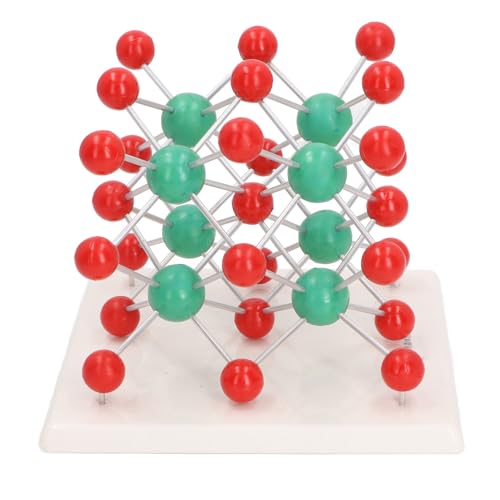
- Detachable cesium chloride model
- Color-coded parts for clarity
- Durable plastic classroom tool
Best For: Simple classroom teaching of cesium chloride structure
Ultimate Crystal Science Kit
National Geographic 5-Activity Crystal Grower

- 5 crystal-growing activities
- Glow-in-the-dark crystal included
- Dinosaur, trees, and underwater crystals
Best For: Kids ages 8+ who want a varied crystal-growing STEM kit
Crystal Structure Teaching Model
Sodium Chloride Classroom Display

- Focuses on crystal structure and ionic bonding
- 18 cm tall teaching model
- Good for chemistry demonstrations
Best For: Teachers or students needing a sodium chloride classroom display
Organic Molecular Build Kit
444-Piece Chemistry Structure Set

- 444-piece chemistry model set
- Includes atoms, bonds, and tool
- Built for molecular structure lessons
Best For: Students and teachers needing a large molecular chemistry kit
Guided STEM Pick
Educational Molecule Model Kit for Kids

- 48 learning cards and a mission guide
- Color-coded atoms and flexible bonds
- Designed for beginners ages 6-12
Best For: Families, classrooms, and young beginners
Large Study Set
240-Piece Molecular Chemistry Kit

- 86 atoms and 154 bonds included
- Build ball-and-stick or space-filling models
- Portable for home, classroom, or lab
Best For: Older students needing broad chemistry coverage
Compact Classroom Pick
135-Piece Organic Chemistry Model Set

- 59 atoms and 76 bonds included
- Embedded design for easy assembly
- Comes with a compartment storage box
Best For: Teachers and students who need portability
Diamond Lattice Demo – EISCO Diamond Crystal Lattice Model Kit
If you need a crystal structure model kit for demonstrating carbon bonding, this EISCO diamond lattice set gives a clear 3D tetrahedral layout. It is designed for hands-on learning in chemistry and material science, with durable plastic parts that can be reused in classrooms, labs, and demonstrations.
Best For: Students, educators, and labs that want a reusable diamond crystal lattice model for visualizing molecular geometry and crystal structure.
Pros:
- Accurately represents a diamond crystal lattice in 3D
- Includes 39 atoms and 60 connectors for the tetrahedral arrangement
- Built from sturdy plastic for repeated classroom or lab use
- Supports learning in molecular geometry, bonding, and crystal structures
Cons:
- Focused on the diamond structure rather than a general molecule set
- Requires assembly before use
This is a strong pick if your goal is to teach the structure of diamond specifically, rather than build a broad range of molecular examples. It offers a practical, durable way to make an abstract lattice easier to understand.
Versatile Molecular Kit – SOUJOY 444-Piece Chemistry Molecular Model Kit
This crystal structure model kit is a broad chemistry learning set built for everything from simple molecules to more advanced structures. With 444 pieces, color-coded atoms, and a storage box, it works well when you want one kit for organic, inorganic, and fullerene-style modeling.
Best For: Students, teachers, and chemistry learners who want a large, versatile model kit for building many different structures.
Pros:
- Large 444-piece set with atoms, bonds, and Carbon-60 parts
- Made from high-quality PP and LDPE with smooth edges
- Color-coded pieces follow national standards for easier identification
- Comes in a slim plastic box for convenient storage
Cons:
- More of a general molecular kit than a dedicated crystal lattice model
- Assembly is required for use
For buyers who want flexibility, this set stands out because it supports a wide range of chemistry modeling tasks. It is a practical classroom or study kit when you need more than a single crystal structure example.
NaCl Lattice Model – Eisco Labs Sodium Chloride Crystal Lattice Kit
If you want a crystal structure model kit for showing ionic lattices, this Eisco NaCl model gives a straightforward view of the sodium chloride arrangement. It is designed for interactive chemistry learning and uses simple, durable plastic parts that can be handled repeatedly in classroom settings.
Best For: Chemistry lessons, crystallography studies, and molecular modeling sessions focused on the NaCl crystal structure.
Pros:
- Shows the cubic lattice arrangement of sodium and chloride ions
- Includes 54 connectors, 13 gray atoms, and 14 green atoms
- Made from high-quality plastic for repeated use
- Useful for hands-on learning in labs and classrooms
Cons:
- Designed specifically around NaCl, not general molecule building
- Requires assembly
This model is a good fit when your teaching goal is an easy-to-see salt lattice rather than a multipurpose chemistry kit. It keeps the focus on crystal structure and bonding in a clean, classroom-friendly format.
Cesium Chloride Teaching Aid – Cesium Chloride Crystal Structure Teaching Model
This crystal structure model kit is aimed at teaching and demonstration, with a cesium chloride structure that can be taken apart using a disconnect tool. Its color and size differences make the elements easier to distinguish, and the sturdy plastic build is suited to school or lab use.
Best For: Teachers and students who want a simple cesium chloride crystal structure model for classroom explanation and study.
Pros:
- Detachable parts with a disconnect tool for easy removal
- Different colors and sizes help distinguish elements
- Made from durable plastic for long service life
- Suitable for schools and laboratories
Cons:
- Single crystal structure focus limits versatility
- Assembly is not required, so it is less customizable than build-it-yourself kits
This model is best when you need a ready-to-use teaching aid rather than a large construction set. It offers a simple, durable way to introduce a cesium chloride crystal structure in class.
Ultimate Crystal Science Kit – National Geographic 5-Activity Crystal Grower
If you want a crystal structure model kit that is more about hands-on growing than static display, this National Geographic set is a strong pick. It includes five different crystal-growing activities, from a glow-in-the-dark crystal to underwater crystals, plus crystal trees and a dinosaur figure for a more visual STEM experience.
Best For: Kids ages 8+ who want a playful, educational crystal-growing kit with multiple displayable results.
Pros:
- Includes 5 crystal-growing activities for variety.
- Glow-in-the-dark crystal adds extra visual appeal.
- Comes with crystal trees, a dinosaur mold, and underwater crystal setups.
- Includes a learning guide and all-in-one materials for the project.
Cons:
- It is a growing kit, not a prebuilt crystal structure model.
- Requires waiting time for crystals to form.
- Best suited to kids rather than advanced chemistry learners.
This set stands out if your goal is to make crystal science feel active and fun while still being educational. The mix of themed builds gives it more variety than a basic single-crystal kit.
Crystal Structure Teaching Model – Sodium Chloride Classroom Display
This crystal structure model kit is built for direct teaching use, showing the sodium chloride structure in a clear classroom-friendly format. With crystal structure and ionic bonding listed as educational objectives, it is a focused model for chemistry lessons rather than a hands-on building project.
Best For: Teachers, tutors, or students who need a ready-made sodium chloride crystal structure model for chemistry instruction.
Pros:
- Designed around crystal structure and ionic bonding.
- 18 cm overall height gives it a visible classroom presence.
- Simple teaching-equipment format is useful for demonstrations.
- Made as a crystal material model for chemistry education.
Cons:
- Represents only sodium chloride, so it is not a general molecular kit.
- No assembly or building activity is described.
- Limited to a single crystal structure example.
For buyers who want an instructional display rather than an activity set, this model is straightforward and to the point. It fits well when the goal is to explain one crystal lattice clearly in a lesson or lab setting.
Organic Molecular Build Kit – 444-Piece Chemistry Structure Set
If you are shopping for a crystal structure model kit in the broader chemistry sense, this 444-piece molecular model set is built for assembling structures and exploring spatial relationships. It is geared toward organic molecular chemistry lessons, with atoms, bonds, a bond remover tool, and an instructional guide included.
Best For: Students, teachers, and adult learners who want a large chemistry model kit for building molecular structures.
Pros:
- Large 444-piece set supports many build combinations.
- Includes atoms, bonds, a remover tool, and an instructional guide.
- Made for lessons in chemistry and molecular structure building.
- Compact and lightweight enough to store and carry easily.
Cons:
- It focuses on molecular models, not actual crystal growing.
- Subject listing is inconsistent with the chemistry use case.
- Designed for older users rather than younger kids.
This is the most flexible option if you want something that can support repeated chemistry practice and structural modeling. It is less specialized than a crystal-lattice display, but far more expansive for hands-on learning.
Guided STEM Pick – Educational Molecule Model Kit for Kids
If you want a crystal structure model kit that makes chemistry feel tangible, this Molecular Masters set is built for hands-on learning. Kids can build 3D molecules with color-coded atoms, flexible bonds, and guided activity cards that walk them from simple builds to more advanced structures.
Best For: Kids ages 6-12, beginners, and classrooms looking for a guided chemistry learning kit.
Pros:
- Includes 48 learning cards plus a mission guide for structured STEM activities.
- Color-coded atoms and multiple bond types help students build accurate molecular shapes.
- Beginner-friendly design supports both simple and more advanced molecule builds.
- Large parts count and no batteries make it ready for home or classroom use.
Cons:
- Focused on learning builds rather than advanced lab-style modeling.
- Plastic construction is practical, but not meant to feel premium or display-oriented.
This is a strong pick for families and teachers who want an approachable, educational model kit with clear step-by-step support. It leans more toward chemistry fundamentals and skill-building than complex technical modeling.
Large Study Set – 240-Piece Molecular Chemistry Kit
For shoppers comparing a crystal structure model kit that covers a lot of ground, this 240-piece set is built for broader chemistry study. It includes 86 atoms and 154 bonds, plus an instructional guide, so you can visualize everything from simple compounds to more complex polymer structures.
Best For: Students from grade 7 through graduate level who want a larger chemistry model kit for study and review.
Pros:
- Large 240-piece set with 86 atoms and 154 bonds.
- Supports ball-and-stick and space-filling models for different study needs.
- Portable design works well for home, classroom, or lab use.
- Intended to help simplify complex chemistry concepts into 3D structures.
Cons:
- Assembly still required, so it is less plug-and-play than a classroom display model.
- Subject details listed in the notes are inconsistent, so it is best judged by the chemistry-focused features.
This kit makes sense if you want quantity, flexibility, and broad study coverage. It is better suited to learners who need an all-purpose molecular building set than to buyers looking for a decorative or specialized structure model.
Compact Classroom Pick – 135-Piece Organic Chemistry Model Set
If you need a crystal structure model kit that stays compact but still covers core chemistry concepts, this 135-piece set is a practical choice. It includes 59 atoms and 76 bonds, with an embedded component design that makes ball-and-stick and filling models easier to assemble and use.
Best For: Students, teachers, and lab users who want a smaller portable molecular model kit for chemistry practice.
Pros:
- Includes 59 atoms and 76 bonds for a useful range of builds.
- Embedded component design helps make assembly simple.
- Storage box with compartments makes organization easier.
- Portable size works well for classroom, home, or lab settings.
Cons:
- No assembly required according to the notes, which may limit setup flexibility for some users.
- Smaller than larger chemistry sets, so it may not cover as many structures.
This is a straightforward option for buyers who want a compact, organized model kit without extra complexity. It is especially appealing for general chemistry study and portable use where space and simplicity matter.
How We Picked the Best Crystal Structure Model Kit
We focused on build quality, structural accuracy, included parts, clarity of instructions, and overall usefulness for students, teachers, and hobbyists. For a Crystal Structure Model Kit, the most important question is whether it helps learners visualize bonding and lattice arrangement without frustration.
Quick Comparison
Some kits are designed for specific crystal lattices such as diamond or sodium chloride, while others are more general molecular model sets with enough flexibility for organic and inorganic structures. Crystal-growth kits serve a different purpose, making them better for hands-on observation than lattice study.
Key Buying Factors for a Crystal Structure Model Kit
Accuracy and Scope
If you need to study lattice geometry, choose a model built for a specific crystal structure. If you need broader chemistry practice, a molecular kit with atoms, bonds, and multiple element types may be more useful.
Part Count and Complexity
Higher piece counts usually support more complex structures and repeated classroom use. Smaller kits can be ideal for focused lessons, beginner learners, or portable study.
Age Range and Skill Level
Look for kits that match the learner’s level. Younger students often benefit from simpler, color-coded sets, while advanced learners may need more complete kits for organic and inorganic modeling.
Durability and Presentation
Rigid connectors, sturdy atoms, and stable lattice components matter if the model will be handled often or used for display. Clear fit and finish also improve long-term value.
Teaching Value
Good classroom kits should support demonstrations, guided activities, and independent exploration. For a Crystal Structure Model Kit used in teaching, clarity matters as much as completeness.
Who Should Buy Which Crystal Structure Model Kit?
Buy a dedicated lattice model if your goal is crystal structure study, lab teaching, or visual reference for specific compounds like diamond or sodium chloride. Choose a general molecular set if you want broader chemistry coverage and hands-on construction practice.
If you are shopping for younger learners or STEM enrichment, prioritize kits with activity cards or simpler assembly. If display quality is important, select models that look clean, stable, and accurate when assembled. The right choice depends on whether you want a classroom tool, a study aid, or a showpiece model.