Compound microscopes with screens make it easier to view specimens comfortably, share live images, and teach or troubleshoot without crowding around eyepieces.
Whether you want a starter model for home use or a more capable digital setup for class or lab work, the right screen microscope should balance image quality, magnification, lighting, and stage control.
Best 10 Compound Microscopes with Screens Picks for 2026
Lab-Ready LCD Monocular
7'' Screen, 2500X, Temperature Stage

- 7-inch hanging LCD for easier viewing angles
- Constant-temperature stage adjustable from 10-50 degrees
- 40X-2500X magnification with 4 achromatic objectives
Best For: Adults and students needing a lab-style screen microscope
All-in-One HDMI Digital Scope

- 10.1-inch monitor with HDMI and 2160P video
- Five-lens system for slides, coins, repair, and more
- Metal stand and X-Y stage help stabilize observation
Best For: Users wanting one screen microscope for multiple tasks
Student-Friendly Screen Adapter Kit

- 100X-2000X optics with WF25X eyepiece and 2X lens
- Includes slides, phone clip, and Bluetooth remote
- Top and bottom LED lighting for varied specimens
Best For: Beginners who want a complete microscope kit with phone viewing
HD Display Lab Scope

- 7-inch HD 2K display for larger-screen viewing
- Reaches 5000X with WF10X/25X eyepieces and 4 objectives
- Includes 40 specimens and a full starter accessory kit
Best For: Labs and students wanting a screen microscope with a full kit
Screen-Based STEM Pick
TOMLOV DM301 Pro 7" Screen Microscope

- 7" IPS screen with adjustable viewing angle
- 1200X max magnification with dual LED lighting
- 8MP photos, 1080P video, and wireless app support
Best For: Kids, students, and families who want an easy-to-share microscope with a built-in screen
Lab-Style Trinocular Option
PalliPartners 40x-2000x Trinocular Microscope

- 40x-2000x magnification for broad specimen work
- Trinocular head supports camera attachment and sharing
- Top and bottom LEDs with a double-layer stage
Best For: Hobbyists, students, and home users who want a traditional compound microscope with digital capture support
Blood Observation Specialist
Vabiooth 7" LCD Blood Microscope

- 7" LCD display with 5MP electronic eyepiece
- 40X-2500X magnification for detailed biological viewing
- Adjustable mechanical stage with precise slide control
Best For: Users focused on live blood observation and detailed screen-based specimen viewing
Kids STEM Starter
40X-1000X Kids Compound Microscope Kit
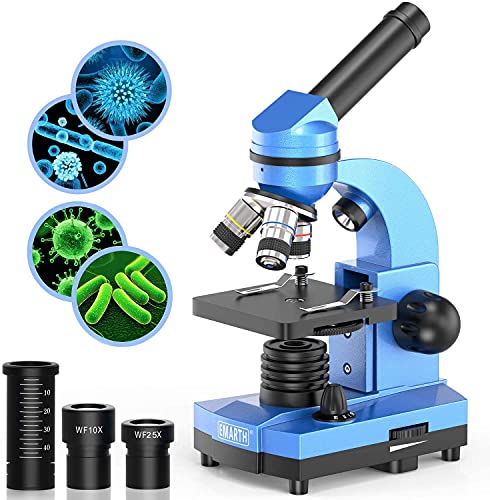
- 40X–1000X magnification for beginners
- 52-piece educational kit included
- Top and bottom LED illumination
Best For: Kids, students, and beginner homeschool science
Pro Screen Lab Pick
7-Inch LCD Trinocular Microscope

- 7-inch HD screen with 5MP camera
- 40X–2500X magnification range
- Achromatic objectives and metal frame
Best For: Lab users and educators who need screen viewing and capture
Value Display Microscope
9-Inch LCD Trinocular Biology Scope

- 9-inch HD screen for easier viewing
- SD card support for photos and video
- 40X–1000X magnification with LED lighting
Best For: Hobbyists and students wanting a larger-screen biology microscope
Lab-Ready LCD Monocular – 7'' Screen, 2500X, Temperature Stage
If you’re shopping for compound microscopes with screens, this EDKKIE model stands out for hands-on lab use thanks to its 7-inch hanging LCD, constant-temperature stage, and strong 2500X maximum magnification. It’s built for users who want a more comfortable viewing setup and a clearer way to share specimen images without crowding around an eyepiece.
Best For: Adults and students who want a lab-style compound microscope with a screen for easier shared viewing and fine-detail observation.
Pros:
- 7-inch LCD hanging screen improves viewing angles and makes specimen observation more convenient.
- Constant-temperature mechanical stage can be adjusted from 10-50 degrees for controlled observation conditions.
- Wide magnification range from 40X to 2500X with WF10X/25X eyepieces and 4 achromatic objectives.
- Halogen illumination with rheostat control helps tune brightness for clearer brightfield viewing.
Cons:
- Monocular design may feel less comfortable for long sessions than binocular alternatives.
- Bulky metal construction and 5.83 kg weight make it less portable.
- Max performance depends on proper setup of objectives, condenser, and lighting.
This is a practical pick if you want a screen-equipped compound microscope that leans toward lab function rather than casual hobby use. The combination of a flexible LCD, temperature-controlled stage, and strong optical range makes it especially useful for detailed specimen work.
All-in-One HDMI Digital Scope – 10.1" Monitor, 5 Lenses
For buyers comparing compound microscopes with screens, the Andonstar AD269S is a versatile digital option that combines multiple microscope styles into one system. Its 10.1-inch monitor, HDMI output, and interchangeable lenses make it useful for biology slides, coin viewing, electronics repair, and other detail-heavy tasks.
Best For: Users who want one screen-based microscope for biology, hobby work, and repair tasks.
Pros:
- 10.1-inch microscope monitor plus HDMI output for larger-screen viewing and 2160P video capture.
- Five-lens system covers biological slides, coins, soldering, and endoscope-style inspection.
- Integrated metal stand is designed to reduce shake at higher magnifications.
- Includes X-Y moveable stage, 32GB SD card, remote control, and measurement software support.
Cons:
- More complex than a basic classroom compound microscope because of the multi-lens setup.
- Higher magnification ranges are split across different lenses, so setup matters.
- Best results depend on learning the controls and choosing the right lens for the job.
This model is a strong fit if you want a screen-first microscope that can do more than biology alone. Its flexibility is the main appeal, especially if you need both slide viewing and general inspection in one package.
Student-Friendly Screen Adapter Kit – 2000X Compound Microscope Kit
If you’re looking at compound microscopes with screens, this PalliPartners model is a straightforward classroom-style choice even though it uses a phone adapter rather than a built-in display. It combines strong optical magnification, dual LED lighting, and a full slide kit, making it a practical starter setup for biology observation and photo capture.
Best For: Students, families, and beginners who want a complete microscope kit with easy phone-based viewing.
Pros:
- 100X-2000X magnification range with 4X, 10X, 40X objectives, a WF25X eyepiece, and 2X lens.
- Includes 10 prepared slides, 18 blank slides, a phone clip adapter, and Bluetooth remote shutter.
- Top and bottom LED lighting supports both opaque and translucent specimens.
- Coarse and fine focus knobs help sharpen the image during observation.
Cons:
- Does not include a built-in screen, so viewing depends on a smartphone setup.
- Battery-powered operation may be less convenient than corded lab microscopes.
- More basic than professional screen-equipped digital microscopes.
This is a useful option if you want a traditional compound microscope with screen-style sharing through a phone, not a dedicated display. The included accessories make it easy to start experimenting right away.
HD Display Lab Scope – 7" Screen, 5000X, Starter Kit
Among compound microscopes with screens, this VOBU model is geared toward users who want a larger display, higher magnification, and a more complete starter bundle. The 7-inch HD screen, dual mechanical stages, and included specimen kit make it a strong fit for school labs and guided home study.
Best For: Adults, students, and labs that want a screen microscope with a full starter kit and high-magnification optics.
Pros:
- 7-inch HD display with 2K resolution lets you observe specimens without relying on the eyepieces alone.
- Wide magnification range reaches 5000X with 4 achromatic objective settings and WF10X/25X eyepieces.
- Abbe condenser, adjustable LED lighting, and focus controls support clearer imaging.
- Includes 40 specimens plus a carrying case and starter accessories for immediate use.
Cons:
- High magnification requires more careful setup and specimen prep to get useful results.
- Accessory-heavy package may be more than casual users need.
- Screen-based design adds complexity compared with a basic optical microscope.
This microscope is best when you want a display-driven viewing experience paired with serious magnification. The bundled kit and lab-friendly features make it a practical all-around choice for structured learning.
Screen-Based STEM Pick – TOMLOV DM301 Pro 7" Screen Microscope
If you want compound microscopes with screens for home science, class demos, or hands-on STEM learning, the TOMLOV DM301 Pro is built around convenience and visibility. Its 7-inch IPS display, wireless app support, and dual LED lighting make it easier to inspect prepared slides and tiny specimens without constantly using eyepieces.
Best For: Students, families, and teachers who want a screen-based microscope for shared viewing and beginner-friendly biology work.
Pros:
- 7″ IPS screen with adjustable viewing angle for comfortable extended use
- Up to 1200X magnification with 3 achromatic lenses for biological observation
- Captures 8MP photos and 1080P video for documenting specimens
- USB/HD output plus wireless app support for sharing on larger displays
Cons:
- Maximum magnification is lower than some lab-style compound microscopes
- Designed more for learning and general observation than advanced research
Overall, this is a practical pick if you want a screen-first microscope that makes group viewing and lesson time easier. The included slides, measurement scale, and long working time give it strong value for STEM-focused use.
Lab-Style Trinocular Option – PalliPartners 40x-2000x Trinocular Microscope
Among compound microscopes with screens, this PalliPartners model stands out for users who want a more traditional biology setup with digital capture support. It offers 40x-2000x magnification, a double-layer stage, and top/bottom LED illumination, making it useful for slide work in home study, classrooms, or basic lab settings.
Best For: Adults, hobbyists, and learners who want a trinocular compound microscope with camera-ready viewing options.
Pros:
- 40x to 2000x magnification range for a wide variety of specimens
- Trinocular head supports viewing plus camera or imaging attachment use
- Dual LED illumination helps with transparent and non-transparent specimens
- Double-layer stage and coarse/fine focus knobs improve slide control
Cons:
- Screen is not built in, so digital viewing depends on added imaging gear
- More of a traditional compound microscope than an all-in-one screen model
If you want stronger magnification and a more lab-style layout, this is a versatile option. It is a good fit when you care more about optical flexibility and camera compatibility than an integrated display.
Blood Observation Specialist – Vabiooth 7" LCD Blood Microscope
If your priority is compound microscopes with screens for live blood viewing, the Vabiooth Dual-View model is tuned for that use case. It combines a 7-inch LCD screen, 5MP electronic eyepiece, adjustable mechanical stage, and 40X-2500X magnification to support close observation and easier sharing of what you see.
Best For: Buyers specifically looking for a screen-equipped microscope for observing live blood and other biological specimens.
Pros:
- 7″ LCD screen with 5MP electronic eyepiece for direct viewing
- 40X-2500X magnification with 4 achromatic objectives
- Adjustable mechanical stage with 1.0mm divisions for precise slide positioning
- Includes an aluminum carry case for storage and transport
Cons:
- Specialized blood version may be more than casual users need
- Video capture requires a capture card for that function
This is the most specialized pick in the group, especially if you need a large screen and a setup aimed at blood observation. The screen, stage control, and high magnification make it a stronger fit for focused biological viewing than a general kids’ microscope.
Kids STEM Starter – 40X-1000X Kids Compound Microscope Kit
If you want compound microscopes with screens in a simple classroom-ready format, this kids starter kit focuses on hands-on learning rather than extra tech. It offers 40X–1000X magnification, top and bottom LED illumination, and a 52-piece educational set that makes it a practical option for school labs, homeschool science, and beginner biology experiments.
Best For: Kids, students, and adult beginners who want a real compound microscope kit for STEM learning.
Pros:
- 40X–1000X magnification for beginner biology and school use
- Dual LED lighting helps with both opaque and translucent specimens
- 52-piece kit includes prepared slides, blank slides, and tools
- Metal frame and easy focus system support steadier viewing
Cons:
- Batteries are not included for the illumination
- No built-in screen or camera
- Best suited to entry-level use rather than advanced lab work
This is a straightforward choice if you care more about real microscope function and a complete starter kit than digital extras. The included accessories and dual lighting make it especially useful for first-time users building basic slide skills.
Pro Screen Lab Pick – 7-Inch LCD Trinocular Microscope
Among compound microscopes with screens, this trinocular model stands out for lab-style viewing and shared observation. It combines 40X–2500X magnification, a 7-inch HD LCD screen, and a built-in 5MP camera, making it a strong fit for teaching, documentation, and detailed biological work.
Best For: Adults, students, and lab users who want a screen-equipped compound microscope with capture features.
Pros:
- 7-inch HD LCD screen supports shared or individual viewing
- Built-in 5MP camera can capture images and videos
- 40X–2500X magnification covers a wide range of lab needs
- Premium achromatic objectives and fine/coarse focus improve clarity
Cons:
- Larger, heavier design may be less convenient to move often
- Higher-spec setup may be more than casual hobbyists need
- Requires more setup than a basic student microscope
This is the most screen-focused option in the group, especially if you want to show observations to others or save media for later review. The adjustable stage and solid metal frame make it feel more like a true lab instrument than a simple classroom starter.
Value Display Microscope – 9-Inch LCD Trinocular Biology Scope
If you’re comparing compound microscopes with screens for practical biology work, this HSL model offers a balanced mix of display size and lab-ready features. It pairs a 9-inch HD screen with a trinocular compound design, 40X–1000X magnification, and a detachable handheld microscope for additional viewing flexibility.
Best For: Hobbyists, students, and clinical learners who want a screen-based microscope with a broader display and simple recording features.
Pros:
- 9-inch HD display provides a larger viewing area
- Trinocular design includes SD card support for photos and video
- 40X, 100X, 400X, and 1000X magnification covers core biology use
- Adjustable LED lighting and Abbe condenser support clearer viewing
Cons:
- Maximum magnification is lower than some screen-equipped alternatives
- Handheld microscope function is limited to 50X–200X
- Bulkier metal build may not suit users needing portability
This model is a strong middle ground if you want a larger screen without moving into the highest magnification tier. The recording options and solid stage setup make it a practical choice for study, demonstrations, and hobby use.
How We Picked the Best Compound Microscopes with Screens
We focused on Compound Microscopes with Screens that offer a useful mix of magnification range, display size, build quality, and ease of use. We also favored models with practical features such as adjustable illumination, mechanical stages, and dual-view or trinocular designs that improve workflow for learning, recording, or demonstrations.
Quick Comparison
For most buyers, the main tradeoff is between simplicity and capability. Entry-level screen microscopes are best for beginners and younger users, while higher-end digital compound microscopes are better for adults, students, and hobbyists who need sharper images, more stable specimen control, and easier image sharing. A larger display can improve comfort, but optical quality and stage precision matter just as much.
Key Buying Factors for Compound Microscopes with Screens
Screen Quality and Size
A larger HD screen is easier on the eyes and better for group viewing, but resolution is just as important. Look for a bright display with good color reproduction and enough detail to judge fine structures.
Optical Versus Digital Performance
Not all magnification claims are equally useful. For Compound Microscopes with Screens, prioritize real image clarity at practical magnification levels over inflated maximum numbers. Good lenses and stable focusing usually matter more than a huge headline range.
Stage, Focus, and Lighting
A mechanical stage helps position slides accurately, especially at higher magnification. Coarse and fine focus controls improve sharpness, and adjustable LED lighting or condenser control helps when switching between transparent and denser specimens.
Ease of Use and Connectivity
If you plan to teach, document, or livestream observations, check whether the microscope supports HDMI output, photo capture, or computer connection. Dual-view and trinocular designs are especially helpful for shared viewing and imaging.
Build and Intended Users
Students and beginners generally benefit from simpler controls and included accessory kits. Adults, advanced hobbyists, and lab users should look for sturdier construction, more precise stages, and better optics to support repeatable results.
Who Should Buy Which Compound Microscopes with Screens?
Beginners and kids should choose a straightforward model with an easy-to-read display and an accessory kit. Students and home science users may want a balanced option with a larger screen and better stage control. Serious hobbyists, educators, and lab-focused buyers should consider more advanced Compound Microscopes with Screens that add trinocular viewing, stronger illumination control, and higher-quality imaging for documentation and instruction.
In short, the best choice depends on how you will use the microscope most often: casual observation, classroom learning, specimen documentation, or more demanding biological work.