The best benchtop pH meters make laboratory and quality-control testing more consistent, repeatable, and easier to document than basic handheld testers. The right model depends on accuracy, calibration flexibility, sample volume, electrode compatibility, and the type of data management your workflow requires.
This roundup compares 10 benchtop pH meters for routine liquid testing, micro-volume samples, research applications, and general laboratory use. Use the guide below to narrow the choices by features, operating demands, and budget.
Best 10 Benchtop Ph Meters Picks for 2026
Best for GLP Data Tracking

- 0.01 pH accuracy with guided auto-calibration
- Stores 500 data groups with USB output
- Shows electrode slope and simultaneous temperature
Best For: Research and quality-control labs needing organized records
Best for Guided Routine Testing
ONiLAB 3-in-1 Benchtop pH Meter

- Simultaneous pH and temperature measurement
- Guided auto-calibration with self-diagnosis
- Includes holder, buffers, and 300 data groups
Best For: Convenient routine testing with integrated temperature measurement
Best for Compact Benchtop Setups

- Footprint is reported as over 40% smaller
- Includes a probe stand
- Designed for 110/220 VAC operation
Best For: Space-conscious laboratories with a fixed testing station
Best for Simple Data Storage

- 0.01 pH accuracy for liquid testing
- Clear LCD shows multiple values
- Includes storage function and electrode holder
Best For: Routine measurements with simple controls and basic record keeping
Oakton pH 700
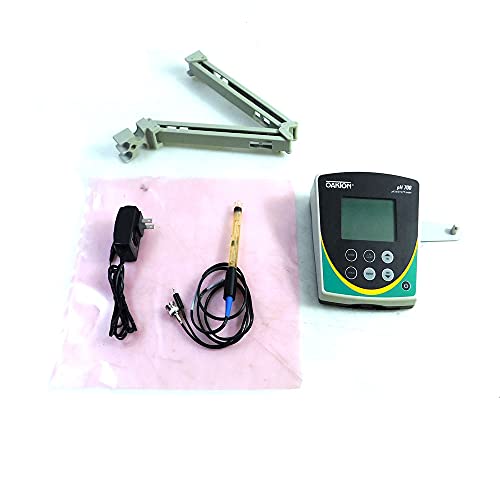
- Includes an all-in-one pH electrode
- Corded-electric bench setup
- Compact 12.25 x 9.13 x 5-inch package
Best For: Simple stationary pH testing with an included electrode
Apera PH700-MS

- Handles samples as small as 15 microliters
- Includes automatic calibration and electrode diagnostics
- Stores 50 sets of data
Best For: Micro-volume water, biological, and protein-containing samples
Bante 210

- Supports one- to three-point calibration
- Includes electrode, temperature probe, and buffers
- Adds temperature compensation and endpoint lock
Best For: Routine lab measurements with guided calibration features
Research-Grade Choice
Apera PH9500 Benchtop pH Meter Kit
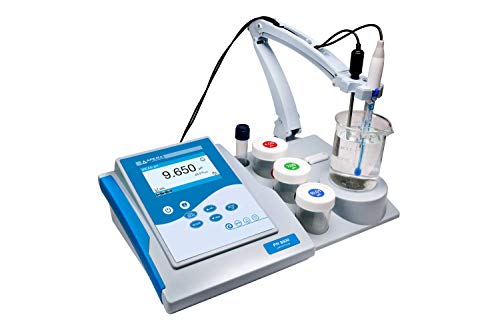
- 500-set GLP data logger with USB export
- Integrated holder, buffer organizers, and stirrer
- 0.003 pH accuracy with one- to five-point calibration
Best For: Laboratories needing detailed records and data export
Versatile Lab Pick

- 0.01 pH accuracy with auto or manual temperature compensation
- One- to three-point automatic calibration
- Stores 200 data sets per parameter
Best For: Routine laboratory, classroom, brewing, and food testing
Compact Essentials

- 0.01 pH accuracy with one- or two-point calibration
- IP54 waterproof design and factory reset
- Compact 3.54-pound benchtop format
Best For: Basic testing in classrooms, aquariums, kitchens, and small labs
Best for GLP Data Tracking – Apera Instruments AI521 PH800
The Apera Instruments AI521 PH800 is a strong choice among benchtop pH meters for laboratories that need guided calibration, stored readings, and USB data output. Its 0.01 pH accuracy, backlit display, and included pH/temperature combination electrode support routine testing and quality-control work.
Best For: Scientific research and quality-control users who need organized measurement records.
Pros:
- Automatic one- to three-point calibration recognizes five pH standard types.
- Stores up to 500 groups of data and offers USB output.
- Displays pH, temperature, reading stability, and calibration status together.
- Shows electrode slope between calibrations to help assess electrode condition.
Cons:
- The included electrode is intended for regular water solutions rather than every specialized sample type.
- Its 5.5-pound weight may be more than needed for portable setups.
Choose this model when calibration guidance and traceable data handling matter as much as day-to-day measurement. The electrode-slope display is an especially useful maintenance feature.
Best for Guided Routine Testing – ONiLAB 3-in-1 Benchtop pH Meter
The ONiLAB 3-in-1 is a practical option among benchtop pH meters for routine measurements requiring pH and temperature readings in one setup. It combines automatic temperature compensation, guided calibration, data storage, and a flexible electrode holder.
Best For: Users who want a convenient pH-and-temperature workstation with straightforward operation.
Pros:
- Measures pH and temperature simultaneously with automatic temperature compensation.
- Guided automatic calibration includes self-diagnosis.
- Stores up to 300 groups of data.
- Includes an electrode holder and pH buffer solutions for setup convenience.
Cons:
- Data storage capacity is lower than some laboratory-oriented models.
- The supplied 201T-F electrode is specified for the included 3-in-1 measurement setup.
This meter makes sense for routine lab or quality-control work where an integrated electrode, holder, and buffers reduce setup effort. Its IP54 spill- and dust-proof design adds practical protection.
Best for Compact Benchtop Setups – Oakton pH 700 Benchtop Meter
Oakton WD-35419-12 Instruments Series pH 700 Benchtop Meter with Probe Stand, 110/220 VAC
Check Price On AmazonThe Oakton WD-35419-12 pH 700 is worth considering when bench space is a priority. This benchtop pH meter has a compact footprint reported as more than 40% smaller than other benchtop meters and includes a probe stand for a tidy testing station.
Best For: Laboratories seeking a smaller fixed benchtop meter with a dedicated probe stand.
Pros:
- Compact footprint helps conserve bench space.
- Includes a probe stand for organized electrode placement.
- Supports 110/220 VAC operation.
Cons:
- The supplied notes do not specify accuracy, calibration features, display details, or data storage.
- Its listed package dimensions are larger than the product dimensions, so buyers should verify available space.
This is the most space-conscious choice in the group based on the supplied information. It is best evaluated by buyers who value a compact station and probe organization, while confirming technical specifications before purchase.
Best for Simple Data Storage – Digital Lab Benchtop pH Meter
This digital lab model is a straightforward entry among benchtop pH meters for liquid testing. It offers 0.01 pH accuracy, a clear non-reflective LCD, one-key measurement operation, data storage, and an electrode holder for hands-free testing.
Best For: Routine liquid measurements where simple controls and basic result storage are priorities.
Pros:
- Clear LCD can display multiple values at the same time.
- Stores readings using the dedicated store/extract button.
- Includes an electrode holder for hands-free testing.
- Measures solution temperatures from 5 to 60°C with the supplied compound electrode.
Cons:
- The supplied electrode is specified for a 5–60°C solution range.
- The notes do not state the number of stored readings or describe automatic calibration.
- Its basic feature set may be less suitable for workflows requiring advanced data management.
For users who want uncomplicated operation and essential storage rather than extensive laboratory workflow tools, this kit is a sensible fit. Its included holder also makes repeat testing more convenient.
Oakton pH 700 – All-in-One Benchtop Meter
The Oakton pH 700 is a straightforward choice for buyers comparing benchtop pH meters for routine corded-electric testing. This package includes the benchtop meter and an all-in-one pH electrode, keeping the core setup simple.
Best For: Users who want a basic benchtop pH meter with an included all-in-one electrode.
Pros:
- Includes an all-in-one pH electrode.
- Corded-electric power source supports stationary bench use.
- Compact package dimensions of 12.25 x 9.13 x 5 inches.
Cons:
- The supplied notes do not specify accuracy, calibration features, or data storage.
- Only one included component is listed: the benchtop pH meter.
The Oakton is best considered a simple, focused option when an included electrode matters more than advanced specifications. Buyers needing documented calibration or logging functions should verify those details separately.
Apera PH700-MS – Micro-Volume Lab pH Meter
The Apera PH700-MS stands out among benchtop pH meters for micro-volume and biological sample work. Its Swiss LabSen 241-3SP electrode is designed for water solutions, protein-containing solutions, and samples as small as 15 microliters.
Best For: Laboratories measuring micro-volume water, biological, or protein-containing samples.
Pros:
- Measures samples as small as 15 microliters.
- Offers one- to three-point automatic calibration with self-diagnosis and electrode-condition display.
- Includes an electrode holder, pH 4/7/10 calibration solutions, and 50-set data storage.
- Provides Max/Min reading mode and IP54 spill- and dust-proof protection.
Cons:
- At 3 pounds, it is heavier than the listed Oakton meter.
- Its specialized micro-volume design may be unnecessary for routine larger-volume samples.
With its specialized electrode and sample-saving capability, the PH700-MS is the most purpose-built option here for small or biologically relevant samples. The included calibration solutions and storage features also make it a more complete lab package.
Bante 210 – Routine Lab Benchtop pH Meter
The Bante 210 is a practical option among benchtop pH meters for routine laboratory measurements. It combines a backlit LCD with one- to three-point calibration, automatic buffer recognition, temperature compensation, and an included pH electrode, temperature probe, and buffers.
Best For: Routine lab measurements where clear display and guided calibration features are useful.
Pros:
- Provides one- to three-point calibration with automatic buffer recognition.
- Includes automatic electrode diagnosis and electrode-slope display.
- Automatic temperature compensation supports measurement consistency.
- Auto-read and endpoint lock simplify result capture.
Cons:
- The supplied notes do not identify the included buffer values.
- No data-storage capacity is specified.
The Bante 210 offers a well-rounded feature set for everyday bench testing, particularly if automatic calibration recognition and endpoint locking fit your workflow. It is a sensible middle-ground choice for routine measurements.
Research-Grade Choice – Apera PH9500 Benchtop pH Meter Kit
For demanding laboratory workflows, this research-grade option stands out among benchtop pH meters with advanced calibration controls, GLP data management, and PC or printer output. Its integrated TestBench helps organize electrodes, buffers, and stirring during routine measurements.
Best For: Laboratories and users who need detailed records, repeatable calibration, and exportable measurement data.
Pros:
- Stores up to 500 data sets and supports USB export to a printer or PC.
- Includes a flexible electrode holder, buffer organizers, and intelligent magnetic stirrer.
- Offers one- to five-point automatic calibration, buffer recognition, and visible slope and offset results.
- Supplied with a Swiss LabSen 211 electrode rated for accuracy of 0.003 pH.
Cons:
- Its research-oriented feature set may be more than casual users need.
- At 7.26 pounds, it is less portable than lighter benchtop models.
The PH9500 is the most capable choice in this group for structured laboratory work. Choose it if GLP documentation, data export, and calibration insight matter more than simplicity or low weight.
Versatile Lab Pick – PH200E Benchtop pH Meter
The PH200E is a practical middle-ground among benchtop pH meters, combining 0.01 pH accuracy with automatic or manual temperature compensation and a large 6-inch display. Its measurement and storage features suit a range of everyday lab and preparation tasks.
Best For: Users who want a readable, general-purpose meter for laboratories, classrooms, food and beverage work, aquariums, or brewing.
Pros:
- Provides 0.01 pH accuracy and a constant-value readout for repeatable measurements.
- Supports one- to three-point automatic calibration.
- Offers auto-read, continuous-read, and auto-hold measurement modes.
- Stores up to 200 sets of data for each parameter.
Cons:
- Its stated accuracy is lower than the research-grade Apera model.
- It has fewer automatic calibration points than the PH9500.
With its broad application range and straightforward display, the PH200E is a sensible choice for routine testing. It balances useful automation and data storage without focusing on the more advanced GLP features of premium equipment.
Compact Essentials – PH100B Benchtop pH Meter
The PH100B keeps benchtop pH meters simple and compact while providing 0.01 pH accuracy, a 6-inch LCD, and manual temperature compensation. Its reset function and IP54 waterproofing add convenience for routine testing in varied settings.
Best For: Home, classroom, aquarium, kitchen, brewery, and basic laboratory users who need essential pH testing functions in a smaller unit.
Pros:
- Delivers 0.01 pH accuracy with one- or two-point automatic calibration.
- Uses standard recognition to support calibration.
- Includes an IP54 waterproof design and a factory-reset function.
- Compact dimensions and a 3.54-pound weight make it relatively easy to position or move.
Cons:
- Temperature compensation is manual rather than automatic.
- It supports fewer calibration points than the PH200E and PH9500.
- The supplied notes do not list data-storage capacity or export features.
The PH100B is a focused option for users who value a smaller footprint and core measurement functions. It is best suited to straightforward testing rather than data-heavy laboratory documentation.
How We Picked the Best Benchtop Ph Meters
We focused on the features that most affect laboratory usability and measurement confidence: stated pH accuracy, calibration options, temperature measurement, electrode design, sample-volume requirements, display and controls, data storage, and output connectivity. We also considered whether each meter is aimed at routine testing, general laboratory work, micro-volume samples, or research-grade documentation.
Because a meter is only as reliable as its electrode and calibration routine, models with included electrodes, probe stands, automatic calibration, or GLP and data-output functions can offer practical advantages. Specifications should still be checked against your sample type, required resolution, and laboratory procedures.
Quick Comparison
| Best for | Features to prioritize |
|---|---|
| Routine laboratory testing | Simple calibration, stable readings, included electrode |
| Water and liquid testing | Temperature measurement, suitable probe, easy cleaning |
| Micro-volume samples | Micro-volume electrode and low minimum sample volume |
| Research and regulated workflows | GLP records, data storage, USB or printer/PC output |
| Shared laboratory benches | Clear display, probe stand, durable controls, broad calibration support |
Key Buying Factors for Benchtop Ph Meters
Accuracy, Resolution, and Stability
A stated accuracy of 0.01 pH is common in this category, but real-world performance also depends on calibration, electrode condition, temperature, sample preparation, and stabilization time. Choose a meter that matches your required tolerance rather than paying for research-grade features you will not use.
Calibration and Temperature Compensation
Automatic calibration reduces setup errors, while two- or three-point calibration supports a wider working range. Automatic temperature compensation can improve consistency when sample temperatures vary, but it does not replace proper temperature control or a compatible temperature probe.
Electrode and Sample Compatibility
Check the connector type, replacement-electrode availability, and the probe’s intended sample volume. Micro-volume or biological samples may require a specialized electrode, while viscous, dirty, or chemically aggressive liquids may need a more specialized construction and maintenance routine.
Data Management and Connectivity
For traceability, look for GLP functions, calibration reminders, internal storage, timestamps, USB connectivity, or printer and computer output. These features matter more for regulated or research workflows than for occasional checks.
Who Should Buy Which Benchtop Ph Meters?
Choose a straightforward lab benchtop model if you need dependable readings for routine liquids and do not require extensive records. A meter with a probe stand and included electrode is often the most convenient choice for shared workspaces. If testing involves very small samples, select a model specifically designed for micro-volume measurements rather than adapting a standard probe.
For research groups, quality-control teams, or laboratories that must document calibration and results, prioritize GLP data management and data output over the lowest purchase price. Buyers who perform occasional water or solution checks should focus on easy calibration, temperature measurement, replacement-electrode availability, and simple operation. Whichever model you select, budget for calibration buffers, electrode storage solution, and eventual probe replacement to maintain reliable results.