The best beginner science experiment sets turn curiosity into hands-on learning with manageable activities involving chemistry, physics, geology, and everyday STEM concepts.
We compared 10 popular kits across age suitability, experiment variety, included materials, instructions, and repeat-play value to help you choose a set that fits your child and your budget.
Best 10 Beginner Science Experiment Sets Picks for 2026
Best for Science Magic
National Geographic Mega Science Kit

- 20 included magic experiments
- 85+ bonus activities
- For ages 8 and up
Best For: Kids who like science demonstrations with a magic-show feel
Best for Younger Beginners
Melican 60+ Science Experiment Kit

- 60+ hands-on experiments
- Includes goggles and materials
- Recommended for ages 4+
Best For: Young children exploring science with adult guidance
Best Chemistry Focus
National Geographic Amazing Chemistry Set

- 15 supplied chemistry experiments
- 85 household-item activities
- Includes lab-style tools
Best For: Children ages 8+ who want chemistry-focused projects
Best for Experiment Variety
80-Experiment Scientist Role-Play Kit

- 80 guided science experiments
- Includes goggles and gloves
- Activities progress from simple to challenging
Best For: Kids who want lots of projects and scientist role-play
Best Chemistry Starter
National Geographic Chemistry Set

- 45 chemistry experiments
- Illustrated step-by-step guide
- Includes volcano, geyser, and rocket projects
Best For: Kids ages 8 and up beginning hands-on chemistry
Best for Young Explorers
Doctor Jupiter My First Science Kit

- 50+ hands-on experiments
- Designed for ages 4 to 8
- Includes illustrated instructions and activity materials
Best For: Younger children starting screen-free STEM play
Best Variety Pick

- 70 varied science experiments
- Includes crystals, circuits, and volcanoes
- Illustrated manual explains the science
Best For: Older kids wanting a broad activity selection
Best Earth Science Variety
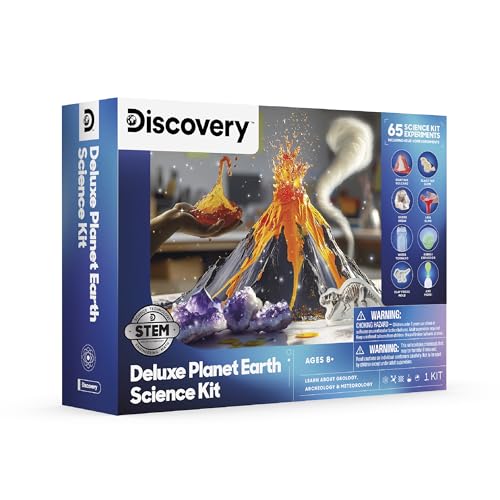
- 65 experiments and activities
- Volcano, fossils, crystals, weather, and slime projects
- Includes tools, materials, molds, and guide
Best For: Ages 8+ who want broad earth science exploration
Best Broad Home Lab

- More than 50 activities
- Earth, chemistry, and magic themes
- Detailed guide explains the science
Best For: Ages 8+ exploring science at home with household items
Best for Simple Instructions

- More than 40 experiments
- Step-by-step illustrated manual
- Includes hands-on reaction and creative projects
Best For: Ages 8+ who want approachable, guided STEM activities
Best for Science Magic – National Geographic Mega Science Kit
For families seeking beginner science experiment sets with an entertaining twist, this National Geographic kit combines 20 included magic experiments with a bonus booklet containing more than 85 additional activities. It is designed for children ages 8 and up and requires no batteries.
Best For: Kids who enjoy science demonstrations, magic tricks, and STEM-themed activities.
Pros:
- Includes materials for 20 magic experiments.
- Adds a bonus guide with 85+ additional experiments.
- Battery-free, manual operation keeps setup straightforward.
- Backed by a manufacturer warranty and U.S. support team.
Cons:
- Recommended for ages 8 and up, so it may be too advanced for younger children.
- The science-magic theme may be less suitable for children seeking chemistry-only activities.
This is a strong choice when presentation and variety matter as much as the experiment itself. Adult supervision may still be useful when introducing the activities or explaining the underlying STEM concepts.
Best for Younger Beginners – Melican 60+ Science Experiment Kit
This Melican set is one of the more accessible beginner science experiment sets for children ages 4 and up. It includes more than 60 activities, such as volcanoes, dinosaur-egg digging, milk animation, and lava lamps, along with tools, materials, goggles, and an illustrated manual.
Best For: Young children starting hands-on STEM activities with parent assistance.
Pros:
- Offers 60+ experiments across chemistry and discovery themes.
- Includes experimental materials, tools, safety goggles, and a manual.
- Illustrated instructions are intended to make activities easier to follow.
- Suitable for children ages 4 and up.
Cons:
- Parent assistance is recommended for carrying out the experiments and explaining concepts.
- Some activities may be better suited to an adult-guided setting for younger children.
With its broad age range and highly visual activities, this kit can provide a gentle introduction to scientific observation and cause-and-effect learning. It is most practical when an adult helps prepare and discuss each experiment.
Best Chemistry Focus – National Geographic Amazing Chemistry Set
For children ready to explore chemistry, this National Geographic set is a focused option among beginner science experiment sets. It includes supplies for 15 featured experiments, plus a guide with 85 additional activities using common household items, and is recommended for ages 8 and up.
Best For: Kids interested in chemical reactions, crystals, color changes, and laboratory-style tools.
Pros:
- Provides materials for 15 featured chemistry experiments.
- Includes 85 bonus activities using common household items.
- Uses hands-on tools such as test tubes, beakers, and pipettes.
- Explores crystals, bubbling solutions, glowing effects, and color changes.
Cons:
- Recommended for ages 8 and up, limiting suitability for preschool-age children.
- The included materials cover 15 experiments; many bonus activities require household supplies.
This kit is a particularly good fit for children who want a more recognizable chemistry-lab experience. Its combination of prepared materials and household-based follow-up activities can extend the learning beyond the initial experiments.
Best for Experiment Variety – 80-Experiment Scientist Role-Play Kit
This scientist role-play kit stands out among beginner science experiment sets with 80 guided activities, including rainbow rain, erupting volcanoes, fountains, and balloon experiments. It is marketed for children over 6 and includes goggles, gloves, test tubes, droppers, measuring tools, pigments, and other supplies.
Best For: Children who enjoy variety, pretend laboratory play, and step-by-step experimentation.
Pros:
- Offers 80 experiments ranging from simple to more challenging.
- Includes a guidance card explaining steps and scientific principles.
- Provides a large assortment of tools, protective gear, and activity materials.
- Resealable chemical bottles are intended to help preserve unused materials.
Cons:
- Adult supervision is advisable when children handle chemicals and small components.
- The listing gives inconsistent age information, mentioning both over 6 and a manufacturer range of 36 months to 12 years.
- Some experiments may require careful preparation and cleanup.
The broad activity count makes this a compelling choice for children who quickly move through individual projects. Its progression from simpler to more challenging experiments may also help build confidence, provided an adult oversees setup and safety.
Best Chemistry Starter – National Geographic Chemistry Set
For families seeking beginner science experiment sets for children ages 8 and up, this National Geographic chemistry kit offers a structured introduction to chemical reactions. Its 45 activities include familiar projects such as volcanoes, geysers, rockets, and other hands-on reactions.
Best For: Kids ages 8 and up who want an approachable, chemistry-focused STEM activity set.
Pros:
- Includes 45 experiments, including volcano, geyser, and rocket activities.
- Illustrated, kid-friendly instructions explain each step and the science involved.
- Introduces the scientific process, chemistry fundamentals, and safe experiment practices.
Cons:
- Recommended for ages 8 and up, so it may not suit preschool-age children.
- Some experiments may require adult guidance depending on the child and activity.
This is a strong choice when you want a recognizable, chemistry-centered kit with clear guidance and a substantial selection of projects.
Best for Young Explorers – Doctor Jupiter My First Science Kit
Among beginner science experiment sets, the Doctor Jupiter My First Science Experiments Kit is designed for younger children, with a recommended age range of 4 to 8 years. It combines more than 50 activities with illustrated instructions and materials for playful, screen-free exploration.
Best For: Preschool and early-elementary children who need simple, engaging experiments with adult participation.
Pros:
- Offers more than 50 experiments for extended activity variety.
- Includes illustrated, step-by-step instructions intended for children and adults.
- Features playful projects such as oobleck, dinosaur squishies, color experiments, and volcanoes.
- Includes tools, food colors, ingredients, and other listed materials for the activities.
Cons:
- Recommended for ages 4 to 8, so older children may want more advanced chemistry.
- Young children will likely need adult help with setup and supervision.
Choose this kit if age-appropriate simplicity and a large mix of playful activities matter more than advanced scientific depth.
Best Variety Pick – UNGLINGA 70 Lab Experiments
The UNGLINGA set is a practical option for families comparing beginner science experiment sets with broad project variety. Recommended for ages 8 and up, it includes 70 experiments spanning chemistry reactions, crystal growing, volcanoes, balloon rockets, and fruit circuits.
Best For: Kids ages 8 and up who want a wide selection of science and STEM activities to share with family, friends, or classmates.
Pros:
- Provides 70 experiments across chemistry, simple circuits, crystals, and motion projects.
- Manual includes clear illustrations and explanations of the science behind activities.
- Supports critical thinking, problem-solving, science, and math skills through hands-on work.
- Ingredients are described as safe and child friendly.
Cons:
- Recommended for ages 8 and up, limiting its fit for younger beginners.
- The supplied details do not specify the included components, so additional household materials may be needed.
Its unusually large experiment count makes it appealing for children who may lose interest quickly and benefit from having many different project formats available.
Best Earth Science Variety – Planet Earth Science Kit
For families seeking beginner science experiment sets with plenty of variety, the Discovery Planet Earth Science Kit offers 65 experiments and activities focused on volcanoes, fossils, geology, weather, crystals, and slime. Its included tools and materials make it a strong option for supervised home science exploration.
Best For: Kids ages 8 and up who enjoy earth science themes, hands-on projects, and family science-fair activities.
Pros:
- Includes 65 experiments and DIY activities across earth science, chemistry, and archaeology.
- Provides engaging projects such as a volcano, water tornado, fossils, crystals, instant snow, and slime.
- Includes experiment materials, tools, molds, excavation bricks, and an instruction guide.
Cons:
- Adult supervision is recommended.
- Recommended for ages 8 and up, so it may not suit younger children.
This is the most expansive and earth-science-focused choice in the group. Choose it when you want a broad activity count and a kit centered on geology, weather, fossils, and crystals.
Best Broad Home Lab – UNGLINGA 50+ Science Lab Kit
This UNGLINGA kit is one of the more versatile beginner science experiment sets, combining more than 50 earth, chemistry, and magic-themed activities. It uses included experiment materials alongside common household items, making it suitable for repeat play at home.
Best For: Kids ages 8 and up who want a broad home laboratory experience with family or classmates.
Pros:
- Offers more than 50 experiments covering earth science, chemistry, and magic-style activities.
- Includes projects such as a volcano eruption, foamy fountain, gemstones, color-changing flowers, and rainbow rain.
- Detailed instructions explain the science behind the activities and support critical thinking.
Cons:
- Some experiments require common household items.
- The supplied notes do not specify the exact contents of every activity.
Pick this set for an activity-packed home lab that mixes traditional science with playful demonstrations. Its emphasis on explanations also helps children connect each project with the underlying concepts.
Best for Simple Instructions – UNGLINGA 40+ Experiments Kit
For beginners who benefit from straightforward guidance, this UNGLINGA set provides more than 40 experiments with step-by-step instructions and child-friendly illustrations. It is a compact option for hands-on STEM activities, though a few projects need common household items.
Best For: Kids ages 8 and up who prefer clearly illustrated activities involving reactions, creative projects, and simple science concepts.
Pros:
- Includes more than 40 experiments, including bouncy balls and lava lamps.
- Uses simple, illustrated instructions designed to support independent follow-through.
- Encourages observation, creativity, confidence, and problem-solving through hands-on learning.
Cons:
- Some common household items are not included.
- It offers fewer listed activities than the 50+ and 65-activity alternatives.
This is a practical pick when ease of use matters more than the largest experiment count. Its compact format and illustrated guide make it approachable for young learners beginning to explore STEM activities.
How We Picked These Beginner Science Experiment Sets
We focused on kits designed for first-time experimenters, emphasizing clear instructions, age-appropriate activities, and a useful mix of demonstrations and repeatable projects. The selection includes compact introductory kits, larger chemistry-focused sets, and broad STEM labs covering topics such as volcanoes, crystals, fossils, slime, magic tricks, and role-play science.
We also considered whether a kit offers enough included supplies to begin immediately, how much adult supervision is likely to be needed, and whether the activities support genuine observation and explanation rather than simply producing a one-time result. Always check the manufacturer’s safety guidance and supervise children closely, particularly during chemistry activities.
Quick Comparison
| Best For | Look For | Suitable Options |
|---|---|---|
| Young beginners | Simple instructions, low-mess activities, and broad age guidance | Doctor Jupiter, Melican |
| Experiment variety | Large activity counts and multiple STEM subjects | National Geographic Science Magic, UNGLINGA 70 |
| Chemistry practice | Dedicated lab activities and clear safety directions | National Geographic Amazing Chemistry, National Geographic 45 Experiments |
| Earth science fans | Geology, fossils, crystals, volcanoes, and weather projects | Discovery Planet Earth |
| Budget-friendly activity volume | Many projects with common household materials | UNGLINGA 40+, UNGLINGA 50+ |
Key Buying Factors for Beginner Science Experiment Sets
Age and Supervision
Age labels are a starting point, not a guarantee of independence. Younger children generally benefit from an adult preparing materials, reading instructions, and explaining what they observe. For children ages eight and up, chemistry-oriented kits may offer more challenging activities, but supervision remains important.
Experiment Count Versus Usable Content
A high experiment count can be appealing, but check whether activities require household ingredients, repeat the same basic reaction, or provide genuinely different concepts. A smaller kit with excellent instructions may be more rewarding than a larger box that quickly runs out of specialty supplies.
Subject Variety and Learning Value
Choose chemistry for reactions and mixtures, earth science for rocks and weather, or a broad STEM kit for children who are still exploring interests. Kits that ask children to predict, measure, record, and explain results provide more educational value than demonstration-only sets.
Supplies, Storage, and Cleanup
Review what is included and what must be supplied at home. Goggles, containers, measuring tools, and resealable storage can make activities easier. Consider a washable work surface and a dedicated bin for leftover materials.
Who Should Buy Which Beginner Science Experiment Sets?
Choose a simple introductory kit for preschool and early elementary learners who need short, visually engaging activities. Pick a larger, mixed-topic set for families seeking many weekend projects or for children who enjoy switching between science subjects. Chemistry-focused kits suit older children who want structured lab-style work, while the Planet Earth kit is a strong match for geology and nature enthusiasts. If budget and storage space matter most, compare the included materials carefully and favor a well-organized kit with repeatable activities over the largest advertised number.