Choosing the right gear can make or break your first astrophotography sessions. The best beginner-friendly cameras are easy to set up, compatible with common telescopes, and capable of producing clear lunar and planetary images without a steep learning curve.
This roundup focuses on astronomy cameras for beginners that prioritize simplicity, value, and practical performance, so you can spend less time troubleshooting and more time capturing the night sky.
Best 10 Astronomy Cameras for Beginners Picks for 2026
Entry-Level USB Planetary Camera
SVBONY SV205 7.05MP IMX415 Telescope Camera

- Plug and play USB setup
- 7.05MP IMX415 sensor with low-light compensation
- Best for Moon and bright planets
Best For: Beginners who want an easy USB telescope camera for lunar and planetary viewing
Starter USB Eyepiece Camera
SVBONY SV105 IMX307 Color Camera
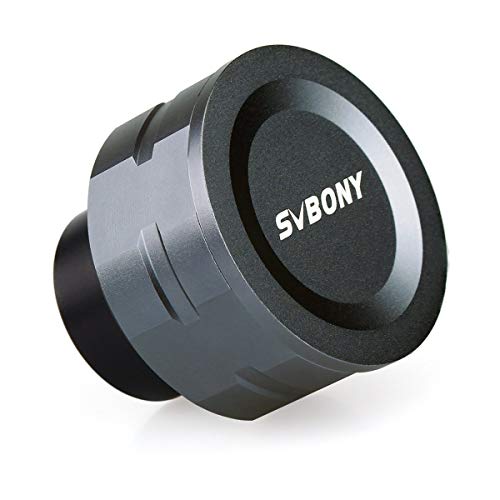
- Beginner-focused astronomical imaging
- Plug and play with no driver required
- Good for Moon and bright planets
Best For: First-time astrophotographers who want a simple, low-friction way to start imaging
App-Controlled Smart Telescope
ZWO Seestar S30 Pro Smart Telescope
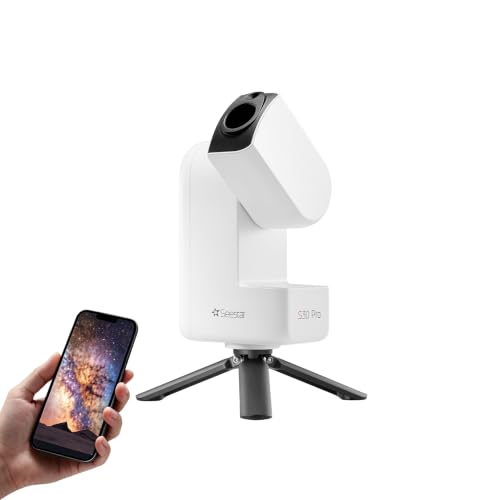
- App-controlled with auto GoTo and tracking
- Dual-camera 4K imaging with AI processing
- Portable 3.64 lb smart telescope
Best For: Beginners who want a portable smart telescope with automated tracking and imaging
Planetary Detail Picker
SVBONY SC715C IMX715 Color Camera

- IMX715 sensor with 1.45μm pixels
- USB 3.0 with up to 45.5 fps capture
- Works with SharpCap, AstroDMX Capture, and NINA
Best For: Beginners focused on moon and planet detail
Easy-Start Eyepiece Cam

- 8MP sensor supports up to 4K video
- UVC plug-and-play with optional ASCOM driver support
- Fits standard 1.25 inch telescope focusers
Best For: First-time users shooting the Moon and bright objects
Entry-Level EAA Camera

- IMX662 sensor with low readout noise
- Built-in 128MB buffer and ROI/BIN tools
- SharpCap modes for planetary and long-exposure use
Best For: Beginners who want one camera for planets, Moon, and EAA
Wireless Eyepiece Camera
4K Telescope Camera with WiFi App Control

- 8MP sensor with 4K video and up to 64MP photos
- 2.8-inch IPS screen plus WiFi app viewing
- Fits eyepieces from 23mm to 60mm
Best For: Beginners who want an easy camera accessory for telescopes and eyepieces
Dual-Screen Smart Telescope
4K Astronomy Scope with Card Included

- Dual-screen viewing with a foldable 3-inch external display
- Auto focus and one-touch photo/video modes
- Includes a 64GB card and supports up to 512GB storage
Best For: New astronomers who want an all-in-one telescope with built-in display and recording
High-Sensitivity Planetary Camera

- IMX585 sensor with 3840x2180 maximum resolution
- High near-infrared sensitivity and low read noise
- Good fit for planetary, EAA, and entry-level deep sky
Best For: Beginners ready for a more advanced imaging-focused telescope camera
Entry-Level USB Planetary Camera – SVBONY SV205 7.05MP IMX415 Telescope Camera
If you’re comparing astronomy cameras for beginners, the SVBONY SV205 is a straightforward way to start imaging the Moon, bright planets, and terrestrial targets. It is built as a plug-and-play USB camera, so you can get up and running without a driver-heavy setup.
Best For: Beginners who want an easy USB telescope camera for lunar and planetary viewing.
Pros:
- Plug and play design with no driver required
- 7.05MP IMX415 sensor with dark-light compensation for clearer low-light images
- Up to 30FPS at 1920×1080 and 15FPS at 3264×2160
- Compatible with Windows, Linux, Android, and MacOS laptops
Cons:
- 1.25-inch fit may require the right adapter for your telescope
- Not compatible with Apple phones or tablets
- Best suited to bright targets rather than deep-sky imaging
The SV205 keeps the learning curve low while still giving beginners a capable sensor and simple live-view workflow. It makes the most sense if you want an affordable first step into telescope-based imaging and don’t need a fully automated smart scope.
All-in-One Smart Scope – FASHIONARI Smart Telescope with 4K Camera
For astronomy cameras for beginners who want the simplest possible setup, this smart telescope combines viewing and capture in one portable package. It adds autofocus, dual displays, and one-touch photo and video modes so you can observe and record without building a separate imaging rig.
Best For: New users who want a guided, all-in-one telescope with built-in imaging and displays.
Pros:
- Autofocus design with a built-in 4K astrophotography camera
- Dual-screen viewing with an eyepiece and foldable external display
- One-touch photo and video capture with up to 512GB external storage support
- 4500mAh battery rated for up to 6 hours of use
Cons:
- Objective lens diameter is listed as 1 mm in the supplied details
- More of a smart observing system than a traditional telescope-camera combo
- Specifications suggest it is geared toward convenience over manual control
This model is appealing if you want the least technical path into skywatching and imaging. Its main strength is convenience: turn it on, view on-screen, and capture results without needing a separate PC-based workflow.
Starter USB Eyepiece Camera – SVBONY SV105 IMX307 Color Camera
The SVBONY SV105 is one of the most beginner-friendly astronomy cameras for beginners because it is positioned as a basic entry point to astronomical imaging. It’s a simple USB eyepiece camera for Moon, planets, and other bright targets, with plug-and-play operation and no driver required.
Best For: First-time astrophotographers who want a simple, low-friction way to start imaging.
Pros:
- Designed as a basic starting point for astronomical imaging
- Plug and play with no driver required
- IMX307 sensor with dark-light compensation for low-light clarity
- Up to 30FPS at 1920×1080 and 2K video recording support
Cons:
- Best suited to lunar and planetary targets, not deep-sky work
- Requires software downloads on Windows, Linux, or Android
- Not compatible with Apple phones or tablets
If you want a no-nonsense first camera for a telescope, the SV105 keeps the setup simple and the target list realistic. It offers the kind of immediate feedback beginners usually want while they learn capture basics.
App-Controlled Smart Telescope – ZWO Seestar S30 Pro Smart Telescope
If you want astronomy cameras for beginners without the usual setup hassle, the ZWO Seestar S30 Pro is built around automation. It uses app control, automatic GoTo targeting, tracking, and one-tap imaging so you can start exploring the sky from a smartphone or tablet.
Best For: Beginners who want a portable smart telescope with automated tracking and imaging.
Pros:
- App-controlled with automatic GoTo targeting and tracking
- Dual-camera 4K imaging and intelligent one-tap capture modes
- Built-in AI noise reduction and sky/foreground separation
- Portable 3.64 lb design with anti-dew protection
Cons:
- Depends on a smartphone or tablet for operation
- Deep-sky imaging needs the device to stay stationary
- More expensive and specialized than a basic USB eyepiece camera
This is the easiest option in the group for users who prefer automation over manual telescope work. It is especially attractive if you want a travel-ready smart scope that can handle wide-field and deep-sky imaging with minimal learning curve.
Planetary Detail Picker – SVBONY SC715C IMX715 Color Camera
If you are comparing astronomy cameras for beginners, the SVBONY SC715C is a strong planetary-focused option for users who want high-detail capture without moving straight into a full deep-sky setup. Its IMX715 sensor, small 1.45μm pixels, and USB 3.0 transfer are aimed at crisp moon and planet imaging, while the compact body keeps it easy to mount on a typical telescope.
Best For: Beginners who want a lightweight planetary camera with software support and fast data transfer.
Pros:
- IMX715 sensor with 1.45μm pixels for detailed planetary imaging
- USB 3.0 connection supports stable high-speed capture up to 45.5 fps at full resolution
- Works with popular astronomy software like SharpCap, AstroDMX Capture, and NINA
- ST4 autoguider interface adds mount control flexibility for more advanced setups
Cons:
- Does not include built-in focus adjustment; you must focus with the telescope focuser
- Not compatible with smartphones
- Dedicated download software is required, and it is confirmed for Mac computer systems
Overall, this camera makes the most sense for beginners who are already using a telescope and want to learn planetary imaging with a dedicated astronomy camera rather than a general-purpose device.
Easy-Start Eyepiece Cam – 4K 8MP USB Astronomy Camera
For buyers searching for astronomy cameras for beginners, this 4K 8MP USB telescope eyepiece is built around simple first-time use and broad compatibility. It offers a standard 1.25 inch fit, UVC plug-and-play behavior, and optional ASCOM driver support, making it a practical entry point for lunar and bright-object imaging through a telescope.
Best For: First-time telescope users who want a simple, lightweight camera for the Moon and bright objects.
Pros:
- 8MP sensor supports up to 4K video and 1080P high-frame-rate capture
- UVC plug-and-play support keeps setup straightforward
- Fits standard 1.25 inch telescope focusers and supports compatible 1.25 inch filters
- Cross-platform compatibility with Windows, macOS, and Linux
Cons:
- Manual telescope focusing is required
- Performance depends on telescope focus and seeing conditions
- Best suited to bright objects rather than more demanding targets
This is a sensible starter camera if you want an easy, lightweight way to learn lunar and planetary imaging without dealing with a complicated setup.
Entry-Level EAA Camera – SVBONY SV305C IMX662
The SVBONY SV305C is a practical pick for astronomy cameras for beginners who want to start with planetary, lunar, and EAA-style observing. Its IMX662 sensor, low readout noise, built-in buffer, and SharpCap modes give new users a camera that is designed to be usable right away while still leaving room to grow.
Best For: Beginners who want a color camera for planets, the Moon, and entry-level EAA.
Pros:
- IMX662 sensor offers low readout noise and improved red sensitivity
- Built-in 128MB DDRIII buffer helps reduce lost frames during transfer
- SharpCap modes support both planetary high-speed capture and long-exposure sky imaging
- ROI and BIN functions add flexibility for capture speed and sensitivity
Cons:
- Manual focus is required
- Protective glass is removable, but the built-in UV/IR cut filter is not
- USB 2.0 is slower than newer USB 3.0 cameras
For beginners who want a camera that can handle both quick planetary sessions and basic EAA workflows, the SV305C offers a balanced feature set and a very approachable learning curve.
Wireless Eyepiece Camera – 4K Telescope Camera with WiFi App Control
If you’re comparing astronomy cameras for beginners, this wireless eyepiece camera is built for simple capture and live viewing without a complicated setup. It offers 4K video, 8MP imaging, WiFi app control, and a rotatable IPS screen, making it a flexible option for moon, planet, and daytime observation through compatible eyepieces.
Best For: Beginners who want an easy-to-use telescope camera with a screen, app control, and broad eyepiece compatibility.
Pros:
- 8MP sensor supports 4K video and up to 64MP image capture.
- 2.8-inch IPS screen and WiFi viewing make framing more intuitive.
- Universal locking groove fits eyepieces from 23mm to 60mm.
- 2000mAh battery and support for up to 512GB microSD storage.
Cons:
- Manual focus may take practice for first-time users.
- Best suited to eyepiece-based setups rather than a standalone telescope.
- WiFi remote viewing is limited to about 32 ft.
Overall, this is a practical starter-friendly pick if you want a camera accessory that combines live preview, app features, and broad compatibility. It looks especially useful for users who want to record observations while keeping the learning curve manageable.
Dual-Screen Smart Telescope – 4K Astronomy Scope with Card Included
Among astronomy cameras for beginners, this smart telescope stands out because it combines the optics, camera, and screens in one unit. The dual-screen design, 4K astrophotography support, auto focus, and included 64GB card make it a straightforward way to view and record the moon or stars without needing external devices.
Best For: New astronomers who want an all-in-one smart telescope with built-in viewing and recording.
Pros:
- Dual-screen setup includes a foldable 3-inch external display.
- 300mm focal length and 78mm aperture provide fully coated optics.
- Auto focus with one-touch photo and video modes simplifies use.
- Comes with a 64GB memory card and supports up to 512GB storage.
Cons:
- Larger and less portable than a simple eyepiece camera.
- Designed as a full telescope, so it is not just an add-on accessory.
- Magnification is listed up to 350X, which may require some practice to manage well.
This is a strong choice if you want the easiest path to observing and capturing images in one package. The built-in screens and auto focus should make it more approachable for families and first-time users than a more technical camera-only setup.
High-Sensitivity Planetary Camera – SV705C USB 3.0 Camera
If you’re shopping astronomy cameras for beginners but want a path toward more advanced imaging, the SVBONY SV705C is a capable USB 3.0 telescope camera. Its IMX585 sensor, strong near-infrared sensitivity, and high signal-to-noise performance are aimed at planetary imaging, EAA, lucky imaging, and entry-level deep-sky work.
Best For: Beginners who want a more advanced telescope camera for planetary, EAA, and early deep-sky imaging.
Pros:
- IMX585 sensor is designed for strong image quality and high signal-to-noise performance.
- 3840×2180 maximum resolution gives plenty of detail for celestial targets.
- Improved near-infrared sensitivity supports low-light shooting efficiency.
- Dual-gain HCG helps preserve dynamic range and reduce read noise.
Cons:
- More technical than a simple beginner camera with a screen or app.
- Focused on telescope imaging rather than easy all-in-one viewing.
- May be better suited to users ready to learn EAA or planetary workflows.
For beginners who already know they want to grow into astrophotography, this camera offers a serious sensor and strong imaging features. It is less plug-and-play than the other options here, but it gives you a clear upgrade path for higher-quality capture.
How We Picked the Best Astronomy Cameras for Beginners
We focused on Astronomy Cameras for Beginners that offer a sensible mix of plug-and-play setup, standard mounting compatibility, and image sensors suited to common first targets like the Moon, Jupiter, Saturn, and brighter deep-sky objects. We also looked for models with accessible software support, useful frame rates, and enough image quality to reward learning without overwhelming new users.
Quick Comparison
In this category, the main tradeoff is simplicity versus flexibility. Smart telescopes are the easiest path if you want app-guided observing and automatic capture. Traditional USB eyepiece cameras are better if you already have a telescope and want a lower-cost way to learn planetary imaging. Higher-resolution sensors and USB 3.0 connections can improve detail and workflow, but they are most helpful when paired with a stable mount and basic imaging technique.
Key Buying Factors for Astronomy Cameras for Beginners
Compatibility
Check whether the camera fits your telescope’s focuser size, usually 1.25 inches, and whether it works with your operating system and capture software. Compatibility problems are one of the biggest beginner frustrations.
Sensor Type and Resolution
For beginner use, a modern CMOS sensor is usually the best choice. Higher megapixels can help, but sensor quality and pixel size matter more than raw resolution alone. Smaller pixels often help with planets; larger sensors can be more forgiving for broader framing.
Connection and Ease of Use
USB cameras are straightforward and common, while wireless or smart telescope systems reduce setup complexity. If you want the least technical path, prioritize automation and app control. If you want to learn imaging fundamentals, a standard camera may be the better teaching tool.
Target Objects
Match the camera to what you want to photograph. Planetary and lunar imaging benefits from high frame rates and sharp detail. Deep-sky objects need better sensitivity, longer exposures, and a stable mount, so not every beginner camera is equally suited for every target.
Who Should Buy Which Astronomy Cameras for Beginners?
If you want the easiest start, choose a smart telescope with app control. If you already own a telescope and want to practice imaging on a budget, a basic USB eyepiece camera is a smart entry point. If you plan to stay with the hobby and want more detail on planets, a higher-performance astronomy camera with a strong sensor and USB 3.0 support is worth the upgrade.
For most first-time buyers, the best pick is the one that fits your telescope, your target objects, and your tolerance for setup time. Start simple, learn the basics, and upgrade once you know whether you prefer casual sky viewing or hands-on astrophotography.