Choosing the right laboratory turbidity meter can make water testing faster, more consistent, and easier to document. The best models balance measurement range, compliance, calibration simplicity, and readability.
Below, we focus on options that suit routine lab analysis, field sampling, and quality-control workflows, so you can match the meter to your testing needs with confidence.
Best 10 Laboratory Turbidity Meter Picks for 2026
Portable ISO 7027 Turbidity Pick
Apera TN400 Portable Turbidity Meter

- ISO 7027-compliant infrared sensor
- Large TFT screen for easier operation
- EPA-approved calibration solutions included
Best For: Portable lab and field users who want simple ISO 7027 turbidity testing
Multi-Range Data Saver

- Measures NTU, FNU, EBC, and ASBC
- Stores up to 100 data sets
- USB transfer for computer-based analysis
Best For: Users needing a handheld meter with broad ranges and data export
Lab Calibration Workhorse
Bante TB200 Laboratory Turbidity Meter

- 2 to 7 point calibration options
- Measures turbidity and TSS
- Stores up to 200 data sets with USB transfer
Best For: Labs needing configurable calibration and TSS measurement
Field-Ready Water Quality Choice
Sper Scientific Turbidity Meter 860040

- ISO 7027 nephelometric method
- 2-point self-calibration under a minute
- Includes carry case and calibration solutions
Best For: Field and lab testing with simple setup and strong accessory support
Portable Calibration-Focused Pick
Bante TB100 Portable Turbidity Meter

- 2 to 5 point calibration using supplied standards
- Selectable NTU, FNU, EBC, and ASBC units
- Stores up to 100 data sets with USB transfer
Best For: portable testing with flexible calibration and data storage
ISO 7027 Field-and-Lab Option
Digital Scientific TU-2016 Turbidity Meter
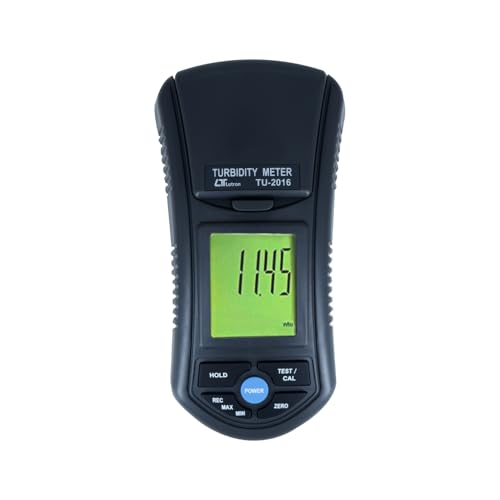
- 0.00 to 1,000 NTU range with auto-ranging
- Meets ISO 7027 and includes a factory certificate
- Data hold, max/min recall, and auto shutoff
Best For: field and lab testing with documented calibration and ISO 7027 alignment
High-Storage Multi-Unit Pick
Portable Turbidimeter Kit NTU1100
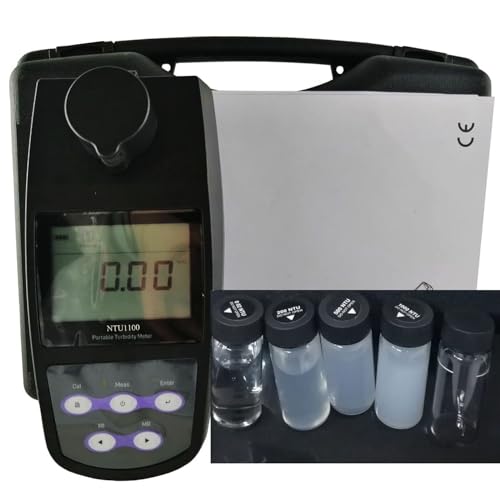
- 2 to 5 point calibration with Formazin standards
- Selectable NTU, FNU, EBC, and ASBC units
- Stores 100 data sets and transfers via USB
Best For: users who want multi-unit output and easy data storage
Portable Calibration Kit
ISO 7027 Portable Lab Turbidity Meter

- 0-1000 NTU range for broad water testing
- Includes calibration solutions and sample accessories
- Fast 4-point self-calibration for quick setup
Best For: Drinking water, environmental monitoring, and portable lab testing
EPA-Compliant Field Kit
EPA 180.1 Portable White Light Turbidimeter

- EPA 180.1 compliant with 90° light scattering
- Auto-ranging and 10-reading average mode
- Includes carry case, vials, and cleaning kit
Best For: Field and plant users needing a complete portable testing kit
Low-Range Precision Pick
ISO 7027 0-200NTU Handheld Turbidimeter

- 0-200 NTU range with 0.1 NTU resolution
- ISO 7027 compliant with Formazine reference solution
- Backlit LCD and dual power for flexible use
Best For: Low-range lab, water treatment, and beverage testing
Portable ISO 7027 Turbidity Pick – Apera TN400 Portable Turbidity Meter
If you need a laboratory turbidity meter that is straightforward to run and built around the ISO 7027 method, the Apera TN400 is a practical portable option. It combines an infrared sensor, a large TFT screen, and EPA-approved standard solutions to make routine measurement and calibration easier.
Best For: Lab teams and water testers who want a portable, ISO 7027-compliant meter with simple calibration.
Pros:
- Infrared sensor and ISO 7027 compliance for nephelometric 90° measurements
- Large TFT screen makes measurement and calibration easier to follow
- EPA-certified, non-toxic polymer standard solutions included for calibration
- Continuous measurement mode helps with repeatability checks and observation
Cons:
- Uses 4 AA batteries, so it is still a portable instrument rather than a bench unit
- Focuses on turbidity testing, so it is less feature-heavy than multi-parameter lab instruments
The TN400 is a good fit if your priority is a compact laboratory turbidity meter with familiar standards support and easy day-to-day operation. Its strengths are compliance, calibration convenience, and a clean interface rather than advanced data-management features.
Multi-Range Data Saver – AMT27 Digital Turbidity Meter
The AMT27 is a laboratory turbidity meter aimed at users who want broader range coverage and built-in data handling. With NTU, FNU, EBC, and ASBC readings, plus single and continuous modes, it suits testing workflows where flexibility and basic recordkeeping matter.
Best For: Lab and water-treatment users who need a handheld meter with multiple units, memory, and USB transfer.
Pros:
- Wide measurement ranges in NTU, FNU, EBC, and ASBC
- Stores up to 100 data sets in internal memory
- USB interface supports data transfer to a computer
- Single and continuous modes add flexibility for different tests
Cons:
- Handheld design may be less convenient than a bench-style setup for repetitive lab workflows
- Feature list is broad, but the product notes do not highlight ISO 7027 compliance
For buyers who care about range versatility and easy data capture, the AMT27 offers a useful mix of functions. It is especially appealing if you want a portable turbidity tester that can move from quick checks to more structured data collection.
Lab Calibration Workhorse – Bante TB200 Laboratory Turbidity Meter
The Bante TB200 is a more lab-focused laboratory turbidity meter built for calibration flexibility and data handling. It supports 2 to 7 point calibration, selectable turbidity units, and a TSS measurement mode, making it well suited to structured testing environments.
Best For: Labs that want a configurable turbidimeter with calibration depth and TSS support.
Pros:
- 2 to 7 point calibration supports a wide range of standards
- Selectable NTU, FNU, EBC, and ASBC units
- Selectable turbidity and total suspended solids measurement modes
- Stores up to 200 data sets and exports to PC via USB
Cons:
- Password protection and setup options add complexity that casual users may not need
- Larger feature set may be more than necessary for simple spot checks
If your lab needs more than a basic turbidity reading, the TB200 stands out for calibration depth and configurable workflows. It is a strong choice when repeatable methods, memory, and PC reporting are part of the job.
Field-Ready Water Quality Choice – Sper Scientific Turbidity Meter 860040
The Sper Scientific turbidity meter is positioned as a portable laboratory turbidity meter for both field and lab use. It meets ISO 7027 standards with the nephelometric method and includes useful accessories, making it a solid option when you want a simple, dependable water-quality tester.
Best For: Field and lab users who want an accurate, easy-to-use turbidity meter with a carry case.
Pros:
- ISO 7027-compliant nephelometric method for turbidity measurement
- Large LCD display with autoranging and min-max recall
- Automatic pushbutton 2-point self-calibration in under a minute
- Includes carry case, calibration solutions, sample cell bottles, and cleaning cloth
Cons:
- Uses 6 AAA batteries, so battery management is part of regular use
- Only 2-point calibration is mentioned, which may feel limited for advanced lab workflows
This model makes sense if you want a practical, portable unit that covers the essentials well. Its standout strengths are compliance, ease of calibration, and a complete accessory package for getting started quickly.
Portable Calibration-Focused Pick – Bante TB100 Portable Turbidity Meter
If you want a laboratory turbidity meter that also works well in the field, the Bante TB100 focuses on flexible calibration and data handling. It supports 2 to 5 point calibration with 0.02, 10, 200, 500, and 1000 NTU standards, plus selectable NTU, FNU, EBC, and ASBC units for different reporting needs.
Best For: Users who need a portable turbidimeter with multi-point calibration, multiple unit options, and onboard storage.
Pros:
- 2 to 5 point calibration with included turbidity standards
- Selectable NTU, FNU, EBC, and ASBC measurement units
- Stores up to 100 data sets for later review
- USB interface supports data transfer or power adapter use
Cons:
- No accuracy or response-time specs are provided in the supplied notes
- Best suited to users who need a more configurable meter rather than a basic readout
The TB100 is a strong fit if calibration flexibility and data management matter more than a stripped-down design. Its setup options, memory, and USB connectivity make it practical for repeat testing workflows.
ISO 7027 Field-and-Lab Option – Digital Scientific TU-2016 Turbidity Meter
This laboratory turbidity meter is built for users who want a straightforward nephelometer with published operating specs and factory documentation. The TU-2016 covers 0.00 to 50.00 NTU and 50 to 1,000 NTU with auto-ranging, uses an 850 nm LED light source, and meets ISO 7027 according to the supplied notes.
Best For: Field and lab users who want a compact turbidity meter with a factory calibration certificate and clear measurement specifications.
Pros:
- Measures 0.00 to 50.00 NTU and 50 to 1,000 NTU with auto range
- Meets ISO 7027 and includes a factory calibration certificate
- Supplied with 0 NTU and 10 NTU standards, empty bottle, and hard case
- Data hold, max/min recall, and auto shutoff add usability
Cons:
- Only NTU is listed, so it is less flexible than multi-unit meters
- Calibration and storage features are more limited than some competing models
For buyers who care about documented compliance and a defined measurement range, the TU-2016 is a practical choice. It looks especially useful for routine water quality checks in municipal, food, and environmental settings.
High-Storage Multi-Unit Pick – Portable Turbidimeter Kit NTU1100
If you need a laboratory turbidity meter with broad unit coverage and simple transfer options, this portable kit is built around practical workflow features. It supports 2 to 5 point calibration using Formazin standards, selectable NTU, FNU, EBC, and ASBC units, and measurement modes for single readings or continuous testing.
Best For: Labs or field users who want a portable turbidimeter with multi-unit output, storage, and USB data transfer.
Pros:
- 2 to 5 point push-button calibration with Formazin standards
- Selectable NTU, FNU, EBC, and ASBC measurement units
- Stores and recalls up to 100 data sets
- USB interface plus battery, adapter, or USB power options
Cons:
- Range is listed in multiple unit formats, which may be more detail than some users need
- No explicit accuracy figure is provided in the supplied notes
This kit is a solid fit when you want a flexible turbidity tester that can handle calibration, storage, and connectivity without much setup hassle. The included carrying case and multi-mode power scheme make it convenient for repeated testing sessions.
Portable Calibration Kit – ISO 7027 Portable Lab Turbidity Meter
If you need a laboratory turbidity meter that can move from benchtop work to field sampling, this portable unit is built for practical water quality testing. It covers a wide 0-1000 NTU range, follows ISO 7027 nephelometric measurement, and includes the calibration solutions and accessories needed to get started quickly.
Best For: Drinking water testing, environmental monitoring, and lab teams that want a portable, calibration-ready meter.
Pros:
- 0-1000 NTU range with ISO 7027-compliant nephelometric measurement
- Includes calibration solutions for 0, 20, 100, and 1000 NTU
- Portable design for both field sampling and benchtop analysis
- Automatic 4-point self-calibration can be completed in under a minute
Cons:
- Higher range than low-turbidity-only meters, so it may be more tool than some routine lab users need
- Best suited to users who want a handheld workflow rather than a full benchtop instrument
This is a strong fit if your workflow values fast setup, standard calibration, and portability in one laboratory turbidity meter. It looks especially useful for teams that split time between controlled testing and on-site measurements.
EPA-Compliant Field Kit – EPA 180.1 Portable White Light Turbidimeter
This laboratory turbidity meter is aimed at users who want standardized measurement plus a full kit for field or plant work. It measures 0-1000 NTU with auto-ranging, uses 90° light scattering, and adds a large TFT screen plus long battery life for easier day-to-day use.
Best For: Field technicians, plant operators, and labs that want an EPA 180.1 compliant portable meter with a complete kit.
Pros:
- EPA 180.1 compliant with 90° light scattering measurement
- Auto-ranging covers 0.01-19.99, 20.0-99.9, and 100-1000 NTU
- Average measurement mode takes 10 readings and calculates the mean
- Includes calibration solutions, sample vials, cleaning kit, and carry case
Cons:
- Larger and heavier than simpler handheld options
- Calibration range is listed as 0-800 NTU, which may feel limiting for some buyers compared with the 0-1000 NTU measurement range
Overall, this is a well-rounded choice if you want a laboratory turbidity meter that emphasizes standardized output, guided operation, and a ready-to-use accessory set. The combination of auto-ranging and averaged readings should help in settings where consistency matters.
Low-Range Precision Pick – ISO 7027 0-200NTU Handheld Turbidimeter
If your work focuses on lower-range water clarity checks, this laboratory turbidity meter keeps the setup simple while still aiming for lab-grade accuracy. It is ISO 7027 compliant, offers 0.1 NTU resolution, and includes calibration solution support for common testing workflows in labs and treatment facilities.
Best For: Users who need a compact, low-range turbidity meter for laboratory, water treatment, or beverage testing.
Pros:
- 0-200 NTU range with 0.1 NTU resolution for fine low-range readings
- ISO 7027 compliance with Formazine reference solution
- Backlit LCD helps reduce glare during indoor or outdoor use
- Dual power support adds flexibility for field and lab operation
Cons:
- Lower maximum range than 0-1000 NTU models
- Not as feature-rich for large-kits or extended averaging workflows
This model makes sense when you care more about precision at the low end than about broad range coverage. It is a practical laboratory turbidity meter for users who want a handheld instrument with straightforward operation and dependable readability.
How We Picked the Best Laboratory Turbidity Meter
We prioritized Laboratory Turbidity Meter models that offer dependable accuracy, clear unit support, and practical calibration options. Compliance matters too, so we looked for meters aligned with common standards such as ISO 7027 and EPA methods where applicable. We also favored products with usable range coverage, portable designs, and kits that include calibration solutions for easier setup.
Quick Comparison
In general, choose a narrower-range meter for routine potable-water checks and a wider-range model if you test wastewater, process water, or samples that can vary a lot. If your lab reports in NTU, FNU, EBC, or ASBC, make sure the meter supports the unit you need before buying. Portable meters are often best for mixed field-and-lab use, while dedicated lab-style units are better when repeatability and workflow control matter more.
Key Buying Factors for a Laboratory Turbidity Meter
Measurement Standard and Light Source
Confirm whether the instrument uses infrared sensing, white light, or another method. ISO 7027-compliant models are commonly preferred for consistent turbidity testing, while EPA-compliant meters may be a better fit for certain drinking-water and regulatory workflows.
Range, Resolution, and Units
Choose a range that matches your samples. A 0–200 NTU meter can be ideal for cleaner water, but higher-range units are more practical for industrial or wastewater applications. Also check whether the meter displays the exact units your lab records, such as NTU/FNU, EBC, or ASBC.
Calibration and Verification
Good calibration support is essential for reliable results. Look for multi-point calibration, included standards, and easy verification steps. If you test frequently, a meter with simple calibration routines will save time and reduce operator error.
Portability and Workflow Fit
If you need to move between bench and field, a handheld Laboratory Turbidity Meter with a solid case and battery power is practical. For fixed lab use, prioritize readability, stability, and how well the meter fits your sample handling process.
Who Should Buy Which Laboratory Turbidity Meter?
Buy a portable ISO 7027 model if you need flexible water-quality checks in both lab and field settings. Choose an EPA-compliant turbidity meter if regulatory alignment is your top concern. Pick a high-range, multi-unit meter for wastewater or process samples. If your work involves routine QC and repeat testing, a meter with stronger calibration options and clearer documentation support will usually deliver the best long-term value.