Choosing the right chemical resistant vacuum pump can make a big difference in lab safety, pump life, and day-to-day workflow. The best options help reduce contamination, handle solvent exposure better, and keep your filtration or distillation setup running smoothly.
In this roundup, we focus on practical picks for laboratory use, with an eye on resistance materials, airflow, vacuum depth, and overall value.
Best 10 Chemical Resistant Vacuum Pump Picks for 2026
Lafil 300C Chemical Resistant Vacuum Pump

- PTFE-coated diaphragm chamber for broad corrosion resistance
- Oil-free, maintenance-free diaphragm design
- Compact filtration-unit format with thermal protection
Best For: Solvent purification, SPE, and vacuum filtration
Company TLD3000 Chemical Resistant Diaphragm Pump

- Economical chemical resistant diaphragm pump
- Listed for filtration, desiccation, drying, and fume suction
- Simple option for standard lab and pilot workflows
Best For: General-purpose lab and pilot applications
Rocker 410C Chemical Resistant Vacuum Pump
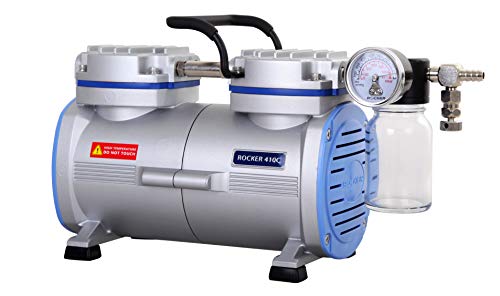
- PTFE-coated, chemical resistant oil-free design
- Quiet, low-vibration operation with thermal protection
- Suited to solvent purification, gel drying, and filtration
Best For: Quieter oil-free lab use with solvent-facing tasks
Rocker 900C PTFE Chemical Resistant Vacuum Pump

- PTFE-coated head for milder solvent vapor resistance
- 100-hour nonstop work test for durability
- Overheat protection and vibration-reducing pad
Best For: Longer runtime setups needing durability and low noise
Huanyu Oilless Diaphragm Vacuum Pump 30L/min

- Oil-free operation helps reduce contamination
- Compact design is easy to move and store
- Cooling and temperature protection aid continuous use
Best For: general laboratory filtration and extraction
Rocker 300C PTFE Diaphragm Pump

- PTFE diaphragm offers good chemical resistance
- Quiet, low-vibration, maintenance-free operation
- Includes inlet trap, gauge, and pressure regulator
Best For: solvent purification and vacuum filtration
Huanyu Oilless Diaphragm Vacuum Pump GM-0.5BF

- PTFE gas-contact parts resist acids and alkalis
- Oil-free design supports clean operation
- Double-pump build suits corrosive environments
Best For: corrosive chemical, pharma, and petrochemical work
Rocker Chemker 300 Diaphragm Pump

- PTFE chemical-resistant, oil-free design
- 20 L/min flow with 105 mbar vacuum
- Quiet operation with thermal protection
Best For: Small labs and benchtop workflows
Huanyu 30L/min Double Pump

- PTFE gas-contact parts resist strong acids and alkalis
- 30 L/min flow with double-pump setup
- Automatic cooling and thermal protection for continuous use
Best For: Frequent filtration, distillation, and extraction
Rocker 400C PTFE Pump
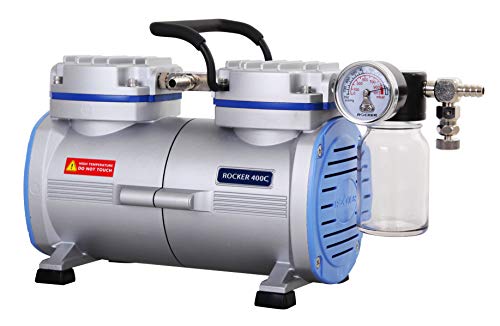
- PTFE oilless design with chemical resistance
- 34 L/min flow for stronger throughput
- Quiet, low-vibration operation with thermal protection
Best For: Labs wanting more flow than entry-level pumps
Budget Lab-Ready Choice – Lafil 300C Chemical Resistant Vacuum Pump
If you need a chemical resistant vacuum pump for routine lab work, the Lafil 300C is built around PTFE-coated diaphragm chambers for broad corrosion resistance in common solvent-facing tasks. Its compact, oil-free design keeps bench setup simple and helps avoid lubricant-related contamination.
Best For: Solvent purification, SPE, and vacuum filtration setups where a compact, low-maintenance pump is preferred.
Pros:
- PTFE-coated diaphragm chamber offers good resistance to a wide range of corrosive gases.
- Oil-free diaphragm operation means no oil pollution and no regular oil changes.
- Built-in thermal protection can shut the pump off if it overheats.
- Compact filtration-unit design saves bench space and includes a fence-like bottle platform.
Cons:
- Not intended for strong acid or alkali exposure.
- Specific performance details are limited beyond the listed 23 LPM and 99 mbar specs.
Overall, the Lafil 300C is a practical pick if you want chemical resistance, simple upkeep, and a space-saving footprint for standard lab filtration and purification work.
Economical General-Purpose Option – Company TLD3000 Chemical Resistant Diaphragm Pump
The Company TLD3000 is a chemical resistant vacuum pump aimed at everyday pilot and lab tasks where you want an economical diaphragm design. Its listed applications cover common uses like vacuum filtration, desiccation, microbiology, vacuum drying, and fume suction.
Best For: Labs and pilot setups that need a basic chemical resistant diaphragm pump for multiple standard applications.
Pros:
- Designed as an economical chemical resistant diaphragm vacuum pump.
- Suitable for several common workflows, including filtration and vacuum drying.
- Also listed for microbiology and fume suction applications.
Cons:
- Supplied notes do not list detailed flow, pressure, or materials specifications.
- Fewer feature details are provided than on more fully specified models.
In practice, the TLD3000 makes sense when you want a straightforward chemical resistant pump for general lab use and do not need a heavily featured spec sheet.
Quiet Mid-Range Performer – Rocker 410C Chemical Resistant Vacuum Pump
Rocker 410C Diaphragm Oilless Vacuum Pump, PTFE, Chemical Resistant, 25 mbar, 23 LPM, 1750 RPM, 110V
Check Price On AmazonThe Rocker 410C is a chemical resistant vacuum pump built for lab users who want oil-free operation with quieter handling. With a PTFE-coated, chemical resistant style and listed low-vibration, automatic shut-off features, it fits solvent-facing tasks where steadier day-to-day use matters.
Best For: Solvent purification, gel drying, vacuum desiccation, and vacuum filtration in a quieter oil-free setup.
Pros:
- PTFE-coated, chemical resistant construction supports solvent-related work.
- Oil-free design avoids air pollution and regular maintenance.
- Quiet and low-vibration operation is specifically called out.
- Thermal protection adds automatic shut-off for overheating protection.
Cons:
- IP 30 protection is modest compared with more sealed industrial designs.
- Not positioned for heavy-duty corrosive exposure beyond general chemical resistance.
If you want a balanced chemical resistant vacuum pump with better comfort features, the 410C stands out for its oil-free, low-noise operation and lab-friendly application range.
Durability-Focused Upgrade – Rocker 900C PTFE Chemical Resistant Vacuum Pump
The Rocker 900C is a PTFE-coated chemical resistant vacuum pump aimed at users who want a tougher-feeling option for milder solvent vapor work. Its listed 100-hour nonstop test, overheat protection, and vibration-proof pad point to a design centered on durability and steadier operation.
Best For: Longer runtime lab setups handling milder solvent vapor with an emphasis on durability and noise control.
Pros:
- PTFE-coated pump head provides good resistance to milder solvent vapor.
- 100-hour nonstop work testing highlights durability.
- Auto shut-off helps protect the pump from overheating.
- Vibration-proof pad helps absorb vibration and reduce noise.
Cons:
- Resistance is described for milder solvent vapor, not the most aggressive chemistries.
- Notes do not provide flow or pressure specifications.
For buyers who care most about sustained operation and basic chemical resistance, the 900C is a sensible upgrade path with a durability-first design.
Lab-Friendly Oil-Free Option – Huanyu Oilless Diaphragm Vacuum Pump 30L/min
If you need a chemical resistant vacuum pump for routine lab tasks, this Huanyu oil-free diaphragm model is built to keep operation clean and simple. It avoids working medium contamination, uses corrosion-resistant rubber diaphragms, and is suited to vacuum filtering, distillation, solvent filtration, and degassing.
Best For: laboratories that want a compact, oil-free pump for general filtration and extraction work.
Pros:
- Oil-free design helps prevent pollution and contamination
- Corrosion-resistant diaphragms improve durability
- Compact, lightweight build saves bench space
- Temperature protector and cooling system support long operation
Cons:
- Standard design is not the most corrosion-focused option in the lineup
- Single-pump setup may be less robust for harsher chemical exposure
For everyday lab use, this pump offers a practical balance of clean operation, portability, and continuous-duty features. It makes the most sense when you want a straightforward chemical resistant vacuum pump for common lab workflows rather than specialized corrosive service.
Quiet Chemical-Resistant Pick – Rocker 300C PTFE Diaphragm Pump
The Rocker 300C is a chemical resistant vacuum pump aimed at lab users who want cleaner operation and lower noise. Its PTFE diaphragm construction, quiet performance, and included inlet trap, gauge, and pressure regulator make it a useful fit for solvent purification, SPE, and vacuum filtration.
Best For: labs that want a low-maintenance, low-vibration pump for solvent work and filtration.
Pros:
- PTFE diaphragm provides good chemical resistance
- Quiet, low-vibration operation is better for shared spaces
- Maintenance-free design reduces upkeep
- Includes inlet trap, vacuum gauge, and pressure regulator
Cons:
- Designed for laboratory applications, not heavy industrial service
- Smaller 5.7-pound unit may not suit higher-capacity needs
This model stands out if your priority is a cleaner, quieter bench setup with useful accessories already included. Among chemical resistant vacuum pump choices, it is a strong fit for users who value convenience and controlled vacuum performance.
Most Corrosion-Resistant Build – Huanyu Oilless Diaphragm Vacuum Pump GM-0.5BF
If corrosion resistance is your top concern, this Huanyu double-pump model is the most specialized chemical resistant vacuum pump in the group. The gas-contact parts are made of PTFE for strong resistance to acids and alkalis, while the oil-free design and cooling protection support clean, continuous lab operation.
Best For: corrosive lab, chemical, pharmaceutical, and petrochemical applications.
Pros:
- PTFE gas-contact parts are designed for strong acid and alkali resistance
- Oil-free operation avoids contamination
- Double-pump build adds a more specialized corrosive-use design
- Temperature protection and cooling support 24-hour operation
Cons:
- Heavier and larger than the single-pump Huanyu model
- May be more pump than needed for simple, non-corrosive tasks
This is the best fit if you need the most corrosion-focused construction and expect exposure to aggressive gases or chemicals. For demanding lab environments, it offers the strongest materials story in this chemical resistant vacuum pump roundup.
Lab-Ready Compact Pick – Rocker Chemker 300 Diaphragm Pump
If you need a chemical resistant vacuum pump for smaller lab tasks, the Rocker Chemker 300 is built around a PTFE, oil-free diaphragm design that helps avoid air pollution and routine oil changes. With a 20 L/min max flow and 105 mbar vacuum level, it fits practical jobs like solvent purification, gel drying, rotary evaporation, and vacuum filtration.
Best For: Small labs and benchtop workflows that need corrosion resistance, low maintenance, and quieter operation.
Pros:
- PTFE, chemical-resistant construction for corrosive use
- Oil-free design with no air pollution and less upkeep
- Quiet, low-vibration operation with built-in thermal protection
- Compact 110V unit rated at 20 L/min
Cons:
- Lower flow than larger two-pump alternatives
- Best suited to smaller-scale lab applications
Overall, this is a straightforward choice if you want a dependable chemical resistant vacuum pump for routine laboratory work without the maintenance burden of an oil system.
High-Flow Lab Workhorse – Huanyu 30L/min Double Pump
The Huanyu Oilless Diaphragm Vacuum Pump is a chemical resistant vacuum pump designed for labs that need more flow and broad compatibility with corrosive work. Its PTFE gas-contact parts, oilless operation, and 30 L/min output make it a strong fit for vacuum filtration, extraction, distillation, solvent filtration, solid-phase extraction, degassing, and related tasks.
Best For: Labs that want higher flow and corrosion resistance for frequent filtration, distillation, and extraction work.
Pros:
- PTFE parts in contact with gas for strong acid and alkali resistance
- Oilless, no-pollution design for cleaner lab operation
- 30 L/min output with a double-pump configuration
- Temperature protection and automatic cooling for 24-hour operation
Cons:
- Heavier than compact benchtop pumps at 18.16 lb
- Larger footprint may take more lab space
For users who need a chemical resistant vacuum pump with more capacity than a compact single-unit model, this Huanyu option offers a useful mix of flow, corrosion resistance, and continuous-operation features.
Balanced Mid-Range Choice – Rocker 400C PTFE Pump
The Rocker 400C is a chemical resistant vacuum pump aimed at users who want a practical middle ground between compact size and stronger throughput. Its PTFE oilless diaphragm design, 34 L/min air flow, and 99 mbar maximum pressure make it suitable for solvent purification, gel drying, vacuum desiccation, and vacuum filtration.
Best For: Labs that want a quiet, maintenance-free pump with more flow than entry-level models.
Pros:
- Chemical-resistant PTFE diaphragm construction
- Oil-free, maintenance-free operation with no air pollution
- 34 L/min air flow for stronger throughput
- Quiet, low-vibration design with thermal protection
Cons:
- Still limited to 99 mbar maximum pressure
- Not the smallest or lightest option in the group
If you need a chemical resistant vacuum pump that can handle common lab vacuum tasks while staying quiet and oil-free, the Rocker 400C is a solid all-around pick.
How We Picked the Best Chemical Resistant Vacuum Pump
We prioritized pumps that are built for chemical exposure, including PTFE-coated or PTFE diaphragm designs, since those materials are commonly used to improve resistance to corrosive vapors and solvent contact. We also looked at vacuum performance, airflow, motor protection, and suitability for common lab tasks like filtration, extraction, and distillation.
Because buyers often need a Chemical Resistant Vacuum Pump for demanding day-to-day use, we favored oil-free designs, which are cleaner to maintain and better suited to laboratory environments.
Quick Comparison
At a high level, the main differences across these 10 picks come down to vacuum strength, flow rate, and chemical-handling design. Higher LPM models are generally better for faster filtration and larger setups, while deeper vacuum ratings are more useful when your process needs stronger pull.
PTFE-coated and diaphragm-based units tend to be the safest starting point for users who want better chemical resistance without moving to more specialized industrial equipment.
Key Buying Factors for a Chemical Resistant Vacuum Pump
Chemical Resistance Materials
Look for PTFE, PTFE-coated parts, or other chemically resistant wetted components. These materials are a major advantage when working with aggressive solvents or vapor-heavy processes.
Vacuum Level and Flow Rate
Match the pump to your application. Higher airflow helps speed up filtration, while stronger vacuum is often more important for evaporation, degassing, or distillation. A balanced specification is usually best for mixed lab use.
Oil-Free Vs. Oiled Designs
Most lab buyers will prefer an oil-free Chemical Resistant Vacuum Pump because it reduces maintenance and avoids oil contamination in sensitive workflows. That said, you should still confirm whether the pump is intended for continuous duty or intermittent use.
Voltage, Noise, and Protection Features
Check the power requirements before buying, especially if you are matching an existing bench setup. Thermal protection can be a useful safeguard, and lower-noise operation may matter in shared lab spaces.
Who Should Buy Which Chemical Resistant Vacuum Pump?
If you need a dependable general-purpose unit for filtration or routine solvent handling, choose a mid-range PTFE diaphragm model with solid airflow and a practical vacuum rating. Users doing more demanding extraction or distillation work should lean toward stronger-performing pumps with better chemical exposure resistance.
If your priority is easy maintenance and clean operation, oil-free models are the smartest choice. If you are trying to maximize throughput, focus on higher LPM specifications; if you need stronger process vacuum, prioritize deeper pressure ratings instead. The best Chemical Resistant Vacuum Pump is the one that matches your chemistry, workload, and setup, not just the highest spec on paper.