3D printing can release ultrafine particles, odors, and volatile organic compounds, especially when working with resin or enclosed filament printers. The right air purifier can help reduce airborne contaminants at the source or throughout your workspace.
We’ve selected 10 options for different hobbyist setups, from compact carbon filters and machine-specific purifiers to HEPA systems and printer enclosures. Use the guide below to compare filtration, compatibility, noise, maintenance, and value before buying.
Best 10 3d Printer Air Purifiers for Hobbyists Picks for 2026
Best Overall for Enclosed Printers
Purpose-Built HEPA H13 Filter System

- Three-stage filtration for particles, fumes, and odors
- Up to 60 m³/h airflow
- Default fit for Bambu Lab P1S and X1C
Best For: Enclosed filament-printer users needing broad filtration
Best for Resin Printer Workspaces

- VOC sensor with filter-change reminder
- 35 dB operation and 6W power draw
- Activated carbon filter for compatible resin printers
Best For: ELEGOO resin-printer users seeking quiet VOC-focused filtration
Best Compact Option
ANYCUBIC Mini Purifier Two-Pack
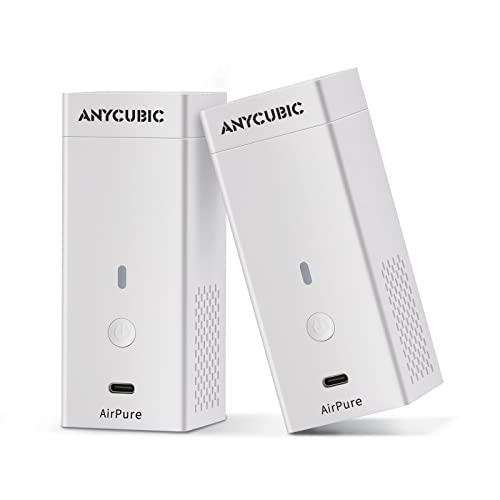
- Ultracompact design for printer-side placement
- High-density carbon targets resin odors
- Two replaceable-filter units included
Best For: Space-conscious resin-printing hobbyists
Best High-Capacity Choice
BD-60B Multi-Stage Air Purifier

- Four-stage HEPA and carbon filtration
- Stepless speed control for airflow adjustment
- Includes hose, hoods, and five pre-filters
Best For: Compatible enclosed Bambu Lab and ELEGOO printers
Best for Easy Setup

- Four-layer HEPA and 500 g activated carbon filtration
- Supports at-source and area purification
- Compact, quiet, and includes filter-life monitoring
Best For: Desktop hobbyists using compatible Creality printers
Best Resin-Printer Extractor

- HEPA plus 4.4 pounds of activated carbon
- Includes extractor, hose, connectors, and power supply
- Stepless airflow control for supported resin printers
Best For: ELEGOO and ANYCUBIC resin-printing setups
Best Integrated Enclosure Option

- Five-layer cartridge for PM0.3 and VOC filtration
- Monitors cartridge status and lifespan
- Designed for Snapmaker 2.0, Artisan, and Ray
Best For: Snapmaker owners with the required enclosure
Best All-Around Filtration

- Six-layer activated-carbon and HEPA filtration
- Works with resin and FDM printers
- Three speeds and 42 dB operation
Best For: Mixed resin and FDM printing setups
Best Enclosure System
BD-60A Printer Enclosure and Purifier
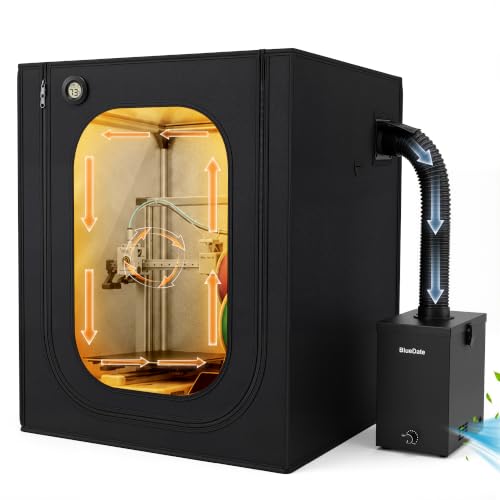
- Enclosure and smoke extraction in one system
- Multi-stage HEPA and activated-carbon filtration
- Adjustable speed with broad printer compatibility
Best For: Large or open-style printer setups needing containment
Best Quiet Resin Option
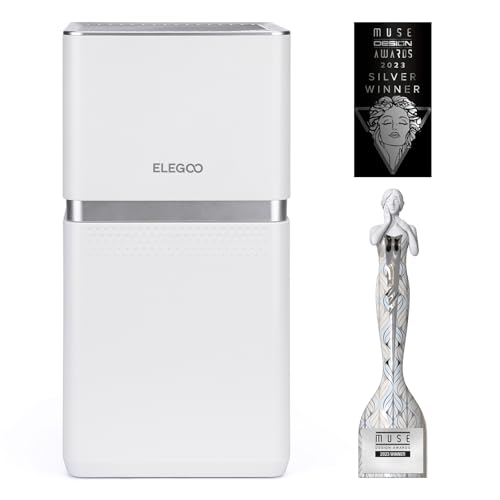
- Quiet 35 dB operation
- VOC and filter-life reminder system
- Designed for compatible ELEGOO resin printers
Best For: Quiet photocuring and resin-printing workspaces
Best Overall for Enclosed Printers – Purpose-Built HEPA H13 Filter System
For hobbyists comparing 3d printer air purifiers for hobbyists, this system stands out as a purpose-built option for enclosed filament printers. Its three-stage design combines a pre-filter, True HEPA H13 media, and chemically activated carbon to address particles, odors, and fumes from materials such as PLA, PETG, ABS, ASA, and Nylon.
Best For: Bambu Lab P1S and X1C owners who want dedicated particle and odor filtration with adaptable printer connections.
Pros:
- True HEPA H13 filtration is rated to capture more than 99.97% of ultrafine particles down to 0.3 µm.
- Activated carbon targets odors and fumes associated with ABS/ASA and Nylon printing.
- Provides airflow up to 60 m³/h while maintaining negative pressure inside the enclosure.
- Compact, quiet-minded design with tool-free, quick-swap filter modules.
Cons:
- The default connector is for Bambu Lab P1S and X1C; other printers may require adapter kits or printed connectors.
- It is designed around enclosed printers rather than general room air purification.
With its combination of HEPA and carbon filtration, this is the most comprehensive choice here for hobbyists focused on emissions from enclosed filament printing. Check connector requirements before ordering if you use a different printer platform.
Best for Resin Printer Workspaces – ELEGOO MARSMATE Air Purifier
Among 3d printer air purifiers for hobbyists, the ELEGOO MARSMATE is a resin-printing-focused option with a built-in VOC sensor and activated carbon filter. Its automatic fan modes and 35 dB noise rating make it practical for users who want quieter operation near compatible ELEGOO resin printers.
Best For: ELEGOO Mars, Saturn, and Jupiter resin-printer owners who prioritize low power use, quiet operation, and VOC reminders.
Pros:
- Designed specifically for the photocuring and resin-printing field.
- Built-in VOC sensor can monitor concentration and remind you when the filter needs replacement.
- Uses only 6 watts and is rated at 35 dB for quieter operation.
- Compatible with numerous ELEGOO models and other resin printers with an extension port.
Cons:
- Its filtration is based on activated carbon rather than a stated HEPA-and-carbon combination.
- The supplied filter lifespan is up to two months, so replacement may be relatively frequent.
- Its large 16.14-inch height may require more desk space than compact alternatives.
The MARSMATE is a sensible match for resin hobbyists who want a dedicated purifier with automatic VOC monitoring. Its compatibility depends on having the appropriate printer extension port, so verify your setup first.
Best Compact Option – ANYCUBIC Mini Purifier Two-Pack
For hobbyists seeking compact 3d printer air purifiers for hobbyists, the ANYCUBIC Mini Purifier is easy to place directly on or beside a printer. This two-pack uses high-density activated carbon to absorb resin odors and adds a small fan rated for low-noise circulation.
Best For: Resin-printing hobbyists who need lightweight, space-saving odor control for one or more LCD or DLP printers.
Pros:
- Very compact dimensions of approximately 4.5 x 1.8 x 1.8 inches.
- High-density activated carbon filter is designed to absorb resin odors.
- Fan operates at up to 5,000 rpm with a stated noise level of 40 dB or less in the product description.
- Two units are included, and filters are replaceable.
Cons:
- Activated carbon filtration is primarily aimed at odors; the supplied notes do not describe a full HEPA particle-filtration system.
- The small design is intended for localized printer use rather than broad room purification.
- Battery-powered operation requires monitoring charge or power availability.
This is a convenient low-footprint choice when desk space is limited or when you want one purifier per printer. Choose it for localized resin odor control, not as a substitute for room ventilation or a larger particulate-focused system.
Best High-Capacity Choice – BD-60B Multi-Stage Air Purifier
For hobbyists comparing 3d printer air purifiers for hobbyists across Bambu Lab and ELEGOO machines, the BD-60B offers a more substantial four-stage setup. Its pre-filter, HEPA, activated carbon, second HEPA stage, and second carbon stage are designed to capture particles and odors from materials including PET, PETG, ABS, PC, and PP.
Best For: Users with compatible enclosed Bambu Lab or ELEGOO printers who want adjustable airflow and multi-stage filtration in a metal-cased unit.
Pros:
- Four-stage filtration combines pre-filter, HEPA, and dual activated-carbon stages.
- Rated to capture 99.97% of particles as small as 0.3 micron, according to the supplied product details.
- Stepless speed control lets users adjust airflow and noise for different printer models.
- Includes a smoke pipe, pipe joint, magnetic suction hoods, power supply, and five pre-filters.
Cons:
- Its 55 dB noise rating and 22-watt power draw are higher than the quieter compact options here.
- At about 10.6 pounds, it is less portable than mini purifiers.
- Bambu Lab P2S users need to print their own riser bracket for connection.
The BD-60B is a strong fit when filtration stages, adjustable airflow, and included connection hardware matter more than minimal size or noise. Confirm compatibility and bracket requirements before purchasing, particularly for the P2S.
Best for Easy Setup – Creality Ease Air Purifier
For hobbyists comparing 3d printer air purifiers for hobbyists, the Creality Ease is a compact option designed for both enclosed-printer extraction and general workspace purification. Its four-layer filtration, activated carbon, quiet operation, and smart features make it practical for a desktop or small workbench.
Best For: Hobbyists who want a small purifier for compatible Creality printers and flexible at-source or area filtration.
Pros:
- Four-layer HEPA filtration captures particles down to 0.3 micron, with 500 g of granular activated carbon for odors and VOCs.
- Supports ducted at-source purification or mesh-cover area purification.
- Compact design, three fan speeds, printer synchronization, and filter-life monitoring.
Cons:
- Smart synchronization is limited to compatible printer models.
- The supplied information does not specify the exact compatible models beyond the listed Creality series.
The Creality Ease stands out when limited desk space and quieter operation matter. Verify printer compatibility before buying, especially if you plan to use the automatic synchronization feature.
Best Resin-Printer Extractor – BD-60E Resin Air Purifier
Among 3d printer air purifiers for hobbyists, the BD-60E is aimed specifically at resin-printing setups. It combines a fume extractor, smoke pipe, HEPA filter, and substantial activated-carbon media, with adjustable airflow for supported ELEGOO and ANYCUBIC printers.
Best For: Resin-printing hobbyists using the listed ELEGOO, ANYCUBIC, or compatible printer models.
Pros:
- Uses HEPA filtration rated to capture 99.97% of harmful plastic particulate pollutants, according to the supplied product information.
- Includes 4.4 pounds of activated carbon for gaseous pollutants such as TVOCs.
- Includes the extractor, filter, pipe, connectors, power supply, and manual for a plug-and-play setup.
- Stepless speed adjustment supports different airflow and noise preferences.
Cons:
- At 55 dB and 10.6 pounds, it is less lightweight and quiet than some compact desktop options.
- Other printer models may require a separately printed exhaust-port adapter.
- Compatibility should be checked carefully against the listed printer models.
The BD-60E is the more specialized choice for resin users who want enclosed extraction and a complete accessory package. Its broad model list is useful, but adapter requirements make compatibility verification essential.
Best Integrated Enclosure Option – Snapmaker Air Purifier
For hobbyists looking at 3d printer air purifiers for hobbyists within a dedicated enclosure, the Snapmaker Air Purifier is a purpose-built match for selected Snapmaker machines. Its five-layer cartridge filters PM0.3 and VOCs, while cartridge-status monitoring helps track replacement needs.
Best For: Snapmaker 2.0, Artisan, or Ray owners who already use the required enclosure.
Pros:
- Five filter layers are consolidated into a tailor-made cartridge.
- Provides PM0.3 and VOC filtration, with 95.9% filtration efficiency for PM0.3 as supplied.
- Monitors filter-cartridge status and remaining lifespan.
Cons:
- Must be used with the enclosure for the Snapmaker 2.0, Artisan, or Ray PM.
- It is not presented as a universal purifier for other printer brands.
- The relatively tall 16.54-inch dimensions may require more vertical workspace.
The Snapmaker purifier makes the most sense as part of a supported Snapmaker enclosure system rather than as a standalone, general-purpose unit. Confirm that your printer and enclosure are among the listed compatible products.
Best All-Around Filtration – Phrozen Air Purifier Max
For hobbyists comparing 3d printer air purifiers for hobbyists, the Phrozen Air Purifier Max is a versatile standalone option for both resin and FDM setups. Its six-layer system combines activated carbon and HEPA filtration, while three fan modes let you balance odor control, airflow, and noise.
Best For: Hobbyists who use both resin and FDM printers and want a compact purifier with flexible speed settings.
Pros:
- Designed for both resin and FDM printing environments.
- Six-layer filtration includes activated carbon and HEPA components for dust, odors, VOCs, and fumes.
- Quiet 42 dB operation with Power, Balanced, and Quiet modes.
- Slide-out filter changes and a replacement reminder light simplify maintenance.
Cons:
- Its 17-inch height and 10 kg weight may require dedicated space beside a printer.
- The supplied details do not specify a replacement-filter cost.
The Air Purifier Max stands out when you want one purifier to support different printer types without adding an enclosure. Its three-speed control also makes it practical for both high-emission jobs and quieter overnight printing.
Best Enclosure System – BD-60A Printer Enclosure and Purifier
Among 3d printer air purifiers for hobbyists, the BD-60A takes a more comprehensive approach by combining a printer enclosure with smoke extraction. Its multi-stage filter setup, adjustable airflow, and fire-resistant construction are aimed at containing emissions around open-style and resin printers.
Best For: Hobbyists who need an enclosure, smoke extraction, and broad printer compatibility in one larger setup.
Pros:
- Combines an enclosure, smoke purifier, pipe, and extractor in one package.
- Multi-stage filtration uses pre-filters, HEPA, and activated carbon layers.
- Stepless speed control supports different airflow and noise preferences.
- Fire-resistant materials and a sturdy structure add practical safety features.
Cons:
- The 650 x 750 x 800 mm enclosure requires substantial workspace.
- At 55 dB, it is louder than the other listed purifiers.
- Its enclosure-focused design may be excessive if you already have printer containment.
The BD-60A is best viewed as a containment-and-filtration package rather than a small desktop purifier. Check the listed printer compatibility and available floor or workbench space before choosing it.
Best Quiet Resin Option – ELEGOO Marsmate Air Purifier
For resin-printing hobbyists seeking 3d printer air purifiers for hobbyists, the ELEGOO Marsmate emphasizes quiet operation and printer-specific compatibility. Its activated-carbon filter, two fan modes, and VOC-based replacement reminder make it a focused choice for photocuring workflows.
Best For: Resin users with compatible ELEGOO Mars, Saturn, or expansion-interface printers who prioritize low noise.
Pros:
- Operates at a quiet 35 dB.
- Two fan speeds support low-noise or higher-airflow operation, with automatic switching available.
- VOC monitoring and filter-life reminders help guide replacement timing.
- Large design is intended for photocuring printers and supports several ELEGOO series.
Cons:
- It uses activated-carbon filtration without a HEPA filter listed in the supplied details.
- Compatibility is most clearly specified for ELEGOO printers; other brands need an expansion interface.
- Its 16.14-inch height and 14-pound weight may be bulky for small work areas.
The Marsmate is a sensible pick when quiet resin printing is the priority and your printer matches its compatibility requirements. Its sensor-based reminders add convenience, but users seeking particulate-focused HEPA filtration may prefer another model.
How We Picked the Best 3d Printer Air Purifiers for Hobbyists
We focused on products designed specifically for 3D printing, prioritizing filtration type, printer compatibility, installation method, noise, size, and ongoing filter availability. The selection includes options for resin printers, enclosed FDM machines, open workspaces, and users who want source capture rather than room-wide purification.
We also considered practical features such as activated carbon quantity, HEPA filtration, automatic printer syncing, filter-life monitoring, enclosure integration, and stated coverage. Because manufacturer claims can vary, treat performance figures as comparisons within a product line rather than guarantees of complete removal.
Quick Comparison
Compact purifiers with activated carbon are convenient for resin printers and small enclosures, while HEPA-and-carbon systems offer broader particle and odor control. A printer-specific model is usually easiest to install, but a standalone or area purifier may be more flexible if you use multiple machines.
- Best for Bambu Lab owners: Choose a compatible P1S or X1C filter system with HEPA H13 and carbon filtration.
- Best for resin printing: Look for substantial activated carbon, quiet operation, and compatibility with your ELEGOO, Anycubic, or Phrozen printer.
- Best for broader workspace coverage: Consider a larger purifier or an enclosure with integrated air cleaning.
- Best for convenience: Smart-sync models and filter-life monitors reduce manual operation and maintenance guesswork.
Key Buying Factors for 3d Printer Air Purifiers for Hobbyists
Filtration and Contaminant Control
HEPA filtration is intended to capture fine particles, while activated carbon helps adsorb odors and some gaseous compounds. For resin printing, prioritize a purifier with meaningful carbon capacity rather than relying on a small dust filter alone. A layered system can be useful when you want both particle and odor reduction.
Compatibility and Placement
Check the exact printer model, enclosure dimensions, power connection, and mounting method. Internal purifiers are space-efficient, but an external unit may provide more airflow and easier filter replacement. Do not block printer vents or place a purifier where it interferes with moving components.
Noise, Airflow, and Maintenance
Quiet operation matters in bedrooms, offices, and shared hobby rooms. Compare stated decibel ratings, but remember that higher fan speeds are typically louder. Confirm replacement-filter availability and cost, and look for a filter-life indicator if you print frequently.
Safety and Ventilation
An air purifier is not a substitute for ventilation, safe resin handling, or following the printer and material manufacturer’s instructions. Use suitable gloves and eye protection for resin work, keep the printer properly enclosed when appropriate, and vent the room when possible.
Who Should Buy Which 3d Printer Air Purifiers for Hobbyists?
Occasional hobbyists can choose a compact, low-noise activated-carbon purifier that fits their printer or enclosure. Frequent resin users should favor stronger carbon filtration, dependable replacement filters, and an enclosure or source-capture setup. FDM users concerned about particles may prefer a HEPA-and-carbon system designed for an enclosed printer. Multi-printer households should consider a larger standalone unit or area purifier, while owners of a specific brand should start with a model designed for that printer’s dimensions and controls.