The best memory cards for Mac setups are fast, reliable readers that match your Mac’s ports and your camera’s card format. The right model can make photo, video, and file transfers simpler without requiring extra adapters.
These 10 options include Apple’s streamlined reader, versatile multi-card hubs, and USB-C models designed for Macs, iPads, iPhones, and other devices.
Best 10 Memory Cards for Mac Picks for 2026
Most Versatile
BENFEI 4-in-1 USB-C Card Reader

- Reads SD, microSD, Memory Stick, and CompactFlash
- Supports simultaneous access to four cards
- Works with USB-C and USB 3.0 ports
Best For: Photographers using multiple card formats
Best Apple Match

- Supports UHS-II SD card transfers
- Works with USB-C Macs, iPads, and iPhones
- Designed to leave nearby ports accessible
Best For: Apple users transferring from full-size SD cards
Best Expansion Value

- Supports SD and microSD card formats
- Adds a USB-A port for peripherals
- Includes a built-in USB-C cable
Best For: USB-C Mac users needing card access and expansion
Best Compact Dual-Slot
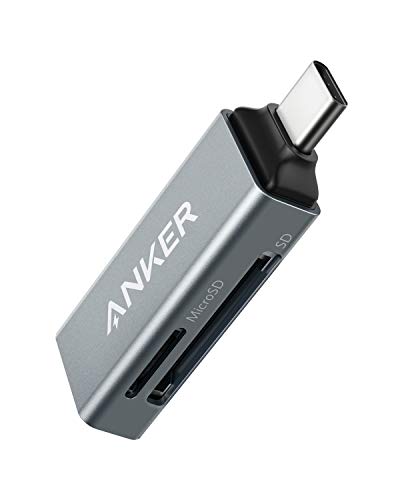
- Includes dedicated SD and microSD slots
- Compact USB-C design for laptops and phones
- Backed by an 18-month warranty
Best For: Portable SD and microSD transfers on MacBook
Best for Easy Setup
4-in-1 USB-C Memory Card Reader

- Reads CF, SD, TF, and MS cards
- Includes USB-C and USB-A connectivity
- Plug-and-play across macOS and other systems
Best For: Mac users with mixed card formats and ports
Fastest Transfers
Acer Dual-Slot USB-C Card Reader

- USB 3.0 transfer rate up to 5Gbps
- Reads SD and microSD simultaneously
- Includes USB-C and USB-A connectors
Best For: Photographers and editors transferring standard SD media
Best Apple Flexibility
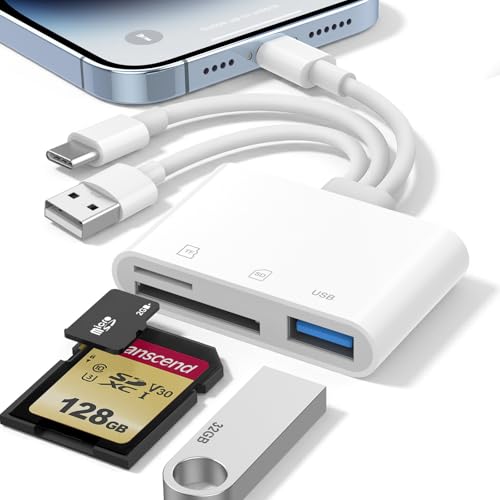
- Built-in Lightning, USB-C, and USB-A plugs
- MFi Certified for Apple device compatibility
- Supports SD and microSD cards up to 1TB
Best For: Apple users moving camera files across multiple device generations
Best Plug-and-Play Pick
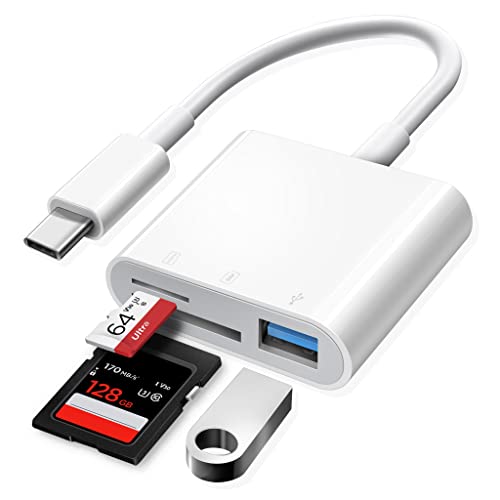
- SD and microSD support
- Built-in USB-C cable
- No driver or app required
Best For: Simple Mac photo and video transfers
Best Heavy-Duty Pick
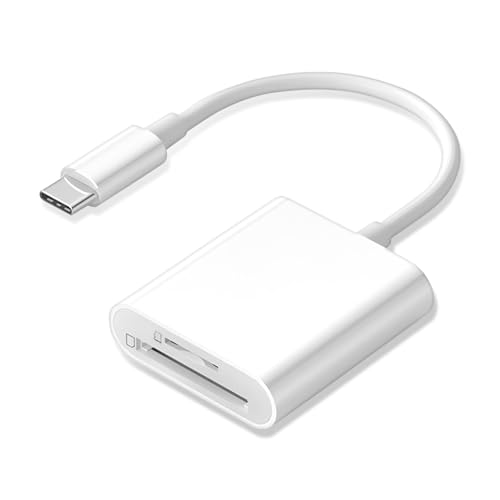
- Two dedicated card slots
- Bidirectional batch transfers
- Compact built-in USB-C cable
Best For: Mac users handling SD and microSD cards
Best High-Speed Versatility Pick

- SD, microSD, and USB 3.0 ports
- Advertised speeds up to 90M/s
- Three-port simultaneous access
Best For: Photographers needing flexible Mac connectivity
Most Versatile – BENFEI 4-in-1 USB-C Card Reader
If you need memory cards for Mac in several formats, the BENFEI 4-in-1 reader offers SD, microSD, Memory Stick, and CompactFlash support in one compact adapter. Its dual USB-C and USB 3.0 design works with newer MacBooks as well as computers with standard USB ports.
Best For: Photographers and Mac users who work with multiple card formats or need simultaneous access to up to four cards.
Pros:
- Supports SD, microSD, Memory Stick, and CompactFlash cards.
- USB-C and USB 3.0 connectivity provides broad computer compatibility.
- Can read and write four cards simultaneously.
- Includes an 18-month warranty.
Cons:
- Not compatible with standard Memory Stick, Memory Stick Micro, or CF Type I cards.
- Transfer performance depends on the card and USB port used.
The BENFEI is the most flexible choice here if your workflow includes more than standard SD cards. Its four-slot design adds convenience, though users with only SD media may prefer a smaller reader.
Best Apple Match – Apple USB-C to SD Card Reader
For straightforward memory cards for Mac support, Apple’s USB-C to SD Card Reader is a focused option for transferring photos and videos. It connects to USB-C-enabled Macs, iPads, and iPhones and supports high-resolution transfers at UHS-II speeds.
Best For: Mac, iPad, and iPhone users who primarily use full-size SD cards and want a simple Apple-branded reader.
Pros:
- Supports UHS-II SD card transfer speeds.
- Works with USB-C-enabled Mac, iPad, and iPhone devices.
- Backward compatible with other SD cards and adapters.
- Designed not to block nearby ports.
Cons:
- Focused on SD cards rather than offering multiple card slots.
- Requires a USB-C-enabled device.
This reader makes sense for Apple users who want a streamlined SD workflow without extra slots or expansion ports. It is less suitable if you regularly transfer from microSD, CompactFlash, or other card types.
Best Expansion Value – BnmxTek USB-C SD Card Reader
The BnmxTek is a practical choice for memory cards for Mac when you also want extra connectivity. It includes SD and microSD slots plus a USB-A expansion port, making it useful for moving photos, videos, and documents between a MacBook and other devices.
Best For: USB-C Mac users who need SD and microSD access alongside a port for USB peripherals.
Pros:
- Compatible with SD, SDHC, SDXC, microSD, microSDHC, and microSDXC cards.
- Includes a USB-A port for flash drives, hard drives, keyboards, and other peripherals.
- Plug-and-play support across macOS, Windows, Linux, Chrome OS, and iOS.
- Built-in USB-C cable saves space and avoids a separate cable.
Cons:
- Cannot read an SD card and microSD card simultaneously.
- Not compatible with Lightning-connector iPhones.
- Listed transfer rate is 54 MB/s.
BnmxTek offers more flexibility than a basic card reader because of its USB-A port and built-in cable. Its limitations around simultaneous card use and Lightning devices are important to check before buying.
Best Compact Dual-Slot – Anker USB-C SD Card Reader
The Anker PowerExpand is a compact option for memory cards for Mac, with separate standard SD and microSD slots in a small USB-C adapter. It is designed for convenient file syncing and sharing across USB-C laptops, phones, and other compatible devices.
Best For: MacBook users who want a small reader for both standard SD and microSD cards.
Pros:
- Provides separate SD and microSD slots.
- Compact design fits beside other USB-C peripherals.
- Compatible with a wide range of USB-C devices, including MacBook models.
- Includes an 18-month warranty.
Cons:
- You may need to remove a device case before use.
- Requires a USB-C port.
- Does not provide the extra USB-A expansion port found on some alternatives.
The Anker is a sensible everyday reader when portability matters more than extensive connectivity. Its dual-slot layout covers common SD and microSD workflows without adding much bulk.
Best for Easy Setup – 4-in-1 USB-C Memory Card Reader
For shoppers comparing memory cards for Mac accessories, this 4-in-1 reader is a flexible option for moving files between newer USB-C devices and older USB-A computers. It accepts CF, SD, TF, and MS cards and works with macOS alongside iOS, Android, and Windows devices.
Best For: Mac users who need support for several card formats and both USB-C and USB-A connections.
Pros:
- Supports CF, SD, microSD, and Memory Stick formats.
- Detachable USB-C-to-USB adapter adds compatibility with USB-A ports.
- Plug-and-play operation requires no driver, software, or network.
- Handles common photo formats, RAW files, and SD/HD video formats.
Cons:
- Listed transfer rate is 480Mbps, slower than the 5Gbps option in this roundup.
- Does not support Wi-Fi SD cards.
This reader stands out when your workflow includes legacy CF or Memory Stick media as well as standard SD cards. Its broad device support is useful, though users focused only on SD and microSD may prefer a faster, simpler reader.
Fastest Transfers – Acer Dual-Slot USB-C Card Reader
If speed is a priority when choosing memory cards for Mac workflows, this Acer reader offers USB 3.0 connectivity rated up to 5Gbps. Its SD and microSD slots can be used simultaneously, making it practical for photographers and editors managing multiple cards.
Best For: MacBook users who regularly transfer SD and microSD photos or videos and want dual-card convenience.
Pros:
- Supports data transfer speeds up to 5Gbps through USB 3.0.
- Reads and writes SD and microSD cards simultaneously.
- Provides both USB-C and USB-A connectors.
- Compact aluminum design includes protective port covers and an attached cord.
Cons:
- Does not support CF Express, XQD, MS, or Memory Stick cards.
- Not compatible with Lightning-port devices.
- Thick device cases may interfere with full insertion.
The Acer is a focused, high-speed choice for standard SD and microSD media. It lacks the broader format support of the 4-in-1 reader, but its dual-slot design and faster listed interface suit frequent Mac file transfers.
Best Apple Flexibility – 3-in-1 SD Reader for Mac
This 3-in-1 reader is designed for households using a mix of Mac, iPad, iPhone, and USB-A equipment. It combines Lightning, USB-C, and USB-A connectivity with SD and microSD support, giving users a convenient way to transfer camera files without extra cables or drivers.
Best For: Apple users who move photos and videos between Macs, iPhones, iPads, and older USB-A computers.
Pros:
- Built-in Lightning, USB-C, and USB-A connectors cover a wide range of devices.
- Apple MFi Certified and compatible with macOS and iOS devices.
- Supports SD, SDHC, SDXC, microSD, microSDHC, and microSDXC cards up to 1TB.
- Requires no app, driver, Wi-Fi, or separate cable for basic transfers.
Cons:
- Listed data transfer rate is 68Mbps.
- Supports SD and microSD formats but not CF or Memory Stick cards.
- FAT32 limits individual files to under 4GB.
This is the most convenient pick for Apple-heavy setups spanning both Lightning and USB-C generations. Its lower listed speed makes it less appealing for large, frequent transfers, but the integrated connectors reduce adapter clutter.
Best Plug-and-Play Pick – Oyuiasle USB-C SD Card Reader
If you need memory cards for Mac and other USB-C devices, the Oyuiasle reader provides a straightforward way to access SD and microSD files. Its built-in cable, two-way transfer, and plug-and-play design make it practical for moving photos and videos without extra software or power.
Best For: Mac users who want a compact reader for SD and microSD cards, plus occasional USB peripheral connectivity.
Pros:
- Supports SD and microSD cards with two-way file transfer.
- Built-in USB-C cable helps keep adjacent ports accessible.
- Works with macOS and requires no driver or third-party app.
Cons:
- SD and microSD cards cannot be read simultaneously.
- Listed transfer rate is 30 megabits per second.
This is a sensible basic choice for MacBook, iMac, and other USB-C setups when easy photo and video transfers matter more than maximum speed.
Best Heavy-Duty Pick – LBSC USB-C SD Card Reader
For memory cards for Mac, the LBSC USB-C reader offers dedicated SD and microSD slots in a compact design. It supports bidirectional transfers and batch uploads, making it useful for viewing, saving, and sharing camera files while traveling.
Best For: MacBook and Mac users who regularly switch between full-size SD and microSD cards.
Pros:
- Two slots support SD, SDHC, SDXC, microSD, and related formats.
- Supports transfers in both directions, including batch photo and video uploads.
- Plug-and-play compatibility with macOS, Windows, Linux, and Chrome.
Cons:
- Designed around USB-C devices with OTG support.
- The product notes do not specify simultaneous use of both card slots.
Its dual-slot layout and compact built-in cable make this a convenient everyday reader for Mac users handling cards from cameras, trail cameras, or mobile devices.
Best High-Speed Versatility Pick – SZHAIYIJIN USB-C Card Reader
If you want memory cards for Mac with broader connectivity, this SZHAIYIJIN reader combines SD and microSD slots with a USB 3.0 port. It is aimed at photographers and supports simultaneous access to up to three ports, along with advertised transfer speeds of up to 90M/s.
Best For: Photographers and MacBook or iPad Pro users who need card access plus a USB accessory port.
Pros:
- Includes SD and microSD slots plus a USB 3.0 port.
- Supports reading and writing to three ports simultaneously according to the product notes.
- Plug-and-play operation with macOS, Windows, Chrome, and Linux.
Cons:
- The listed up-to-90M/s speed depends on the device, card, and connection.
- Compatibility is centered on USB-C devices.
This is the most flexible option of the three for a Mac-based photography workflow, especially when you also need to connect a flash drive, camera, keyboard, or mouse.
How We Picked the Best Memory Cards for Mac
We focused on card readers that make transferring files to a Mac straightforward. The selection includes USB-C models for newer MacBook and iMac computers, readers with USB-A compatibility for older hardware, and multi-slot designs for people who work with several card formats.
We also considered practical details such as SD and microSD support, CF and Memory Stick compatibility, simultaneous card access, plug-and-play operation, portability, and compatibility with iPhone and iPad devices. Because actual transfer speeds depend on the card, host device, file type, and connection, advertised speed claims should be treated as a maximum rather than a guarantee.
Quick Comparison
- Best for Apple simplicity: Apple USB-C to SD Card Reader.
- Best for multiple formats: BENFEI 4-in-1 reader or another SD/microSD/CF/MS model.
- Best for USB-C versatility: BnmxTek, Anker, or acer dual-slot readers.
- Best for mixed-device households: A 3-in-1 reader with USB-C, Lightning, and USB-A connections.
- Best for basic SD and microSD transfers: A compact USB-C dual-slot reader.
Key Buying Factors for Memory Cards for Mac
Port Compatibility
Check your Mac before buying. Newer MacBook models typically use USB-C or Thunderbolt ports, while older Macs may have USB-A ports or a built-in SD slot. A USB-C reader is the simplest choice for current Macs, but an adapter or multi-connector reader can be more useful if you share files across older computers, phones, and tablets.
Card Formats
SD and microSD cover most cameras, drones, action cameras, and handheld devices. Choose a reader with CF support if you use professional camera equipment, and look for Memory Stick support only if you still rely on compatible Sony hardware. Dual-slot readers are convenient, but confirm whether they can read both cards simultaneously or only one at a time.
Speed and Reliability
For large RAW photo libraries and 4K video, prioritize USB 3.0 or faster connectivity and a reputable card-reader design. The reader cannot make a slow memory card faster, so pair it with a card whose rated speed suits your workflow. A short, durable connector and secure card slots also matter for frequent travel.
Device Support
If you plan to use the reader with an iPhone or iPad, verify the required connector and operating-system compatibility. Some models are designed primarily for USB-C devices, while 3-in-1 readers offer broader flexibility. Always check whether your phone or tablet can supply enough power for the connected card and accessories.
Who Should Buy Which Memory Cards for Mac?
Choose Apple’s reader if you want a compact, straightforward option for an SD card and prefer first-party compatibility. Choose a multi-format reader if your workflow includes CF, Memory Stick, SD, and microSD cards. Choose a dual-slot USB-C model for everyday camera and drone transfers with minimal bulk. Choose a multi-connector reader if you move files among a Mac, iPhone, iPad, and older USB-A equipment.
Before ordering, match the reader’s connector and supported card formats to your devices. That quick check is the best way to ensure your new memory card reader works immediately with your Mac and the cards you already own.