The best portable memory card readers make it easy to move photos, videos, and other files between cameras, phones, tablets, and computers. The right model can save time by offering fast USB 3.0 transfers, broad card compatibility, or convenient USB-C connectivity.
This roundup compares 10 options ranging from compact microSD adapters to multi-format readers with SD, CF, MS, USB-A, and USB-C support. Use the buying guide below to narrow the list based on your devices, cards, and workflow.
Best 10 Portable Memory Card Readers Picks for 2026
Most Versatile

- Reads SD, microSD, MS, and CF cards
- Four cards can be read simultaneously
- USB-C and USB 3.0 connectivity
Best For: Photographers using multiple card formats
Best for Travel

- Slim design for bags and laptop sleeves
- USB-C and USB-A interfaces
- Simultaneous SD and microSD access
Best For: Traveling photographers and content creators
Most Connected
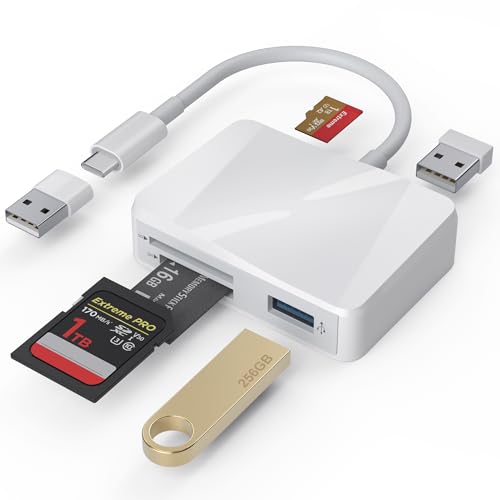
- Three card slots and two USB-A ports
- USB-C connection with detachable adapter
- Supports SD, microSD, and MS cards
Best For: Multi-device users needing card and USB connectivity
Best Dual-Slot Design

- Simultaneous SD and microSD transfers
- USB-C and USB 3.0 connectivity
- Protective covers and attached cord
Best For: SD and microSD camera-file transfers
Best for Easy Setup

- Supports CF, SD, TF, and MS cards
- Includes USB-C and USB connectivity
- Plug-and-play across major operating systems
Best For: Mixed card formats and cross-platform transfers
Fastest Transfers

- USB 3.0 transfers up to 5Gbps
- Reads SD and microSD simultaneously
- Includes USB-A and USB-C connectors
Best For: Fast SD and microSD file management
Best for Lightning iPhones
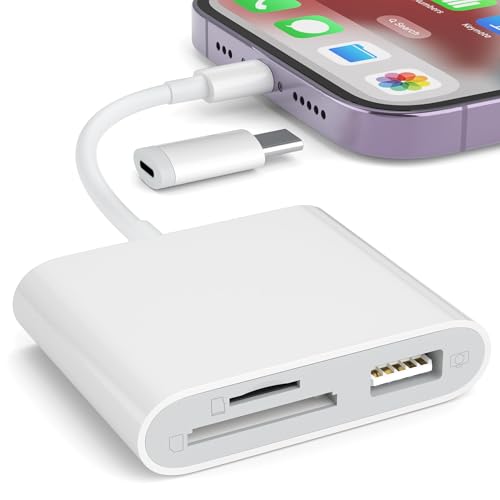
- Supports Lightning and USB-C devices
- Handles SD and microSD cards
- Enables two-way iOS transfers
Best For: iPhone and iPad photo imports
Best Compact USB-C Pick
Anker PowerExpand Dual-Slot Reader
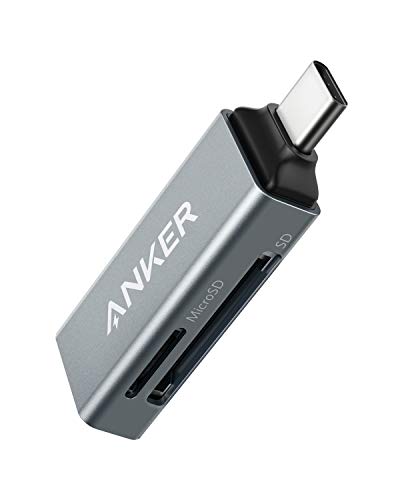
- Compact USB-C design
- SD and microSD dual slots
- 18-month warranty
Best For: USB-C users needing a small everyday card reader
Best iPhone and iPad Flexibility
SUNTRSI Dual-Connector Card Reader

- iPhone and USB-C connectors
- SD and microSD slots
- Plug-and-play file transfers
Best For: Apple users who also work with USB-C devices
Best High-Speed Multi-Device Pick

- USB-A and USB-C connectors
- Simultaneous SD/microSD transfers
- Keychain-friendly portable design
Best For: Creators managing large files across newer and older devices
Most Versatile – BENFEI 4-in-1 Card Reader
For shoppers comparing portable memory card readers, the BENFEI 4-in-1 stands out for broad card support and flexible connectivity. It accepts SD, microSD, MS, and CF cards, while its USB-C and USB 3.0 design works with newer and older computers and compatible mobile devices.
Best For: Photographers and creators who need to access several card formats from one compact reader.
Pros:
- Supports SD, microSD, MS, and CF cards.
- Can read and write four cards simultaneously.
- USB-C and USB 3.0 connectors improve device compatibility.
- Supports UHS-I transfer rates up to 160MB/sec, depending on the card and port.
Cons:
- Not compatible with standard Memory Stick, M2, or CF Type I cards.
- Older Windows and macOS versions may not support certain SDXC exFAT cards.
The BENFEI is a strong choice when card-format flexibility matters most. Its four-slot design is more capable than simpler SD and microSD readers, though buyers should verify their specific card type and device port.
Best for Travel – UGREEN USB-C and USB-A Reader
The UGREEN is one of the more travel-friendly portable memory card readers, combining a slim build with USB-C and USB-A connections. It supports SD and microSD formats, plug-and-play operation, and simultaneous access to both cards.
Best For: Photographers, videographers, and mobile users who want a compact reader for cameras, GoPros, laptops, and phones.
Pros:
- Dual USB-C and USB-A interfaces support a wide range of devices.
- Reads SD and microSD cards at the same time.
- Plug-and-play operation requires no drivers or extra power.
- USB 3.0 supports transfer speeds up to 5Gbps.
Cons:
- Supports SD and microSD formats but not the broader range of card types offered by some readers.
- Actual transfer speed depends on the card and connected device.
Choose the UGREEN when portability and everyday compatibility are higher priorities than maximum slot count. Its dual-interface design is especially convenient for switching between USB-C and USB-A devices.
Most Connected – 5-in-1 USB-C Card Adapter
This 5-in-1 adapter is designed for users who need more than basic card transfers. Among portable memory card readers, it offers SD, microSD, and MS slots plus two USB-A ports, with USB-C connectivity and a detachable USB-C-to-USB adapter for broader device support.
Best For: iPhone, iPad, MacBook, Android, and PC users who want card access alongside USB accessory connectivity.
Pros:
- Combines three card slots with two USB-A ports.
- Works with USB-C devices and older USB ports using the included adapter.
- Supports SD, microSD, and MS cards, including listed UHS-I and UHS-II compatibility.
- Plug-and-play design needs no driver installation or additional power.
Cons:
- The supplied details do not identify the complete operating-system specification.
- Actual transfer performance varies by card, device, and connection.
The adapter makes sense for a flexible workstation or mobile setup where USB peripherals and memory cards need to share one accessory. Its added ports provide more functionality, but the larger feature set may be unnecessary for shoppers who only transfer SD cards.
Best Dual-Slot Design – uni USB-C Card Reader
The uni USB-C reader keeps the focus on straightforward SD and microSD transfers. It is a practical option among portable memory card readers, with USB-C and USB 3.0 support, simultaneous two-card operation, protective covers, and a short attached cord for easier handling.
Best For: Camera, GoPro, dash-cam, and surveillance users who regularly move files from SD and microSD cards.
Pros:
- Reads and writes SD and microSD cards simultaneously.
- USB-C and USB 3.0 support speeds up transfers to compatible devices.
- Plug-and-play operation requires no driver or extra power.
- Protective covers help keep the slots shielded from dust and liquid.
Cons:
- Does not support Lightning devices, CF Express, XQD, SIM, or Memory Stick cards.
- It transfers card data but does not connect directly to a camera.
The uni is a sensible choice for users with standard SD and microSD workflows. Its dual-slot design and protective covers add convenience, while the format limitations make it less suitable for owners of specialized cards.
Best for Easy Setup – 4-in-1 USB-C Card Reader
For shoppers comparing portable memory card readers, this 4-in-1 model stands out for supporting CF, SD, TF, and MS cards in one compact unit. Its USB-C connector and included USB adapter make it useful across newer phones, tablets, computers, and older USB devices.
Best For: Users who need broad card-format support and flexible USB-C or USB connectivity.
Pros:
- Supports CF, SD, microSD/TF, and Memory Stick formats.
- Includes a detachable USB-C to USB adapter for broader device compatibility.
- Plug-and-play operation works across iOS, Android, Windows, and macOS devices.
- Supports common photo and video formats, including JPEG, RAW, H.264, and MPEG-4.
Cons:
- Its listed transfer rate is 480Mbps, below the 5Gbps rating of the Acer reader.
- It does not support Wi-Fi SD cards.
This is the most flexible choice of the three for mixed card collections, especially if CF or Memory Stick support matters. Choose it over a dual-slot reader when format coverage is more important than maximum transfer speed.
Fastest Transfers – Acer Dual-Slot USB-C Reader
This Acer model is a strong option among portable memory card readers for photographers and creators who prioritize speed. It offers USB 3.0 performance up to 5Gbps, USB-A and USB-C connectivity, and simultaneous reading and writing from SD and microSD cards.
Best For: Camera users, video editors, and travelers who want fast SD and microSD transfers.
Pros:
- Offers a listed transfer rate of up to 5Gbps through USB 3.0.
- Can read and write SD and microSD cards simultaneously.
- Uses both USB-A and USB-C connectors for flexible device compatibility.
- Compact aluminum design includes protective covers and an attached cord.
Cons:
- Supports SD and microSD only; it does not support CF Express, XQD, MS, or Memory Stick cards.
- Not compatible with Lightning-port devices.
- Thick device cases may prevent full insertion.
With its faster interface and dual-card workflow, the Acer reader is the practical pick for frequent media transfers. Its limitations are mainly format-related, so confirm that your cards are SD or microSD before buying.
Best for Lightning iPhones – Dual-Connector SD Reader
For Apple users shopping for portable memory card readers, this model combines USB-C with a detachable Lightning adapter. It supports SD and microSD cards, requires no app for photo imports, and can transfer files in both directions between compatible iPhones or iPads and memory cards.
Best For: iPhone and iPad owners who need SD or microSD imports, including users with Lightning and USB-C devices.
Pros:
- Supports both SD and TF/microSD cards.
- Includes USB-C and detachable Lightning connectivity.
- Supports two-way file transfers on iOS 13–18 devices.
- Works without a dedicated app for importing photos and videos.
Cons:
- Its listed transfer rate is 25MB/s, slower than the other two readers.
- Does not support Wi-Fi SD cards.
- The USB adapter does not support printers or hard drives, and peripherals must stay within 500mA.
This reader is the most Apple-focused option, particularly for households using both older Lightning iPhones and newer USB-C devices. It is convenient for photo transfers, but users moving large video libraries may prefer a faster-rated model.
Best Compact USB-C Pick – Anker PowerExpand Dual-Slot Reader
This Anker model is one of the more compact portable memory card readers for USB-C phones, tablets, and computers. Its SD and microSD slots make it practical for moving photos, videos, and other files without carrying separate adapters.
Best For: USB-C device owners who want a small, straightforward reader for standard SD and microSD cards.
Pros:
- Dual slots support SD and microSD card formats, including SDXC and microSDXC.
- Compact 1.65-inch design is easy to carry alongside other peripherals.
- Works with a broad range of USB-C devices, including compatible smartphones, MacBooks, and Chrome OS devices.
- Includes an 18-month warranty and customer support.
Cons:
- USB-C-only design does not directly connect to older USB-A ports.
- The compact fit may require removing a phone or tablet case.
Choose this reader if portability and dependable dual-slot convenience matter more than having multiple connector types. Its 5Gbps-rated connection and broad card support make it a sensible everyday option for USB-C setups.
Best iPhone and iPad Flexibility – SUNTRSI Dual-Connector Card Reader
For shoppers comparing portable memory card readers for Apple devices, this SUNTRSI reader stands out for its combination of an iPhone connector and USB-C connector. It is designed for direct photo and video transfers from SD or microSD cards without requiring a computer or additional app.
Best For: iPhone and iPad users who also need compatibility with USB-C phones, tablets, laptops, or computers.
Pros:
- Dual connector design supports compatible iPhones, iPads, USB-C devices, MacBooks, PCs, and Android devices.
- Two card slots accommodate standard SD and microSD cards.
- Plug-and-play operation requires no additional application, with a recommended five-second connection wait.
- Supports common JPEG, RAW, H.264, and MPEG-4 files and cards up to 2TB.
Cons:
- Listed transfer speeds are up to 20–30MB/s, slower than some USB 3 readers.
- Its larger listed dimensions are less pocket-friendly than ultra-compact dongle-style readers.
- The iPhone/iPad connector is intended for specified iOS versions and compatible devices.
This is a versatile choice for users moving camera content directly to Apple devices while keeping a USB-C connection available for newer hardware. It is especially useful when one reader must serve several device types.
Best High-Speed Multi-Device Pick – UANTIN USB-A/USB-C Reader
This UANTIN reader is built for creators who use both newer USB-C hardware and older USB-A computers. Among portable memory card readers, it adds a keychain-friendly design, 5Gbps-rated transfers, and simultaneous SD and microSD read/write support for more involved backup workflows.
Best For: Photographers and videographers who transfer large files across USB-A and USB-C devices.
Pros:
- Integrated USB-A and USB-C connectors work with newer phones, tablets, MacBooks, and older PCs.
- Supports SD, SDHC, SDXC, microSD, microSDHC, and microSDXC cards.
- Designed for simultaneous SD and microSD reading and writing, including direct card-to-card transfers.
- Compact keychain design is convenient for travel, outdoor shoots, and daily editing.
Cons:
- Achieving the full 5Gbps performance depends on the device port and memory card speed.
- The reader may become slightly warm during prolonged high-speed transfers.
- Memory cards are not included.
Consider this model when connector flexibility and card-to-card transfers are priorities. Its safety features and heat-dissipation design are useful for extended backups, though actual results will depend on the connected hardware and cards.
How We Picked These Portable Memory Card Readers
We focused on practical features that affect everyday transfers: supported card formats, connector types, USB performance, simultaneous read and write capability, portability, and compatibility with modern phones and tablets. The selection includes single-purpose microSD readers, dual-slot models, and more versatile multi-card adapters.
Compatibility claims should still be checked against your specific device. Some phones and tablets may require an adapter, a compatible file system, sufficient power, or permission to access external storage.
Quick Comparison
| Best For | Look For | Why It Matters |
|---|---|---|
| Camera owners | SD and CF support | Handles common full-size camera cards without extra adapters. |
| Action cameras and drones | MicroSD or TF support | Provides a direct way to transfer compact media cards. |
| USB-C phones and tablets | USB-C plug or included adapter | Connects directly to newer mobile devices. |
| Mixed-device households | USB-C and USB-A connectors | Works with both current and older computers. |
| Frequent file transfers | USB 3.0 and quality construction | Helps reduce waiting and withstands regular use. |
Key Buying Factors for Portable Memory Card Readers
Card Format Support
Check whether you need SD, microSD or TF, CompactFlash, Memory Stick, or more than one format. A reader with several slots is useful if you regularly switch between camera, drone, dashcam, and game-camera cards.
Connector and Device Compatibility
USB-C is standard on many current phones, tablets, and laptops, while USB-A remains common on older computers. Dual-connector designs or included adapters offer more flexibility, but they may be slightly larger than a single-port reader.
Transfer Speed and Workflow
USB 3.0 can provide faster transfers than USB 2.0 when the reader, card, cable, and host device all support the higher standard. Real-world speeds also depend on the card itself. If you frequently copy large video files, prioritize a USB 3.0 model and a fast memory card.
Single Versus Simultaneous Access
Some multi-slot readers can read and write multiple cards at once, while others support only one active card or allow copying between media in limited ways. Confirm the manufacturer’s specifications if simultaneous transfers are important.
Who Should Buy Which Portable Memory Card Readers?
Choose a compact microSD reader if you mainly use action cameras, drones, handheld consoles, or trail cameras. Pick a dual-slot SD and microSD model for a simple camera-to-phone workflow. A multi-format reader is the better choice for photographers who use several card standards, particularly when CompactFlash support is required.
If you move files between newer phones and older computers, select a reader with both USB-C and USB-A connectivity. For the smallest travel kit, choose a short, direct-plug design; for desk use, a reader with a cable or more spacing may be easier to connect. Finally, verify your phone or tablet supports external storage before buying, especially when using a camera adapter or a reader with multiple ports.