Reliable pressure readings can help hikers, anglers, climbers, and field researchers recognize changing weather before conditions become uncomfortable or unsafe. The best barometers for field work balance useful accuracy with portability, readable displays, and durable construction.
Our selection includes handheld weather meters, multifunction altimeters, battery-free options, and compact barometer clocks. Use the guide below to match the right tool to your activity, environment, and preferred level of weather data.
Best 10 Barometers for Field Work Picks for 2026
Field-Ready Weather Meter
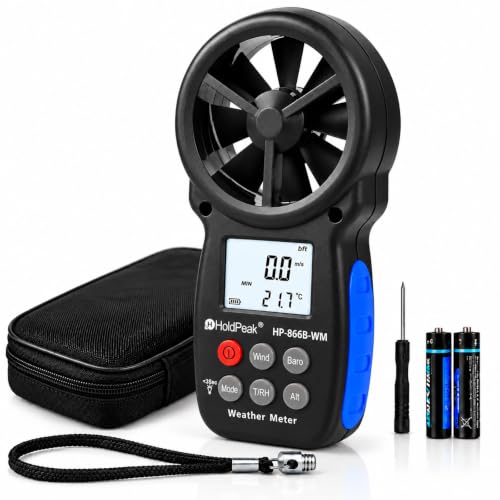
- Measures pressure, wind, humidity, temperature, and altitude
- Stores 16 pressure readings to review changes over time
- Backlit, handheld design with case and wrist strap
Best For: Multi-variable outdoor and HVAC condition checks
Multifunction Trail Instrument
Digital Compass Altimeter Barometer

- Combines barometer, altimeter, compass, thermometer, and time functions
- Measures altitude across a wide -2,300 to 29,500-foot range
- Includes backlight, lanyard, and English manual
Best For: Hiking and mountain navigation with elevation tracking
Simple Pressure Tracker

- Calibrates to local barometric pressure
- Adjustable indicator and reference marker show pressure changes
- Compact plastic housing includes a braided lanyard
Best For: Anglers and simple pressure-trend monitoring
Complete Pocket Weather Station
Ambient Weather WM-5 Handheld Weather Meter
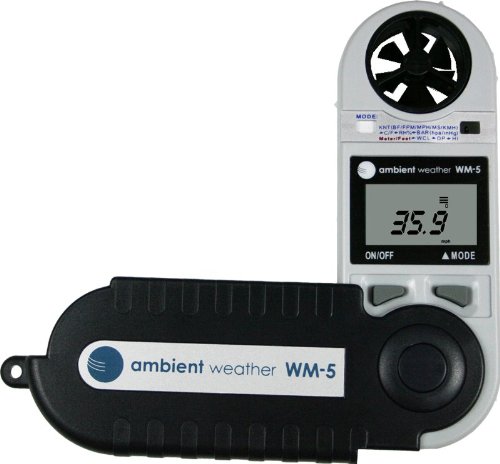
- Reports pressure, altitude, wind, temperature, humidity, and dew point
- Water resistant, floating design with protective pocket-knife form
- Includes carrying accessories and a two-year factory warranty
Best For: Broad outdoor weather monitoring in a compact handheld
Multifunction Digital Pick
8-in-1 Hiking Altimeter Barometer

- 300–1100 mbar pressure range
- Altitude, compass, temperature, and weather functions
- Backlit display with Celsius/Fahrenheit temperature readings
Best For: Hikers and campers wanting a versatile all-in-one field instrument
Battery-Free Analog Choice

- No batteries required
- 0–15,000-foot altitude scale
- Adjustable dial and rugged ABS case with lanyard
Best For: Outdoor users seeking a simple, portable analog gauge
Weather-Measurement Specialist
BT-100WM Anemometer and Digital Barometer
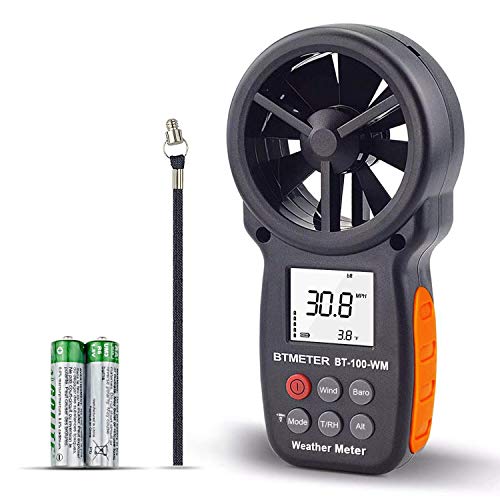
- Measures pressure, altitude, wind, temperature, and humidity
- Logs 16 groups of barometric-pressure data
- Backlit display with tripod mounting and auto shutoff
Best For: Field work requiring wind measurements and atmospheric data logging
Trail-Ready All-in-One
8-in-1 Outdoor Altimeter Barometer

- Altitude range from -2,300 to 29,500 feet
- Includes compass, thermometer, timer, and clock
- Backlit display with 300–1,100 mbar pressure range
Best For: Hiking, mountaineering, camping, and fishing
Indoor Monitoring Pick
Digital Barometer Weather Station

- Displays local pressure, humidity, and temperature
- Manual calibration and front controls
- Desk or wall placement with 4-inch backlight
Best For: Protected workshops, RVs, boat cabins, and offices
Portable Forecast Companion

- Measures altitude up to 29,500 feet
- Includes compass, thermometer, timer, and weather function
- Compact design with lanyard and backlit display
Best For: Hiking, camping, mountaineering, and outdoor sports
Field-Ready Weather Meter – 866B-WM Anemometer Barometer
For barometers for field work that also measure wind and humidity, the 866B-WM is a versatile handheld option. It records barometric pressure, dew point, pressure-based altitude, wind chill, temperature, humidity, and wind speed, making it useful when conditions are changing.
Best For: Hiking, sailing, drone flights, HVAC checks, and outdoor condition monitoring.
Pros:
- Measures pressure, altitude, dew point, wind chill, temperature, humidity, and wind speed.
- Stores 16 pressure readings at two-hour intervals for reviewing trends.
- Offers MAX, MIN, and AVG wind readings with five selectable speed units.
- Backlit display, wrist strap, non-slip grips, and carrying case support field use.
Cons:
- Its plastic housing may be less rugged than specialized professional instruments.
- It is more feature-rich than needed if you only want barometric pressure.
The 866B-WM is a strong choice when barometric data is only one part of the field picture. Its pressure history and broad environmental readings add practical context, while the handheld design keeps it convenient on trips or job sites.
Multifunction Trail Instrument – Digital Compass Altimeter Barometer
This 8-in-1 instrument suits shoppers seeking barometers for field work alongside navigation and elevation data. It combines a barometer, altimeter, electronic compass, thermometer, time display, and weather information in a compact handheld unit with a lanyard.
Best For: Hiking, camping, mountain climbing, and other activities where altitude and direction matter.
Pros:
- Combines barometer, altimeter, compass, thermometer, time, and weather functions.
- Measures altitude from -2,300 to 29,500 feet with approximately 3.3-foot resolution.
- Barometer covers 300 to 1,100 mbar with 0.1 mbar resolution.
- Includes a five-second electronic backlight, carrying lanyard, and English manual.
Cons:
- The notes do not specify water resistance or a protective case.
- Compass readings require correction according to the external magnetic field.
- The compact multifunction design may be less suitable for users wanting only pressure readings.
This model is best viewed as a compact navigation and elevation tool with barometric capability rather than a dedicated pressure monitor. Its wide altitude range and integrated compass make it practical for trail-oriented field work.
Simple Pressure Tracker – Camco TRAC Fishing Barometer
The Camco TRAC is a straightforward option for barometers for field work when your priority is monitoring pressure changes rather than collecting multiple weather measurements. Its adjustable indicator, reference marker, and color-coded dial make pressure trends easy to interpret outdoors.
Best For: Anglers who want a simple, portable barometer for tracking local pressure conditions.
Pros:
- Adjusts easily to local barometric pressure.
- Reference marker helps show pressure changes over time.
- Color-coded dial identifies conditions associated with great, good, or poor fishing.
- Sure-grip plastic housing and braided lanyard support carrying or hanging.
Cons:
- It focuses on barometric pressure and does not provide digital altitude, temperature, or wind readings.
- The fishing-oriented color coding may be less useful for general weather field work.
Choose the Camco when simplicity matters more than a full set of environmental sensors. It is easy to calibrate and interpret, but its usefulness is centered on pressure tracking and fishing-oriented guidance.
Complete Pocket Weather Station – Ambient Weather WM-5 Handheld Weather Meter
The Ambient Weather WM-5 is designed for people who want barometers for field work in a broader handheld weather instrument. Along with barometric pressure and altitude, it provides wind speed, temperature, wind chill, heat index, relative humidity, and dew point in a water-resistant, floating design.
Best For: Outdoor users who want a portable weather meter with wind and comfort-condition readings.
Pros:
- Provides wind speed, temperature, wind chill, heat index, humidity, dew point, pressure, and altitude readings.
- Pocket-knife design helps protect the unit when it is not in use.
- Water resistant and floats, adding practical protection around water.
- Includes a soft case, neck lanyard, wind tunnel, replacement impeller, and two-year factory warranty.
Cons:
- The notes do not provide a barometric pressure measurement range or resolution.
- Its many included accessories may be unnecessary for users seeking a basic pressure-only instrument.
- Operation depends on a battery, with a CR2032 recommended.
The WM-5 makes sense when field decisions depend on more than pressure alone. Its protected pocket-knife form, floating construction, and broad weather readouts give it an advantage for general outdoor use, especially near water.
Multifunction Digital Pick – 8-in-1 Hiking Altimeter Barometer
For shoppers comparing barometers for field work, this compact 8-in-1 instrument combines air-pressure readings with altitude, compass, temperature, time, and weather functions. Its broad altitude range and backlit display make it a versatile option for hiking and other outdoor activities.
Best For: Hikers and campers who want one handheld tool for pressure, elevation, orientation, and temperature checks.
Pros:
- Measures barometric pressure from 300 to 1100 mbar.
- Reads altitude from -2,300 to 29,500 feet with approximately 3.3-foot resolution.
- Includes an electronic compass, thermometer, time display, weather updates, and 5-second backlight.
- Temperature readings cover 14°F to 140°F and switch between Celsius and Fahrenheit.
Cons:
- Its many functions may be more than needed if you only want a basic barometer.
- The supplied notes do not specify battery life or water resistance.
This is the most feature-rich choice in the group, particularly for field users who value altitude and navigation data alongside barometric pressure. Consider it when versatility matters more than a simple analog design.
Battery-Free Analog Choice – Sun Company Altimeter 203
If you prefer straightforward equipment, the Sun Company Altimeter 203 is a practical option among barometers for field work. It uses surrounding barometric pressure rather than batteries, with an adjustable dial to account for changing high- or low-pressure systems.
Best For: Hikers, backpackers, campers, and drivers who want a compact analog altitude and pressure gauge without battery dependence.
Pros:
- Battery-free operation uses surrounding barometric pressure.
- Reads altitude from 0 to 15,000 feet.
- Adjustable dial helps compensate for high- or low-pressure systems.
- Rugged ABS case and included lanyard support portable field use.
Cons:
- It does not provide digital logging or additional electronic functions.
- Pressure is displayed in inches of mercury rather than the mbar format used by some digital instruments.
- Compass and thermometer functions require separate equipment.
The Altimeter 203 suits users who value simplicity, low maintenance, and an easy-to-read analog scale. Its 15,000-foot range is useful for many hiking and camping situations, though it is less versatile than the digital alternatives.
Weather-Measurement Specialist – BT-100WM Anemometer and Digital Barometer
The BT-100WM expands beyond pressure readings, making it a strong candidate for barometers for field work that also involve wind and humidity checks. This handheld meter measures barometric pressure and altitude alongside wind speed, temperature, relative humidity, dew point, and wind chill.
Best For: Shooters, sailors, hunters, drone operators, and field technicians who need wind and atmospheric data in one device.
Pros:
- Measures barometric pressure, altitude, wind speed, temperature, humidity, dew point, and wind chill.
- Wind-speed range is 0.67 to 67.1 mph with stated ±5% accuracy.
- Logs 16 groups of barometric-pressure data for comparison and analysis.
- Backlit LCD, multiple wind-speed units, tripod hole, and automatic shutoff improve field usability.
Cons:
- Its anemometer-focused design may be unnecessary for users seeking only pressure or altitude readings.
- The supplied notes do not identify water resistance.
- It weighs 150 g, making it less minimal than a basic pocket gauge.
This is the best fit when barometric pressure is only one part of the job. Data logging and wind-related measurements make it especially useful for shooting, sailing, airflow checks, and other applications where atmospheric conditions must be compared over time.
Trail-Ready All-in-One – 8-in-1 Outdoor Altimeter Barometer
For hikers and climbers comparing barometers for field work, this compact instrument combines pressure readings with altitude, direction, temperature, and basic timing functions. Its broad altitude range, pressure trend forecasting, and backlit display make it useful when you want several outdoor measurements in one pocket-sized device.
Best For: Hiking, mountaineering, camping, and fishing trips where altitude, compass, and weather information are useful together.
Pros:
- Combines eight functions, including a barometer, altimeter, compass, thermometer, clock, timer, weather forecast, and backlight.
- Measures altitude from -2,300 to 29,500 feet with approximately 3.3-foot resolution.
- Measures pressure from 300 to 1,100 mbar and temperature from 14°F to 140°F.
- Backlit LCD and selectable Celsius/Fahrenheit readings support use in varied lighting and conditions.
Cons:
- Uses an ABS plastic and rubber construction and does not include a stated warranty.
- The compass can be affected by external magnetic fields.
This is a practical choice when field work calls for more than pressure monitoring alone. Choose it for its unusually broad altitude range and integrated navigation features, but remember that barometric weather forecasting relies on pressure trends rather than a guaranteed forecast.
Indoor Monitoring Pick – Digital Barometer Weather Station
Although it is designed for indoor placement, this unit can suit stationary field work in a workshop, RV, boat cabin, or protected work area. It displays local barometric pressure alongside temperature, humidity, time, and pressure trends, while manual calibration helps align readings with the user’s location.
Best For: Protected indoor or mobile-base locations such as workshops, garages, RVs, boat cabins, and offices.
Pros:
- Shows local pressure, temperature, humidity, time, pressure trend, and weather icons on a 4-inch display.
- Allows manual pressure calibration using front buttons.
- Can stand on a desk or mount on a wall.
- Includes a backlight that illuminates the display for approximately 10 seconds and comes with two AAA batteries.
Cons:
- It is intended for indoor use rather than exposed outdoor field conditions.
- Pressure trends may take 24 to 48 hours to stabilize after setup or relocation.
- Weather icons are a simple reference based on local pressure changes, not a detailed forecast.
This is the most suitable option here for base-camp-style monitoring rather than handheld fieldwork. Its large display and calibration controls are useful for a fixed location, but its indoor positioning limits it for hiking, mountaineering, or exposed work sites.
Portable Forecast Companion – 8-in-1 Hiking Barometer
For barometers for field work that need to travel light, this multifunction altimeter pairs pressure readings with a digital compass, thermometer, weather forecasting, timer, and backlit display. The included lanyard makes it easy to carry on hikes, climbs, and other outdoor activities without adding much bulk.
Best For: Outdoor enthusiasts who want portable altitude, compass, pressure, and short-term weather information.
Pros:
- Combines an altimeter, compass, barometer, thermometer, weather function, timer, and backlight.
- Measures elevations up to 29,500 feet or 9,000 meters and pressure from 300 to 1,100 mbar.
- Backlit LCD is designed for visibility in different lighting conditions.
- Compact body and included lanyard make it convenient to carry or store.
Cons:
- The supplied details identify the included component as an altimeter, so the accessory package appears limited.
- Its weather function predicts conditions over approximately 12 to 24 hours, so it is not a substitute for a full forecast service.
- The construction is listed as plastic.
This model stands out as a lightweight, carry-friendly option for outdoor trips. It offers the core measurements field users often need, including altitude and pressure, while the lanyard and backlight improve portability and readability.
How We Picked the Best Barometers for Field Work
We focused on practical features that matter outside rather than choosing products based on specifications alone. The selection covers dedicated barometers, handheld anemometers with pressure readings, and multifunction instruments combining an altimeter, compass, thermometer, and weather-trend indicator.
We also considered portability, display readability, operating range, power requirements, durability, and how easily each device can support decisions in the field. Because needs vary widely, the list includes both simple battery-free instruments and more capable digital weather meters.
Quick Comparison
| Type | Best for | Typical strengths |
|---|---|---|
| Handheld weather meter | Detailed outdoor monitoring | Pressure, wind speed, temperature, and additional readings |
| Multifunction altimeter | Hiking and mountaineering | Altitude, compass, temperature, weather trends, and backlight |
| Analog barometer | Simple trend tracking | No battery dependence, quick visual readings, straightforward operation |
| Barometer clock or hygrometer | Base camps and indoor-outdoor use | Pressure, temperature, humidity, time, and forecast displays |
Key Buying Factors for Barometers for Field Work
Pressure Range and Trend Functions
Look for a pressure range suited to your elevation and environment. A pressure-trend indicator is often more useful than a single reading because falling pressure can signal worsening weather, while stable or rising pressure may indicate improving conditions. Digital models may show forecast icons or historical changes; analog models provide a simpler visual trend.
Accuracy and Calibration
Barometric altitude is calculated from air pressure, so it changes with weather as well as elevation. Choose a model that allows altitude or pressure calibration when possible. For navigation or safety-critical work, treat the device as supporting information rather than a replacement for maps, forecasts, or an emergency plan.
Readability and Controls
Large numerals, a backlight, and simple buttons are valuable in low light or while wearing gloves. Check whether the display shows pressure in the units you use and whether key readings can be accessed without cycling through numerous screens.
Portability, Power, and Weather Resistance
A lanyard, compact case, and low weight make a meter easier to keep accessible. Battery-powered devices offer more functions but require spare batteries or charging. Battery-free analog instruments eliminate that concern, while weather-resistant construction helps protect against splashes and rough handling.
Who Should Buy Which Barometers for Field Work?
Hikers and Mountaineers
Choose an 8-in-1 digital instrument if altitude, compass direction, temperature, backlighting, and weather trends are more useful than wind measurements. Confirm the altitude and pressure ranges before buying for high-elevation trips.
Anglers, Sailors, and Outdoor Observers
A handheld weather meter or fishing barometer is a better fit when pressure changes are central to planning and you also want wind-speed information or a clear adjustable reference marker.
Field Researchers and Serious Weather Watchers
Select a feature-rich handheld meter with accessible readings, calibration options, and a broad pressure range. A model that combines wind, temperature, and pressure can reduce the need to carry several separate instruments.
Campers and Casual Users
A compact barometer clock or battery-free analog model may be sufficient for basic weather awareness. Prioritize easy reading, dependable construction, and simple operation over unused advanced functions.