The best science experiment sets for homeschool turn abstract concepts into hands-on lessons kids can see, test, and discuss. This roundup compares 10 options spanning chemistry, earth science, STEM activities, and early science play.
We focus on experiment variety, age suitability, educational value, and practical features so you can choose a kit that fits your child’s interests, learning stage, and homeschool routine.
Best 10 Science Experiment Sets for Homeschool Picks for 2026
Best Overall
National Geographic Science Magic Kit

- 100-plus science experiments and magic tricks
- Includes materials for 20 experiments
- Bonus booklet with 85-plus activities
Best For: Ages 8 and up who want entertaining STEM activities
Best for Preschool Science
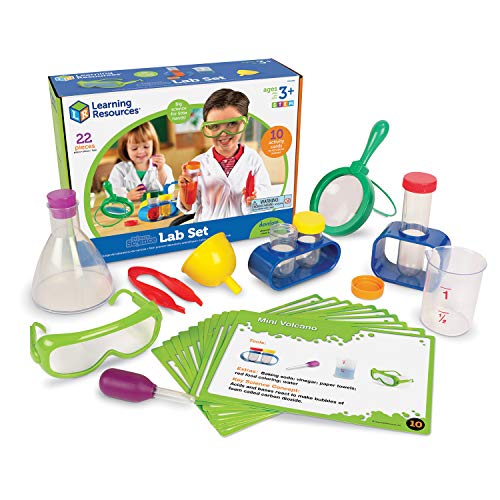
- Child-sized tools for early learners
- Includes 22 lab-play pieces
- Comes with 10 double-sided activity cards
Best For: Young children beginning basic science exploration
Best Introductory Chemistry Kit
National Geographic Junior Chemistry Set

- Includes 50 guided experiments
- Features 20-plus child-safe lab tools
- Illustrated instructions use accessible activities
Best For: Ages 4 and up starting beginner chemistry
Best for Experiment Variety

- Includes guidance for 80 experiments
- Wide assortment of lab tools and materials
- Features colorful, hands-on demonstrations
Best For: Children over 6 who enjoy varied science activities
Best Earth Science Variety

- 100+ listed activities with 15+ highlighted experiments
- Includes volcano, crystal, rock, and tornado projects
- Full-color guide explains the science behind activities
Best For: Ages 8+ homeschoolers focusing on Earth science
Best for Everyday Use

- Provides 150 projects across chemistry, physics, and Earth science
- Includes child-friendly tools and many experiment materials
- Illustrated step-by-step manual supports at-home use
Best For: Ages 8+ families wanting a large activity selection
Best for Younger Learners

- Designed for ages 4–8 with 50+ experiments
- Includes oobleck, volcano, color, and sensory activities
- Illustrated instructions support child-and-adult use
Best For: Early-elementary homeschoolers seeking introductory STEM play
Best Overall Variety
National Geographic Mega Science Lab
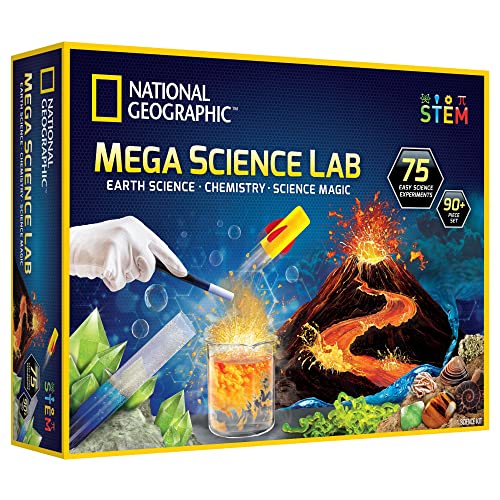
- 75 experiments across three science categories
- Includes rock, mineral, crystal, and fossil activities
- 30 bonus experiments use household items
Best For: Families wanting the widest mix of hands-on activities
Best Guided Chemistry Starter

- Offers 70 guided science activities
- Includes volcano, crystals, circuits, and reactions
- Illustrated manual explains the science
Best For: Families wanting structured introductory STEM practice
Best for Household Extensions

- Includes 50-plus Earth, chemistry, and magic experiments
- Encourages extra activities with household liquids
- Guide explains the science behind projects
Best For: Homeschoolers who enjoy flexible, expandable activities
Best Overall – National Geographic Science Magic Kit
For homeschoolers seeking science experiment sets for homeschool with plenty of variety, this National Geographic kit combines hands-on STEM activities with science-themed magic. It includes materials for 20 magic experiments plus a bonus booklet with more than 85 additional ideas, making it a substantial option for repeated use.
Best For: Kids ages 8 and up who enjoy science demonstrations, magic tricks, and a large activity library.
Pros:
- Includes more than 100 total experiments and tricks.
- Comes with everything needed for 20 magic experiments.
- Bonus booklet provides 85-plus additional activities.
- Supports STEM learning without requiring batteries.
Cons:
- The magic-focused format may be less suitable for a traditional chemistry curriculum.
- Recommended for ages 8 and up, so it is not designed for younger learners.
This is a strong choice when activity volume and entertainment value matter. Its science-magic theme can make demonstrations especially engaging, while the included booklet helps extend the kit beyond a single afternoon.
Best for Preschool Science – Primary Science Lab Set
This Learning Resources set is a practical entry point for families looking for science experiment sets for homeschool for younger children. Its child-sized tools and activity cards support simple investigations with common household ingredients while also allowing open-ended pretend lab play.
Best For: Young children ages 3 and up who are beginning to practice observation, prediction, and basic experiment skills.
Pros:
- Includes 22 pieces such as a flask, beaker, test tubes, goggles, and magnifying glass.
- Tools are sized for little hands and made from sturdy plastic.
- Ten double-sided activity cards provide structured guidance.
- Supports both guided experiments and imaginative play.
Cons:
- Experiments use household ingredients, so materials beyond the kit are needed.
- Its introductory design may be too basic for older elementary students.
Choose this set for hands-on exploration rather than advanced chemistry. The durable tools and simple activity prompts make it well suited to early homeschool routines and supervised science play.
Best Introductory Chemistry Kit – National Geographic Junior Chemistry Set
Families comparing science experiment sets for homeschool may appreciate this junior chemistry kit for its clear structure and accessible materials. It offers 50 illustrated experiments using common household items such as baking soda and vinegar, along with more than 20 child-safe lab tools.
Best For: Children ages 4 and up who need guided, beginner-friendly chemistry activities.
Pros:
- Provides 50 hands-on chemistry experiments.
- Uses familiar household materials for many activities.
- Illustrated, step-by-step instructions support independent participation.
- Includes more than 20 durable lab tools, including test tubes and goggles.
Cons:
- Household experiment ingredients are not all included.
- The junior level may not provide enough depth for advanced students.
This kit stands out for combining a high experiment count with approachable instructions. It is a useful foundation for introducing chemistry vocabulary, observation, and cause-and-effect through short, repeatable activities.
Best for Experiment Variety – 80-Experiment Science Lab Kit
This kit is a broad option for shoppers seeking science experiment sets for homeschool with a mix of colorful demonstrations and role-play tools. The activity cards cover 80 experiments, ranging from rainbow rain and fountains to volcanoes and balloon-based activities, with guidance progressing from simple to more challenging.
Best For: Children over age 6 who enjoy colorful experiments and a wide range of hands-on activities.
Pros:
- Offers 80 experiments with step-by-step scientific guidance.
- Includes goggles, gloves, test tubes, droppers, measuring tools, and other accessories.
- Features engaging activities such as eruptions, color changes, and balloon experiments.
- Stored chemical materials are placed in separate, tightly closed bottles.
Cons:
- Several activities require careful adult supervision and household materials.
- The supplied listing gives limited detail about the specific scientific concepts covered.
- The included tools and components may require organization between activities.
Consider this set when variety and visual results are higher priorities than a formal curriculum sequence. Its large activity count can support frequent homeschool science sessions, provided an adult helps prepare and supervise experiments.
Best Earth Science Variety – Earth Science Kit
For families seeking science experiment sets for homeschool, the National Geographic Earth Science Kit offers a broad, earth-focused activity mix for children ages 8 and up. It includes projects such as water tornadoes, an erupting volcano, crystal growing, and geologic dig kits, supported by a full-color learning guide.
Best For: Homeschoolers who want hands-on Earth science activities that can be shared with siblings, friends, or classmates.
Pros:
- Includes more than 15 experiment activities and 100+ listed activities.
- Covers volcanoes, crystals, rocks, tornadoes, and other Earth science topics.
- Clear instructions and a detailed learning guide connect activities to the science behind them.
- Designed for multiple children to use together.
Cons:
- Recommended for ages 8 and up, so it may not suit younger learners.
- Its focus is primarily Earth science rather than a broad chemistry or physics curriculum.
This is a strong choice when you want a substantial, guided Earth science supplement with enough variety for repeated homeschool sessions.
Best for Everyday Use – 150 Experiments Science Kit
The UNGLINGA 150 Experiments kit is built for homeschool families that want a large menu of hands-on projects. Its activities span Earth science, surface tension, chemistry, and physics, with illustrated, step-by-step instructions and many child-friendly tools included.
Best For: Families looking for a high-volume science activity set for school breaks, weekends, and ongoing at-home exploration.
Pros:
- Offers 150 experiments across several science topics.
- Includes lab-style tools and many of the materials needed for projects.
- Illustrated instructions make activities easier to follow with adult guidance.
- Some projects use common household items, helping extend the kit’s activity options.
Cons:
- Recommended for ages 8 and up, limiting its fit for younger children.
- Some experiments require household materials in addition to the included components.
Choose this set if quantity and subject variety matter most; it can provide a flexible stream of experiments rather than a tightly focused lesson sequence.
Best for Younger Learners – My First Science Kit
For younger children beginning with science experiment sets for homeschool, the Doctor Jupiter My First Science Experiments Kit provides more than 50 guided activities for ages 4 to 8. Projects include oobleck, color experiments, volcanoes, dinosaur squishies, perfumes, and face masks, with illustrated instructions for children and adults.
Best For: Preschool and early-elementary homeschoolers who need approachable, screen-free STEM activities with adult participation.
Pros:
- Designed for children ages 4 to 8.
- Includes more than 50 experiments for extended activity time.
- Offers varied projects, including oobleck, volcanoes, color exploration, and sensory activities.
- Step-by-step manuals and included tools support guided use.
Cons:
- The manufacturer recommends adult involvement for children in this age range.
- Younger learners may need help with setup, measuring, and cleanup.
- The kit is aimed at introductory exploration rather than advanced science study.
This is the most age-accessible option of the three, especially for families prioritizing simple, engaging activities and screen-free learning for early learners.
Best Overall Variety – National Geographic Mega Science Lab
For families comparing science experiment sets for homeschool, this National Geographic kit stands out for its broad mix of activities. It combines Earth science, chemistry, and science magic, with 75 total experiments and several real specimens for hands-on exploration.
Best For: Homeschoolers seeking a large, varied kit for children ages 8 and up.
Pros:
- Includes 75 experiments across Earth science, chemistry, and science magic.
- Features a volcano, glow-in-the-dark crystal, water tornadoes, fossil, and rock specimens.
- Includes a guide with 30 additional experiments using common household items.
- No batteries are required.
Cons:
- The broad activity range may require more storage and setup space.
- Some experiments use household items in addition to the included materials.
With its three-in-one format and substantial experiment count, this is a strong choice when variety matters more than a narrowly focused chemistry curriculum.
Best Guided Chemistry Starter – UNGLINGA 70 Lab Experiments
This UNGLINGA set is a practical option among science experiment sets for homeschool, offering 70 activities with an illustrated manual. It covers familiar projects such as volcanoes, crystal growing, balloon rockets, fruit circuits, and chemical reactions.
Best For: Children ages 8 and up who benefit from step-by-step instructions and introductory STEM practice.
Pros:
- Provides 70 experiments in one comprehensive set.
- Includes volcano, crystal, balloon rocket, fruit circuit, and reaction activities.
- The manual combines illustrated steps with explanations of the science involved.
- Designed to support critical thinking, problem-solving, science, and math skills.
Cons:
- The supplied notes do not identify the included components in detail.
- The kit is recommended for age 8 and up, so younger children may need an alternative.
This kit fits homeschool routines that value a high activity count and a clearly structured guide, especially for introductory chemistry and STEM lessons.
Best for Household Extensions – UNGLINGA 50+ Science Lab Kit
For homeschool families that like extending kit activities with supplies already at home, this UNGLINGA set includes more than 50 Earth science, chemistry, and magic experiments. The guide supports projects such as volcanoes, gemstone activities, color changes, and rainbow effects.
Best For: Children ages 8 and up who enjoy combining included materials with common household liquids.
Pros:
- Includes more than 50 experiments across Earth science, chemistry, and science magic.
- Encourages children to create additional experiments with liquids around the house.
- Features volcano, foamy fountain, gemstone, flower-color, and rainbow activities.
- Includes a detailed guide explaining the science behind the activities.
Cons:
- Some experiments depend on common household items.
- The supplied notes do not specify the exact number or type of included experiment materials.
This is a flexible pick for families that want a compact activity kit with room for simple extensions beyond the packaged experiments.
How We Picked These Science Experiment Sets for Homeschool
We selected kits that support active learning rather than simple entertainment. Our comparison considers the number and variety of activities, the scientific topics covered, age guidance, opportunities for observation and problem-solving, and how easily the set can fit into a homeschool lesson.
We also looked for a useful range of formats: introductory kits for younger children, chemistry-focused sets, earth science activities, role-play lab sets, and larger collections for families that want experiments throughout the school year. Activity counts can vary in complexity, so a higher number does not automatically mean a better educational experience.
Quick Comparison
| Best For | What to Look For | Strong Match |
|---|---|---|
| Early learners | Simple demonstrations, large tools, and clear instructions | Doctor Jupiter My First Science Experiments Kit |
| Broad STEM exploration | Many activities across chemistry, physics, and general science | National Geographic Science Magic Kit or Mega Science Lab |
| Chemistry practice | Experiments organized around reactions, mixtures, and lab methods | National Geographic Junior Chemistry Set or UNGLINGA chemistry kits |
| Earth science | Activities involving geology, weather, rocks, or natural processes | National Geographic Earth Science Kit |
| Pretend-play learning | Lab accessories and role-play elements that encourage independent engagement | Learning Resources Primary Science Lab Set |
Key Buying Factors for Science Experiment Sets for Homeschool
Age and Supervision
Start with the recommended age, then consider your child’s reading ability, patience, and fine-motor skills. Younger children generally need an adult to explain steps and manage materials. Older children may benefit from kits with more detailed instructions, repeatable activities, and opportunities to record results.
Subject Coverage
Choose a general kit if you want variety across a full science curriculum. A chemistry set is more suitable when you are studying reactions, solutions, and lab safety. Earth science kits can add concrete activities to lessons about rocks, minerals, geology, and natural systems.
Experiment Quality and Reusability
Check whether the kit includes consumable materials, reusable tools, or household supplies. A large activity count may include short demonstrations, while a smaller collection may provide more substantial experiments. Review the instructions and plan for replenishing ingredients before starting a lesson.
Safety and Lesson Fit
Read the safety guidance before purchase. Adult supervision, protective eyewear, careful measuring, and proper cleanup may be necessary. Also consider storage: a kit that keeps tools and components organized is easier to use regularly than one that becomes a loose collection of parts.
Who Should Buy Which Science Experiment Sets for Homeschool?
Choose an introductory kit such as Doctor Jupiter’s option for preschool and early elementary learners who need simple, visual activities. Families seeking broad coverage should consider a larger National Geographic or UNGLINGA set, especially when they want multiple activities for co-op sessions or year-round enrichment.
For focused chemistry lessons, compare the National Geographic Junior Chemistry Set with the UNGLINGA chemistry collections based on age guidance, included materials, and the level of adult involvement required. The National Geographic Earth Science Kit is the clearest choice for geology and natural-world units, while the Learning Resources lab set suits children who learn well through pretend play and hands-on tool use.
Whichever option you choose, treat the kit as a starting point rather than a complete curriculum. Pair experiments with prediction questions, a simple science journal, and discussion about evidence. That approach helps children build both practical skills and a stronger understanding of how science works.