The best weather stations for classrooms turn daily observations into practical lessons in measurement, patterns, forecasting, and scientific communication. This roundup includes simple visual charts for younger learners, build-your-own kits for STEM activities, and wireless instruments that collect real outdoor data.
Use the guide below to match each type of station to your students’ ages, curriculum goals, available space, and desired level of hands-on participation.
Best 10 Weather Stations for Classrooms Picks for 2026
Best All-Around Sensor Station
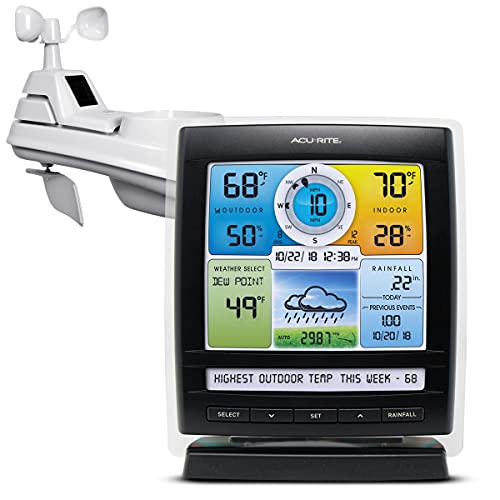
- Tracks more than 55 weather data points
- Wireless readings for temperature, wind, pressure, and rainfall
- Large adjustable color LCD with forecast
Best For: Detailed classroom weather monitoring and data discussions
Best Hands-On Learning Kit
Learning Resources Weather Center

- Measures pressure, humidity, and temperature
- Includes a weather instrument activity guide
- Manual operation requires no batteries
Best For: Ages 5–10 and introductory meteorology activities
Best Large-Display Monitor
Sainlogic 12-in-1 Wireless Station

- 6.5-inch display with bold fonts and adjustable backlight
- Monitors rain, wind, pressure, temperature, and humidity
- Wireless outdoor sensor with solar power
Best For: Readable, multi-variable outdoor weather projects
Best Visual Classroom Chart
Calendar and Weather Pocket Chart

- Combines daily calendar and weather activities
- Includes 149 cards and 42 clear pockets
- Large wall chart for ages 3 and up
Best For: Young learners practicing daily weather and calendar routines
Best Interactive Weather Lab

- Explores eight weather conditions interactively
- Includes an illustrated STEM manual
- USB-C or battery-powered operation
Best For: Elementary STEM centers and guided weather activities
Best Data-Tracking Weather Station
AcuRite Iris 5-in-1 Wi-Fi Station
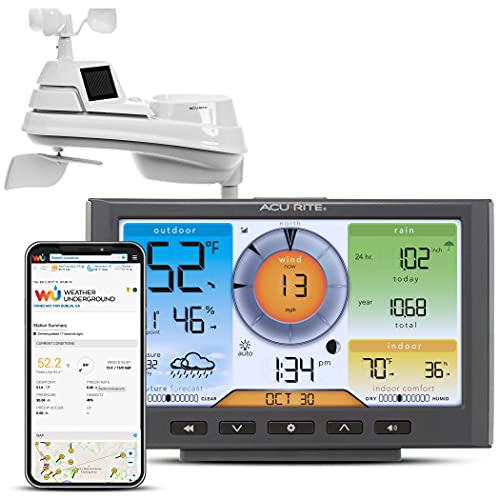
- Tracks temperature, wind, rain, and pressure
- Displays more than 25 data points
- Shares readings through Weather Underground
Best For: Classrooms focused on live weather data and trends
Best Visual Weather Tool
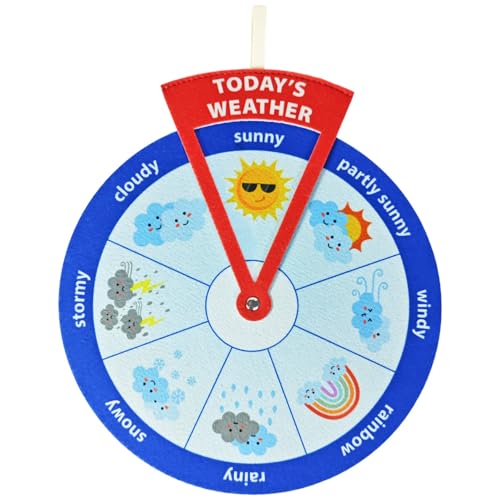
- Helps children identify common weather types
- Colorful, soft fabric design
- Includes a hanging and carrying lanyard
Best For: Preschool and kindergarten daily weather routines
Hands-On STEAM Pick
DIY Green Science Weather Station

- Builds anemometer, wind vane, rain gauge, and thermometer
- Includes a recycled-bottle terrarium activity
- Supports 30 days of weather journaling
Best For: Elementary STEAM and sustainability lessons
Circle-Time Display
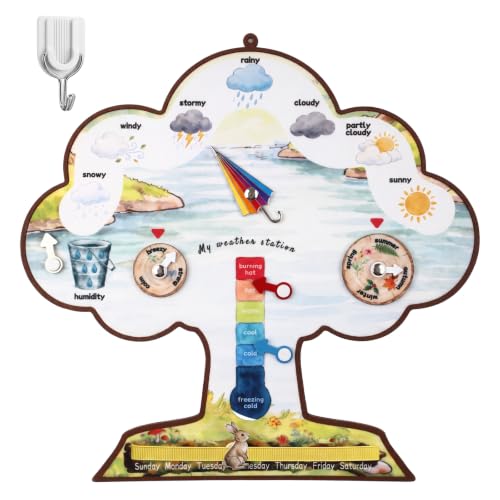
- Covers weather, seasons, temperature, and climate
- Uses rotating discs and arrow indicators
- Soft felt wall display for ages 3 and up
Best For: Preschool circle time and daily routines
Daily Routine Board

- Combines weather tracking with day, month, and year
- Includes 12 weather cards and clothing choices
- Wall-mounted design measures 21 by 15.75 inches
Best For: Preschool morning meetings and calendar routines
Best All-Around Sensor Station – AcuRite Iris Color Screen
For classrooms seeking full-featured weather stations for classrooms, the AcuRite Iris provides a broad set of real-time and historical measurements. Its wireless outdoor sensor and large color display make it practical for observing temperature, humidity, wind, rainfall, pressure trends, dew point, and more.
Best For: Classrooms that want a detailed digital weather-monitoring station for ongoing observation and data discussion.
Pros:
- Tracks more than 55 weather data points, including heat index, dew point, and pressure trends.
- Measures indoor and outdoor temperature and humidity, wind speed and direction, barometric pressure, and rainfall.
- Large color LCD includes time, date, adjustable brightness, and a 12-hour personalized forecast.
- Wireless setup includes a mounting bracket and pre-calibrated sensor.
Cons:
- Requires 10 AA batteries.
- Its broad feature set may be more than younger students need for basic weather lessons.
- The listed lower temperature rating is 32°F.
The AcuRite Iris is a strong choice when a classroom needs many measurable variables in one display. It is especially useful for comparing current conditions with historical readings and connecting observations to weather concepts.
Best Hands-On Learning Kit – Learning Resources Weather Center
The Learning Resources Weather Center is a straightforward choice for weather stations for classrooms focused on hands-on science. Students can use its barometer, hygrometer, and thermometer to explore barometric pressure, relative humidity, and air temperature without batteries or complicated setup.
Best For: Younger learners ages 5 to 10 who are beginning lessons in meteorology and basic weather measurement.
Pros:
- Includes instruments for measuring barometric pressure, relative humidity, and air temperature.
- Designed to introduce children to meteorology through practical observation.
- Includes an activity guide explaining how to use each weather instrument.
- Requires no batteries and operates manually.
Cons:
- Provides fewer functions than a digital wireless weather station.
- Listed for indoor use, so it is not designed for outdoor monitoring.
- May be less suitable for advanced classes needing electronic data logging or wind and rainfall readings.
This kit prioritizes accessible, tactile learning over extensive data collection. It is a sensible classroom introduction to weather instruments, particularly when teachers want students to interact directly with the tools.
Best Large-Display Monitor – Sainlogic 12-in-1 Wireless Station
The Sainlogic 12-in-1 is suited to weather stations for classrooms that need multiple live readings on an easy-to-view screen. It combines rainfall, temperature, humidity, pressure, wind, dew point, and perceived temperature data, while its wireless sensor supports flexible placement outdoors.
Best For: Classrooms that want a large, readable display and broad outdoor monitoring for weather projects.
Pros:
- 6.5-inch screen uses large, bold fonts and three adjustable backlight levels.
- Monitors rainfall, wind speed and direction, pressure, temperature, humidity, dew point, and perceived temperature.
- Temperature and humidity sensors are designed for broad measurement ranges, with rainfall calibration available.
- Wireless transmission and solar power support flexible outdoor installation.
Cons:
- Three AA backup batteries are required, and batteries are not included.
- The supplied details do not specify the complete list of all 12 functions.
- Its installation and advanced readings may be more appropriate for older students or teacher-led projects.
With its large screen and combination of solar-assisted power and wireless transmission, this station can serve as a shared classroom reference point. It is a good fit when visibility and numerous outdoor measurements matter more than a simple beginner kit.
Best Visual Classroom Chart – Calendar and Weather Pocket Chart
Godery Calendar and Weather Pocket Chart, Classroom Organized Chart, 149 Pieces (Black)
Check Price On AmazonFor early-learning weather stations for classrooms, this pocket chart offers a visual, participatory alternative to electronic instruments. Students can update the day, date, month, weather, and related cards while practicing calendar routines and taking responsibility for a daily classroom observation.
Best For: Preschool and early-elementary classrooms, as well as home learning spaces for children ages 3 and up.
Pros:
- Combines calendar and weather activities in one wall-hanging display.
- Includes 149 cards covering years, months, dates, weekdays, weather, festivals, and customization.
- Features 42 see-through pockets and a large 27.5-by-40.7-inch format.
- Cards use non-toxic ink and laminated PET film, while the polyester chart is described as durable and dust-resistant.
Cons:
- It is an activity chart rather than a tool for measuring actual weather conditions.
- Requires teacher or student updates instead of providing automatic readings.
- Its large wall format needs suitable display space.
This chart works best as a daily routine and vocabulary aid rather than a meteorological instrument. It can help younger students connect weather observations with dates, seasons, and classroom responsibilities.
Best Interactive Weather Lab – 3-in-1 Weather Station Toy
For classrooms seeking hands-on weather stations for classrooms, this Science Can model offers an accessible introduction to weather concepts for children ages 6 and up. Students can manually explore eight weather conditions, including rain, tornadoes, and thunderstorms, using simple button controls.
Best For: Elementary classrooms, STEM centers, and guided meteorology activities for young learners.
Pros:
- Offers eight predefined weather experiments with interactive controls.
- Includes an illustrated manual covering the science behind different climates.
- Can run from USB-C power or four AA batteries for flexible placement.
- Also includes humidifier and white-noise modes.
Cons:
- Designed primarily for children rather than detailed weather measurement.
- AA batteries are not included.
- The plastic unit is relatively compact, measuring about 8.66 by 7.68 by 9.84 inches.
This is a strong choice when the goal is interactive weather exploration rather than collecting live outdoor data. Its multiple modes and included manual can support demonstrations, small-group work, or an engaging classroom science station.
Best Data-Tracking Weather Station – AcuRite Iris 5-in-1 Wi-Fi Station
For classrooms that need weather stations for classrooms with real-time measurements, the AcuRite Iris provides indoor and outdoor readings from a wireless sensor. It tracks temperature, humidity, wind, barometric pressure, and rainfall, while Wi-Fi connectivity allows data sharing through Weather Underground.
Best For: Science classrooms studying live weather data, trends, thresholds, and historical observations.
Pros:
- Measures more than 25 weather data points, including temperature, humidity, wind, pressure, and rainfall.
- Large color LCD display shows current conditions, time, and date.
- Connects to Weather Underground for remote monitoring and data sharing.
- Supports threshold alarms and historical weather tracking.
Cons:
- Its recommended use is home, so classroom installation may require additional planning.
- Temperature accuracy is listed as plus or minus 2 degrees Fahrenheit.
- The lower temperature rating is 32 degrees Fahrenheit.
This model is better suited to data-centered instruction than simple weather demonstrations. Teachers can use its live readings, historical records, and Wi-Fi access to connect classroom lessons with local and broader weather observations.
Best Visual Weather Tool – Interactive Weather Wheel
For early-learning weather stations for classrooms, this fabric weather wheel provides a simple visual activity for identifying daily conditions. Children turn the wheel to select illustrations representing sunny, rainy, cloudy, and other weather types.
Best For: Preschool, kindergarten, daycare, homeschool, and morning-calendar weather routines.
Pros:
- Uses colorful illustrations and patterns to support weather recognition.
- Soft plush-fabric construction has no sharp edges.
- Includes a lanyard for hanging or carrying.
- Works as an interactive visual aid for teacher-led communication and learning.
Cons:
- Does not measure or record actual weather conditions.
- Its learning scope is focused on recognizing weather types.
- Fabric construction may be less suitable for outdoor exposure than a weather instrument.
This weather wheel is a low-complexity option for building a daily weather routine. It works especially well as classroom decor that also invites participation, though it should be paired with measurement tools for more advanced weather lessons.
Hands-On STEAM Pick – DIY Green Science Weather Station
For classrooms seeking weather stations for classrooms with a strong hands-on focus, this DIY kit combines weather measurement, recycling, and climate activities. Students assemble an anemometer, wind vane, rain gauge, and thermometer, then use the station outdoors to record observations.
Best For: Elementary STEAM lessons, outdoor observation projects, and sustainability-focused activities.
Pros:
- Builds working tools for tracking wind speed, wind direction, rain, and temperature.
- Uses a recycled plastic bottle to create a terrarium base and reinforce sustainability concepts.
- Includes a 30-day weather journal challenge plus greenhouse-effect and water-cycle activities.
Cons:
- Requires assembly and adult guidance for setup and activities.
- Has no display, so students must read and record observations manually.
- The station is compact at approximately 8.6 by 4.7 inches.
This is a strong choice when the learning process matters as much as the measurements. It turns weather tracking into a multi-lesson project rather than a simple wall display.
Circle-Time Display – Felt Weather Chart Calendar
This felt weather chart is a low-tech option for classrooms looking for weather stations for classrooms that support daily routines. Its rotating discs and arrow indicators help young learners practice weather, seasons, temperature, climate, and calendar concepts during circle time.
Best For: Preschool classrooms, homeschool routines, and hands-on daily calendar lessons.
Pros:
- Combines weather, seasons, temperature, climate, and date-related prompts.
- Soft felt construction and punched design are suited to small hands.
- Includes two rotating discs, three arrow indicators, and a hook for wall display.
Cons:
- Requires assembly before classroom use.
- At approximately 13.78 inches, it may offer less visibility in larger rooms.
- It is an interactive visual chart rather than a tool for measuring live outdoor conditions.
Choose this chart for repeated visual practice and classroom participation, especially with younger children. It works best as part of a teacher-led routine rather than as a standalone measuring station.
Daily Routine Board – Kids Weather Station Calendar
For teachers who want weather stations for classrooms to reinforce both observation and time concepts, this wall-mounted board combines weather symbols with a daily calendar. Children can update the conditions, choose clothing, and review the day, month, and year in one clearly organized display.
Best For: Preschool and toddler classrooms that use daily weather and calendar routines.
Pros:
- Includes weather symbols, temperature tracking, calendar sections, and clothing choices.
- Provides 12 weather condition cards for recurring daily observations.
- Sturdy materials and metal grommets support wall hanging in classroom or home settings.
Cons:
- Designed for indoor display rather than outdoor measurement.
- Its 21-by-15.75-inch size requires suitable wall space.
- The set does not include a warranty.
This board is a practical choice for classrooms where weather observation is part of morning meeting. The clothing feature adds a useful real-life connection, while the calendar sections broaden the activity beyond weather alone.
How We Picked the Best Weather Stations for Classrooms
We selected products across the main ways schools teach weather: daily calendar routines, visual vocabulary practice, guided experiments, DIY construction, and live data collection. We considered age suitability, the clarity of the learning activity, ease of classroom use, durability, setup requirements, and whether the product supports repeat observations rather than a one-time demonstration.
The selection includes both educational toys and full-featured wireless instruments. That range matters because a preschool weather chart serves a different purpose from a sensor-based station used for math, science, or environmental studies.
Quick Comparison
| Classroom need | Best product type | What students practice |
|---|---|---|
| Daily weather routine | Weather chart or pocket chart | Vocabulary, sequencing, observation |
| Early elementary exploration | Kids’ weather station or learning center | Basic measurement and discussion |
| STEM project | DIY mini observatory kit | Building, testing, recording data |
| Outdoor data collection | Wireless weather station | Temperature, humidity, wind, and rainfall analysis |
Key Buying Factors for Weather Stations for Classrooms
Age and Learning Objective
Choose picture-based charts and movable indicators for preschool and kindergarten routines. Older elementary students can benefit from rain gauges, thermometers, wind measurements, and projects that require recording or comparing results.
Data Depth and Accuracy
If the goal is casual observation, a classroom chart may be enough. For lessons involving graphs, averages, forecasting, or real-world weather reports, choose an instrument with clearly displayed readings and the measurements your curriculum requires. Wireless models may provide temperature, humidity, wind, and rainfall, but they also need more careful installation.
Setup, Space, and Supervision
Check whether the product is intended for a wall, desk, window, or outdoor mounting point. DIY kits require preparation and adult guidance, while electronic stations may need batteries, signal range, or Wi-Fi. Avoid placing outdoor sensors near buildings, vents, direct obstructions, or other heat sources when reliable readings matter.
Durability and Shared Use
For busy classrooms, prioritize pieces that are easy to see, handle, and store. Small parts can be useful for sorting and matching but may require supervised use. A simple daily chart often gets more consistent use than a complicated instrument that takes too long to reset.
Who Should Buy Which Weather Stations for Classrooms?
Preschool and kindergarten teachers: Start with a weather wheel, felt chart, pocket chart, or daily calendar set. These options support routine, language development, and participation without requiring technical setup.
Elementary teachers planning STEM activities: Choose a buildable weather kit or hands-on learning center when students should test ideas, observe changes, and document results.
Teachers collecting real outdoor data: Select a wireless station with the sensors and display functions needed for your lessons. A connected AcuRite-style model is best suited to classes that will regularly analyze measurements or compare local conditions over time.
Homeschoolers and small groups: A compact kids’ station or DIY observatory can provide focused experimentation without the cost or installation demands of a full classroom system. The best choice is the one students will use repeatedly and understand clearly.