Choosing among sound level meters for measurement depends on more than the advertised decibel range. Weighting options, accuracy class, logging features, and calibration support can determine whether a meter is suitable for a quick noise check or dependable technical work.
Our roundup includes straightforward LCD meters, portable models for classrooms and workplaces, and more advanced instruments with Leq, peak readings, data logging, and calibration documentation.
Best 10 Sound Level Meters for Measurement Picks for 2026
Best Budget Pick
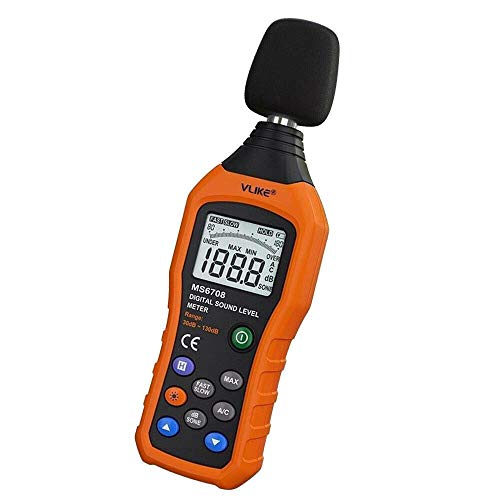
- 30–130 dB measurement range
- A/C weighting and max lock
- Backlit, compact handheld design
Best For: Everyday home, office, and workshop noise checks
Professional Field Pick
CRY2831 Class 2 Sound Level Meter

- IEC 61672-1:2013 Class 2 design
- 29–138 dB range with A/C/Z weighting
- IP54 enclosure and AC/DC power
Best For: Professional workplace, facility, and industrial spot checks
Best for Tracking Changes

- 30–130 dB range with ±1.5 dB accuracy
- Fast/Slow response and A/C weighting
- Alarm history and 30-second sound curve
Best For: Home monitoring, audio tuning, and recurring noise checks
Best Traditional Meter
Extech 407730 Digital Sound Meter

- 40–130 dB measurement range
- 0.1 dB resolution and 2 dB accuracy
- Max/min recording and analog bar graph
Best For: Routine sound checks and peak-level comparisons
Professional Logging Pick
CRY2832-2 Lite Data Logging Sound Level Meter

- Logs Leq, Lmax, Lmin, and Lpeak values
- Exports data for post-measurement review
- Includes flexible weighting and testing modes
Best For: Workplace, industrial, and environmental noise surveys
Everyday Measurement Value
S8607 Digital Sound Level Meter

- Covers a 30–130 dB measurement range
- Includes MAX, MIN, and HOLD functions
- Uses A weighting with Fast and Slow modes
Best For: General home, classroom, office, and workshop checks
Portable Dual-Weighting Choice
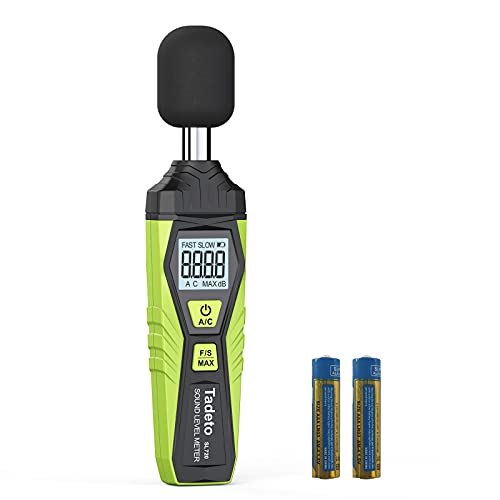
- Measures 30–130 dB with ±2.0 dB stated accuracy
- Offers A and C frequency weighting
- Includes Fast and Slow response modes
Best For: Portable household, machinery, and construction noise checks
Best Data-Logging Pick
DANOPLUS 43,000-Record Sound Level Meter

- Stores up to 43,000 readings with PC export
- 30–130 dB range with stated ±1.5 dB accuracy
- Includes A/C weighting, alarms, and DC output
Best For: Extended noise monitoring and data analysis
Best Certified Option
SM-130DB Type 2 Sound Level Meter
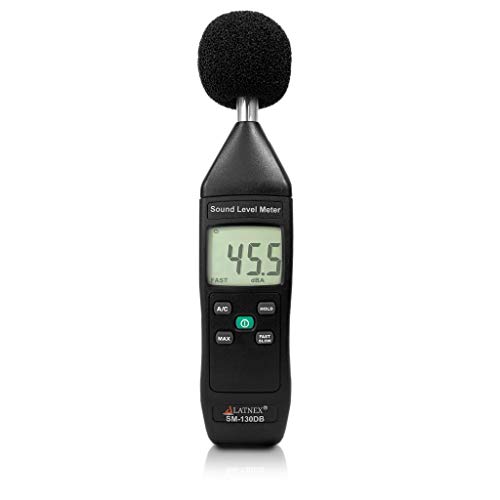
- EN 61672 Type 2 designation with calibration certificate
- 35–130 dB range and 0.1 dB resolution
- Includes 2-year warranty and technical support
Best For: Routine environmental and workplace noise checks
Best Simple Handheld Pick

- 30–130 dB range with stated ±1.5 dB accuracy
- MAX/MIN, hold, backlight, and auto power-off
- Includes FAST timing and Type A weighting
Best For: Quick personal, household, and workplace checks
Best Budget Pick – VLIKE Portable dB Meter
If you need sound level meters for measurement around the home, office, classroom, road, or workshop, the VLIKE VL6708 offers straightforward real-time readings from 30 to 130 dB. Its compact design, backlit display, A/C weighting, and max-lock function make it practical for everyday noise checks.
Best For: General-purpose household, workplace, and educational sound checks.
Pros:
- Measures a broad 30–130 dB range with automatic range selection.
- A/C weighting and max-lock functions support different monitoring tasks.
- Portable casing, backlight, and power-saving design suit mobile use.
Cons:
- Batteries are not included.
- Cannot store or generate a report directly from the device.
The VLIKE is a sensible low-complexity option when you want quick readings without advanced logging. Choose it for routine monitoring rather than formal reporting workflows.
Professional Field Pick – CRY2831 Class 2 Sound Level Meter
For sound level meters for measurement in workplace, facility, environmental, or industrial settings, the CRY2831 is the most specification-focused option here. It is designed to IEC 61672-1:2013 Class 2 standards and combines a wide range, extended frequency response, multiple weighting modes, and field-oriented protection.
Best For: Technicians, EHS teams, facility managers, and inspectors needing professional spot checks.
Pros:
- 29–138 dB range and 20 Hz–12.5 kHz frequency response cover varied sound sources.
- Offers A, C, and Z frequency weighting plus Fast and Slow time weighting.
- Class 2 design, ±1.5 dB accuracy, IP54 enclosure, and AC/DC power support field use.
Cons:
- Its professional feature set may be more than casual users need.
- The supplied notes do not indicate onboard report generation or data logging.
The CRY2831 stands out when measurement standards, environmental durability, and configurable readings matter more than minimal cost. Its calibration certificate and two-year warranty add confidence for recurring professional use.
Best for Tracking Changes – FNIRSI FDM-02 Noise Monitor
The FNIRSI FDM-02 is a practical choice among sound level meters for measurement when you want to observe changing noise rather than only read a single value. Its 2-inch IPS screen, curve view, alarm history, A/C weighting, and rechargeable battery support home, office, audio, and everyday monitoring.
Best For: Home users, musicians, parents, office workers, and audio setup tasks.
Pros:
- Measures 30–130 dB with claimed ±1.5 dB accuracy.
- Fast and Slow response modes support transient and continuous sounds.
- Threshold alarms, 30-second curve view, and storage for 30 recent alarms help track noise.
Cons:
- It is intended for monitoring and everyday checks rather than stated compliance certification.
- Rechargeable battery requires charging when depleted.
Choose the FDM-02 if visual trends and alerts are more useful to you than a basic instantaneous reading. It is especially convenient for tuning audio systems or keeping an eye on recurring household noise.
Best Traditional Meter – Extech 407730 Digital Sound Meter
The Extech 407730 is a conventional option for sound level meters for measurement, with a clear digital display, A/C weighting, and a fast analog bar graph. It covers 40 to 130 dB and adds max/min recording and Max Hold for comparing changing sound levels.
Best For: Users who want a familiar, battery-powered meter for routine sound checks and peak comparisons.
Pros:
- Provides 0.1 dB resolution across a 40–130 dB range.
- Includes A/C weighting, a fast analog bar graph, and 2 dB accuracy.
- Max/min recording, Max Hold, auto power-off, and a windscreen improve usability.
Cons:
- Its range starts at 40 dB, so it is less suited to very quiet measurements than wider-range models.
- The supplied notes do not mention onboard report generation or extended frequency-response specifications.
The 407730 is a good fit when you prefer a straightforward Extech instrument with useful peak and minimum-reading functions. It offers a traditional workflow without the alarm history or trend display found on newer monitoring-focused models.
Professional Logging Pick – CRY2832-2 Lite Data Logging Sound Level Meter
For users comparing sound level meters for measurement beyond occasional spot checks, the CRY2832-2 Lite stands out as a professional data-logging option. It records Leq, Lmax, Lmin, and Lpeak values, supports CSV export through a separately purchased microSD card, and offers multiple testing modes for workplace, environmental, and industrial noise surveys.
Best For: Acousticians, safety officers, engineers, EHS teams, facilities staff, and recurring noise-monitoring projects.
Pros:
- Measures Leq, Lmax, Lmin, and Lpeak for more complete noise analysis.
- Supports Auto, Timing, Trigger, Custom, and Delay testing modes.
- Offers A, C, and Z frequency weightings with Fast, Slow, and Impulse time weightings.
- Provides USB-C, RS232, Bluetooth/Wi-Fi, and microSD-based data workflows.
Cons:
- MicroSD card for data export must be purchased separately.
- Its professional logging features may be more than needed for simple household checks.
Choose this model when documenting and reviewing noise over time matters as much as the live reading. Its 30–130 dBA range and 20 Hz–8 kHz bandwidth support a broad range of workplace, facility, machinery, and environmental measurement tasks.
Everyday Measurement Value – S8607 Digital Sound Level Meter
If you need sound level meters for measurement around a home, classroom, office, or street, the S8607 focuses on practical readings and straightforward controls. Its 30–130 dB range, 0.1 dB display resolution, A weighting, and selectable Fast/Slow response modes cover common environmental noise checks.
Best For: Homeowners, schools, offices, workshops, factories, and general noise troubleshooting.
Pros:
- Measures from 30 to 130 dB with stated accuracy of ±1.5 dB at 94 dB and 1 kHz.
- Provides MAX, MIN, and HOLD functions for capturing and reviewing readings.
- Includes a backlit LCD for easier viewing in dim conditions.
- Automatic shutdown helps conserve battery power.
Cons:
- Uses A-weighted measurement rather than offering multiple frequency-weighting options.
- Its automatic shutdown activates after three minutes of stopping, which may interrupt longer pauses.
This is a sensible general-purpose choice for quick checks where data logging and advanced connectivity are unnecessary. The compact design, low-battery indicator, and simple operating modes make it easy to use across everyday environments.
Portable Dual-Weighting Choice – Tadeto SL720 Decibel Meter
For portable sound level meters for measurement in homes, factories, vehicles, or construction areas, the Tadeto SL720 combines a 30–130 dB range with A/C weighting and Fast/Slow response settings. Its backlit LCD and lightweight design make it convenient for routine real-time noise monitoring.
Best For: Household noise checks, factory and machinery monitoring, construction sites, schools, offices, and audio-system testing.
Pros:
- Measures sound levels from 30 to 130 dB with stated ±2.0 dB accuracy.
- A weighting suits ambient-noise checks, while C weighting supports higher-intensity machine and motor noise.
- Fast and Slow response settings accommodate changing or relatively steady noise.
- Portable body and backlit LCD support convenient field use.
Cons:
- Does not list data logging or export capabilities.
- Its stated accuracy is lower than the S8607’s supplied ±1.5 dB specification.
The SL720 is a practical handheld option when you want more flexibility than a single-weighting meter without moving to a professional logging instrument. A/C weighting and selectable response speeds give it useful versatility for everyday environmental and equipment checks.
Best Data-Logging Pick – DANOPLUS 43,000-Record Sound Level Meter
For buyers comparing sound level meters for measurement, the DANOPLUS stands out when recording, reviewing, and exporting noise data matters. It combines a 30–130 dB range with PC connectivity, visual readings, and configurable alerts.
Best For: Extended noise monitoring, documentation, and PC-based data analysis.
Pros:
- Stores up to 43,000 readings and can export data to Excel through a Windows PC.
- Measures 30–130 dB with stated ±1.5 dB accuracy.
- Offers A/C frequency weighting, FAST/SLOW response settings, and DC output.
- Three-color alarm indicators and a line-chart display make changing noise levels easier to monitor.
Cons:
- PC connectivity and data export are compatible with Windows 7, 10, and 11, rather than described as universal.
- Charging takes about 1.5 hours, so planning around battery use may be necessary for longer sessions.
This is the strongest choice here for users who need a measurement record instead of a single spot reading. Its data capacity, configurable alarm, and export tools add practical value for recurring inspections and analysis.
Best Certified Option – SM-130DB Type 2 Sound Level Meter
The SM-130DB is a practical choice among sound level meters for measurement when a Type 2 designation, calibration certificate, and support coverage are priorities. Its 35–130 dB operating range suits a broad mix of environmental and equipment-noise checks.
Best For: General-purpose environmental, workplace, classroom, and machinery noise measurements.
Pros:
- Identified as an EN 61672 Type 2 sound level meter and includes a calibration certificate.
- Measures 35–130 dB with 0.1 dB resolution and stated ±1.8 dB accuracy.
- Uses a 1/2-inch electret condenser microphone.
- Includes a 2-year warranty, technical support, and a user manual.
Cons:
- Its range begins at 35 dB, which is narrower at the low end than some alternatives.
- It uses a 9V alkaline battery rather than a rechargeable battery.
The SM-130DB emphasizes measurement credentials and support rather than advanced logging features. It is a sensible fit for routine checks where Type 2 classification and included documentation are more important than PC export.
Best Simple Handheld Pick – RISEPRO HT-80A Decibel Meter
For straightforward sound level meters for measurement, the RISEPRO HT-80A focuses on useful handheld features without emphasizing data logging or computer analysis. It covers 30–130 dB and adds MAX/MIN tracking, data hold, and a backlit display.
Best For: Personal, household, business, and general industrial sound checks.
Pros:
- Measures 30–130 dB with stated ±1.5 dB accuracy.
- Provides FAST 125 ms time weighting and Type A frequency weighting.
- Includes data hold, MAX/MIN readings, auto power-off, and backlighting.
- Comes with a carrying pouch and gift box; the product notes also list IPX5 water resistance.
Cons:
- The notes specify Type A weighting and do not mention C-weighting or PC data export.
- The listed frequency range is 31.5 Hz to 4 kHz, which may not suit every specialized application.
This model makes sense for quick, repeatable readings where portability and simple controls matter. MAX/MIN capture and the backlight are especially useful when checking changing noise levels in varied environments.
How We Picked These Sound Level Meters for Measurement
We compared the selected meters by measurement range, stated accuracy or standards compliance, weighting options, display and controls, portability, and recording capabilities. Models advertising IEC 61672-1 compliance or Type/Class 2 performance stand out for users who need more defensible readings, while basic 30–130 dB meters can be practical for household, classroom, workshop, and general noise checks.
We also considered whether each device supports useful functions such as maximum and minimum capture, data hold, backlighting, Leq or peak measurement, USB export, and automatic power-off. These features affect how efficiently you can take repeated measurements and document results.
Quick Comparison
- Basic spot checks: Choose a simple digital meter with a clear LCD, broad range, and A-weighting.
- Home, school, or workplace monitoring: Look for backlighting, MAX/MIN capture, data hold, and easy handheld operation.
- Trend tracking: A data logger with memory and export capabilities is better for collecting readings over hours or days.
- Professional assessments: Consider a Class 2 or Type 2 meter with calibration documentation and functions such as Leq or peak measurement.
Key Buying Factors for Sound Level Meters for Measurement
Accuracy and Standards
Accuracy matters when readings will support compliance decisions, workplace documentation, or disputes. Class 2 and Type 2 meters are commonly used for general-purpose field measurements, but verify the manufacturer’s stated standard, tolerance, and calibration information rather than relying only on the product title.
Frequency Weighting
A-weighting approximates human hearing and is the usual choice for environmental and occupational noise checks. C-weighting retains more low-frequency sound and can help evaluate loud machinery, music, or impact noise. If you need both, select a meter with selectable A/C weighting.
Range, Response, and Measurement Functions
A 30–130 dB range covers many everyday applications, but the lower limit and microphone performance still matter for quiet rooms. Fast response is useful for changing sounds, while slow response can make fluctuating noise easier to interpret. MAX/MIN, peak, hold, and Leq functions add context beyond a single instantaneous reading.
Logging, Display, and Power
For extended monitoring, prioritize memory capacity, timestamping, export options, and rechargeable or replaceable power. A backlit display helps in dim areas, and automatic power-off can prevent drained batteries during transport.
Who Should Buy Which Sound Level Meters for Measurement?
Homeowners and casual users should choose an affordable, easy-to-read meter for checking appliances, neighbors’ noise, rooms, or personal listening environments. Teachers, facility managers, and small businesses will benefit from backlighting, hold, MAX/MIN, and selectable weighting for repeatable checks across several locations.
Researchers, consultants, and workplace safety professionals should prioritize Type 2 or Class 2 specifications, calibration documentation, Leq or peak capability, and reliable data logging. If results may be challenged or used for formal reporting, confirm the meter’s calibration status and measurement procedure before purchase.