When noise needs to be monitored from across a room, a small handheld meter can be difficult to read. Sound level meters with large displays make decibel readings more visible for classrooms, offices, workshops, and shared spaces.
This roundup compares wall-mounted and portable options, including models with data logging, temperature and humidity readings, alarms, remote sensors, and A/C frequency weighting.
Best 10 Sound Level Meters with Large Displays Picks for 2026
Best Wall-Mount Display

- Adjustable 11-inch display shows sound, temperature, and humidity
- 30–130dB range with ±1.5dB stated accuracy
- Visual face icons and wall or desktop placement
Best For: Room-wide noise monitoring
Best Handheld Meter
Extech 407730 Digital Sound Level Meter

- 40–130dB range with 0.1dB resolution
- Analog bar graph plus Max/Min and Max Hold
- Includes windscreen and four AAA batteries
Best For: Portable sound checks
Best Classroom Monitor
LED Traffic Light Noise Monitor

- Double-sided red, yellow, and green LED display
- 50–100dB threshold adjustment in 5dB steps
- Automatic voice alerts or silent visual warnings
Best For: Classroom noise management
Best for Data Logging
11-Inch Decibel Meter with Data Logging

- Logs up to 4,000 time-stamped readings
- USB-C CSV transfer without extra software
- Displays sound, temperature, and humidity on an 11-inch screen
Best For: Long-term monitoring and reporting
Portable Pick
VLIKE Handheld LCD Decibel Meter
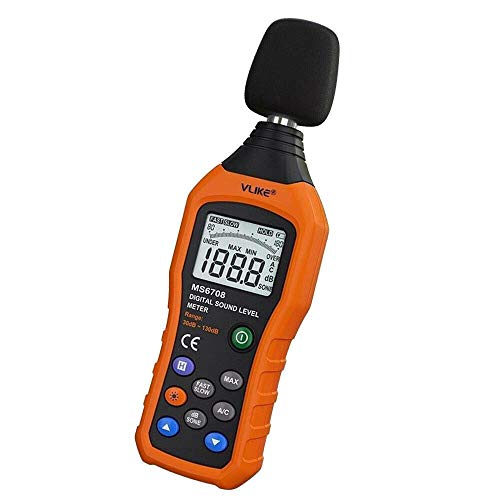
- 30–130 dB range with A/C modes
- Backlit LCD and max hold
- Compact anti-drop design
Best For: Portable spot-checking and general noise monitoring
Large-Display Choice
DANOPLUS 13-Inch Decibel Meter Recorder

- 13-inch HD screen with 4-inch digits
- One-year data storage and logging
- Remote sensor and adjustable alarms
Best For: Room-wide monitoring, alerts, and data recording
Measurement Flexibility
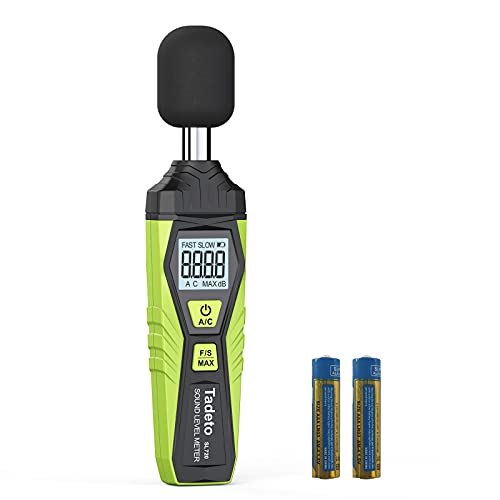
- 30–130 dB range with ±2.0 dB accuracy
- A/C weighting and fast/slow response
- Backlit LCD with max hold
Best For: Portable readings with flexible measurement controls
Best Overall
DANOPLUS 11-Inch Data-Logging Decibel Meter

- 11-inch adjustable LED display shows sound, temperature, and humidity
- Stores 4,000 data points with PC Excel export
- Face icons and buzzer provide clear noise alerts
Best For: Classrooms, studios, offices, and ongoing noise monitoring
Best Oversized Display
SW-526A 18-Inch Wall-Mount Sound Meter

- Extra-large 18-inch LCD display
- 30–130 dB measurement range with ±1.5 dB accuracy
- Wall-hanging design with alarm function
Best For: Large spaces needing a highly visible real-time reading
Best for Remote Sensing
Landtek 13-Inch Data-Logging Sound Meter

- 13-inch LCD with a 16.4-foot corded sensor
- Records every 2 seconds and stores data for one year
- Adjustable visual and audible alarms with external output
Best For: Flexible placement and detailed long-term noise recording
Best Wall-Mount Display – 11-Inch LED Decibel Meter
For shoppers comparing sound level meters with large displays, this DANOPLUS model prioritizes visibility from across a room. Its adjustable 11-inch LED screen shows decibel level, temperature, and humidity, while color-coded face icons provide a quick visual indication of noise conditions.
Best For: Classrooms, studios, offices, homes, factories, and other spaces that need an easy-to-see wall or desktop noise display.
Pros:
- Large, brightness-adjustable 11-inch LED display
- 30–130dB range with stated ±1.5dB accuracy and calibration function
- Color-coded face icons indicate different noise levels without an audible alarm
- Rechargeable 2000mAh battery and 9.8-foot USB cable
Cons:
- Does not provide an audible alarm
- Designed primarily for room monitoring rather than data logging
This is a practical choice when readability and simple visual feedback matter most. The wall-mount or desktop setup also makes it flexible for permanent or temporary monitoring.
Best Handheld Meter – Extech 407730 Digital Sound Level Meter
The Extech 407730 is a handheld option for buyers who want a digital meter with a clear readout and measurement-focused controls. It covers 40–130dB, offers 0.1dB resolution, and adds an analog bar graph for quickly following changing sound levels.
Best For: Portable checks where maximum and minimum readings, hold functionality, and A/C weighting are useful.
Pros:
- Digital display with 0.1dB resolution
- 40–130dB measurement range and stated 2dB accuracy
- Records maximum and minimum values and includes Max Hold
- Includes a microphone windscreen and four AAA batteries
Cons:
- Its display is smaller than the room-facing 11-inch models in this roundup
- Stated accuracy is lower than the ±1.5dB rating of some alternatives
Choose this model when portability and measurement functions are more important than a very large display. The bar graph and Max/Min features make it useful for tracking fluctuating noise during inspections.
Best Classroom Monitor – LED Traffic Light Noise Monitor
Among sound level meters with large displays, this classroom monitor stands out for its instantly recognizable traffic-light display. Bright green, yellow, and red signals help students understand noise expectations, while the double-sided LED design improves visibility from different positions in the room.
Best For: Classrooms, libraries, offices, and other shared spaces where visual noise reminders and adjustable thresholds are helpful.
Pros:
- Color-coded traffic-light indicators are easy for children to understand
- Double-sided LED display provides 360-degree visibility
- Adjustable 50–100dB threshold in 5dB steps
- Offers automatic voice alerts or silent manual visual warnings
Cons:
- Voice alerts require the power adapter
- Battery operation is limited to visual monitoring
- Its supplied notes do not specify measurement accuracy or a broad numerical range beyond the adjustable threshold
This is less of a precision inspection instrument and more of a behavior-feedback tool. Its adjustable alert modes and height-flexible placement make it especially suited to active learning environments.
Best for Data Logging – 11-Inch Decibel Meter with Data Logging
This large-display decibel meter adds historical tracking to an easy-to-read 11-inch screen. It measures sound, temperature, and humidity, then stores up to 4,000 time-stamped readings at three-minute intervals for CSV transfer to a computer without additional software.
Best For: Environmental monitoring, compliance documentation, workplace assessments, and users who need trends rather than one-time readings.
Pros:
- 11-inch display shows sound, temperature, and humidity simultaneously
- Logs up to 4,000 readings with date and time stamps
- Transfers CSV data through USB-C without extra software
- 30–130dBA range, 0.1dBA resolution, and stated ±1.5dBA accuracy
Cons:
- Data is recorded at three-minute intervals rather than continuously specified intervals
- The audible alarm triggers at 85dB, which may not suit every monitoring environment
- More involved than a basic visual-only room monitor
If you need both at-a-glance visibility and a record of changing conditions, this is the strongest fit in the group. Its rechargeable design and driverless CSV export support longer-term monitoring with less manual note-taking.
Portable Pick – VLIKE Handheld LCD Decibel Meter
If you need sound level meters with large displays for quick checks around a home, office, school, workshop, or road, the VLIKE offers a straightforward handheld design. Its backlit LCD, 30–130 dB range, and A/C weighting support basic daytime and nighttime measurements.
Best For: Portable spot-checking and general noise monitoring across indoor and outdoor environments.
Pros:
- Measures sound from 30 to 130 dB with A/C modes and auto-ranging.
- Backlit display supports readings in darker conditions.
- Max-hold function, compact size, and anti-drop casing make it practical to carry.
- Power-saving design helps extend battery life.
Cons:
- Batteries are not included.
- Cannot store or generate a report directly from the device.
The VLIKE is a useful choice when portability and simple real-time readings matter more than data logging or computer-based analysis.
Large-Display Choice – DANOPLUS 13-Inch Decibel Meter Recorder
For rooms where readings need to be visible from a distance, this DANOPLUS is one of the more purpose-built sound level meters with large displays. Its 13-inch HD screen, remote sensor, alarms, and data logging make it suited to continuous classroom, studio, home, or workplace monitoring.
Best For: Wall- or desk-mounted monitoring where oversized digits, alerts, and recorded readings are priorities.
Pros:
- 13-inch HD display uses large 4-inch digits for visibility from far away.
- Records decibel data every two seconds and can store up to one year of data.
- 16.4-foot sensor supports flexible placement away from the display.
- Provides adjustable audible and visual alarms plus a 30–130 dB range.
Cons:
- At 2.66 pounds, it is less portable than handheld meters.
- Software connection is required to display and export real-time data for analysis.
- Its wall-mount or desktop format may be excessive for occasional spot measurements.
This is the strongest fit when readability across a room and ongoing documentation matter more than a compact form factor.
Measurement Flexibility – Tadeto Digital SPL Meter
The Tadeto combines a portable body with a backlit four-digit LCD, making it a practical option among sound level meters with large displays for routine readings. Its A/C weighting, fast and slow response settings, and stated ±2.0 dB accuracy support both ambient-noise checks and louder equipment measurements.
Best For: Users who want a portable meter with flexible response and weighting options for home, factory, automotive, or construction checks.
Pros:
- Measures 30–130 dB with stated accuracy of ±2.0 dB.
- A weighting suits ambient noise, while C weighting supports higher-intensity sound analysis.
- Fast and slow response modes accommodate changing or relatively steady noise.
- Backlit four-digit LCD, 0.1 dB resolution, and max hold improve usability.
Cons:
- The manual operating mode may require more hands-on use during monitoring.
- Its display is larger than a basic readout but not room-sized like a wall-mounted meter.
Choose the Tadeto if measurement controls and portability are more important to you than built-in long-term data logging or an oversized display.
Best Overall – DANOPLUS 11-Inch Data-Logging Decibel Meter
For shoppers comparing sound level meters with large displays, this DANOPLUS model combines an easy-to-read 11-inch LED screen with sound, temperature, and humidity monitoring. Its wall- or desk-mountable design, visual icons, and data-logging features make it practical for ongoing noise checks.
Best For: Classrooms, studios, offices, and users who want environmental readings and stored data in one display.
Pros:
- Large 11-inch LED screen with adjustable brightness and °F/°C switching.
- Stores up to 4,000 readings and can export data as an Excel file through a PC.
- Offers face-icon indicators, a buzzer above 85 dB, and a 30–130 dB range with ±1.5 dB accuracy.
- Includes a rechargeable 2000mAh battery and a 9.8-foot Type-C cable.
Cons:
- Its sampling interval is every 3 minutes, which may not suit fast-changing sound measurements.
- Data export requires connection to a PC.
This is a versatile choice when visibility, simple alerts, and long-term environmental tracking matter more than rapid sampling. The built-in calibration function is also useful for maintaining readings over time.
Best Oversized Display – SW-526A 18-Inch Wall-Mount Sound Meter
If maximum readability is the priority, the SW-526A stands out among sound level meters with large displays thanks to its listed 18-inch LCD screen. It provides straightforward decibel measurement and an alarm-oriented format for spaces where readings need to be visible from a distance.
Best For: Large rooms, wall-mounted installations, and users who prioritize an oversized readout.
Pros:
- Features an 18-inch large LCD display for prominent readings.
- Measures sound across a 30–130 dB range.
- Lists ±1.5 dB accuracy and an alarm function.
- Designed as a wall-hanging sound meter.
Cons:
- Its oversized design is less portable than compact handheld meters.
- The supplied notes do not specify data logging, temperature monitoring, or PC connectivity.
The SW-526A is a focused option for visible, real-time decibel monitoring. Choose it when display size is more important than extra recording and environmental-monitoring features.
Best for Remote Sensing – Landtek 13-Inch Data-Logging Sound Meter
The Landtek model is a strong option among sound level meters with large displays when flexible sensor placement and frequent recording are important. Its 13-inch LCD screen pairs with a 16.4-foot corded sensor, PC connectivity, and adjustable audible and visual alarms.
Best For: Classrooms, studios, factories, and other locations where the display and sound sensor need to be positioned separately.
Pros:
- 13-inch LCD display provides a clear, large-format readout.
- Records readings every 2 seconds and stores data for up to one year.
- 16.4-foot sensor cable supports flexible testing locations.
- Offers adjustable sound and light alarms plus an output for an external speaker.
Cons:
- PC software is limited to Windows 7, 8, 10, and 11 64-bit systems.
- An external speaker for the alarm output is not included.
- A tripod is not included for tripod-mounted use.
This model is especially practical for installations where the operator cannot stand directly beside the measurement point. Its rapid two-second logging interval also makes it better suited to detailed monitoring than meters with slower sampling.
How We Picked These Sound Level Meters with Large Displays
We focused on meters that make readings easy to see at a distance, whether through an oversized LCD or LED display. The selection also considers measurement range, display layout, mounting options, sensor-cord length, alarms, and recording features. Models covering roughly 30 to 130 dB suit many everyday monitoring tasks, while professional-oriented meters may offer clearer weighting controls and more consistent measurement functions.
Because these products serve different settings, we included wall-hanging classroom monitors, portable handheld meters, and units with remote sensors. Features such as data logging, maximum-value capture, backlighting, and temperature or humidity indicators can be useful, but they should support—not replace—the core requirement of dependable sound measurement.
Quick Comparison
- Best for highly visible room monitoring: Wall-mounted models with 11-, 13-, or 18-inch displays and alarm indicators.
- Best for classrooms: Traffic-light monitors that communicate acceptable, caution, and excessive noise levels at a glance.
- Best for portable checks: Handheld meters with backlit LCDs, data hold, A/C weighting, and broad 30–130 dB ranges.
- Best for trend tracking: Data-logging models that record readings for later review.
- Best for flexible placement: Units with a corded remote sensor, especially when the display must remain visible while the microphone sits elsewhere.
Key Buying Factors for Sound Level Meters with Large Displays
Display Size and Visibility
Check both the stated screen size and the viewing conditions. Large digits, strong contrast, backlighting, and clear alarm icons matter more than screen dimensions alone. For a wall-mounted meter, consider viewing distance, mounting height, and whether the display remains readable under classroom or workshop lighting.
Measurement Range and Weighting
A 30–130 dB range covers ordinary conversation, classroom activity, appliances, and many workplace environments. A-weighting approximates human hearing and is commonly used for general noise assessments; C-weighting is more useful when low-frequency sound or louder sources are involved. If you need formal compliance measurements, verify the meter’s accuracy and applicable standards rather than relying on range alone.
Recording, Alarms, and Sensors
Data logging helps identify recurring noise patterns, while maximum hold is useful for quick spot checks. Audible alarms and traffic-light indicators provide immediate feedback, but adjustable thresholds are preferable when available. A remote sensor can improve placement flexibility, and temperature or humidity readings may be helpful for general room monitoring.
Who Should Buy Which Sound Level Meters with Large Displays?
Choose a wall-mounted large-display model for classrooms, offices, studios, and public areas where people need to see noise levels continuously. Choose a traffic-light monitor when simple visual feedback matters more than detailed analysis. Choose a portable handheld meter for maintenance, troubleshooting, inspections, or occasional comparisons between locations. Choose a data-logging model when you need evidence of changing noise levels over time. Finally, select a remote-sensor unit when the microphone and display must be positioned separately.