The best resin printers for small businesses can help produce detailed prototypes, miniatures, jewelry patterns, dental models, and custom products without requiring industrial-scale equipment. The right choice depends on your workload, available workspace, material needs, and tolerance for hands-on post-processing.
We compared 10 current resin printers across resolution, build volume, usability, speed-focused features, and business-friendly practicality. Use the guide below to narrow the options based on what you print most and how often your operation runs.
Best 10 Resin Printers for Small Businesses Picks for 2026
Best for Dual-Material Workflows

- Dual-color and dual-material printing
- Automatic leveling and AI monitoring
- Handles high-viscosity resins up to 8,000 cps
Best For: Small businesses producing multicolor models and specialty resin parts
Best for High-Resolution Production

- 16K resolution with a generous build area
- Heated resin tank for cooler environments
- 150 mm/h printing with smart monitoring
Best For: Detailed prototypes, miniatures, and batch production
Best for Precision-Focused Shops

- High-contrast amber screen for detail and speed
- Automated slicing, leveling, and support generation
- Force monitoring and precision C5 ball-screw Z-axis
Best For: Professional prototypes and dimensionally consistent models
Best for Easy, Connected Operation

- 16K detail with 14 × 19 μm pixels
- Factory pre-leveling and smart resin handling
- Remote monitoring plus built-in resin heating
Best For: Small teams wanting simple, remotely managed resin printing
Beginner Detail Specialist

- 9K LCD with 18 μm XY resolution
- Pre-leveled platform for easier setup
- USB, WiFi, and Creality Cloud transfers
Best For: Small businesses producing detailed miniatures and intricate models
Low-Maintenance Workhorse
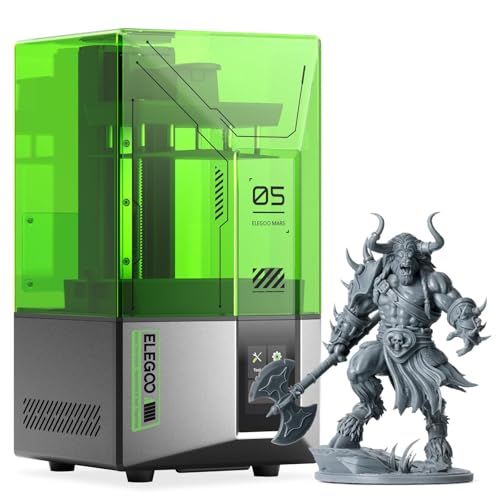
- One-click automatic leveling
- Self-check and resin monitoring features
- 4K mono LCD for detailed prints
Best For: Small teams prioritizing simple operation and reduced setup work
High-Throughput Professional

- 16K LCD with 14 × 19 μm pixel size
- Up to 170 mm/h and larger build volume
- Automated heating, RFID, and resin monitoring
Best For: Production-focused shops needing speed, detail, and larger models
Precision Starter

- 22-micron XY resolution with an 8K monochrome LCD
- Compact tabletop design with a 16.5 × 7.2 × 17 cm volume
- Supports open-source software and popular slicers
Best For: Beginners producing detailed miniatures and models
Large-Format Production

- 302.4 × 161.98 × 300 mm build volume
- 16K resolution with 20 × 26 μm XY resolution
- Automation, monitoring, heating, and Wi-Fi workflow features
Best For: Batch production and larger resin-printed objects
Compact Detail Value

- 7-inch 10K LCD with 17 × 17 μm pixels
- 153.4 × 87 × 165 mm build volume in a compact body
- Beginner-friendly four-point leveling and power resume
Best For: Space-conscious shops and entry-level model production
Best for Dual-Material Workflows – Photon P1
For small businesses seeking versatile resin printers, the ANYCUBIC Photon P1 stands out with dual-color and dual-material printing, automated leveling, and support for high-viscosity professional resins. Its monitoring features are designed to reduce setup time and catch problems early.
Best For: Small businesses creating multicolor prototypes, models, and specialty resin parts.
Pros:
- Prints with two colors or materials simultaneously, helping reduce resin waste on small models.
- Factory-calibrated automatic leveling with pressure feedback simplifies setup.
- AI inspection checks plate installation, layer separation, resin levels, and vat residue.
- Supports resins with viscosity up to 8,000 cps.
Cons:
- At 39 pounds, it is not especially portable.
- Dual-material workflows may add operational complexity compared with single-resin printing.
The Photon P1 is a practical choice when material flexibility and reduced hands-on oversight matter more than a compact footprint. Its sturdy motion system and release technology also support repeatable production.
Best for High-Resolution Production – Saturn 4 Ultra 16K
The ELEGOO Saturn 4 Ultra 16K is one of the more production-oriented resin printers for small businesses, combining a large build area with 16K resolution, heated resin, fast printing, and remote monitoring. Its automation can help streamline repeated jobs.
Best For: Businesses producing detailed miniatures, prototypes, and larger batches of intricate models.
Pros:
- 16K LCD provides 14 × 19 μm XY resolution for fine details.
- Automatic resin-tank heating helps maintain print performance in cooler conditions.
- Advertised print speeds reach 150 mm/h using tilted release technology.
- AI camera, Wi-Fi transfer, power-on resume, and cluster printing support workflow monitoring.
Cons:
- Its 8.33 × 4.66 × 8.66-inch build volume may still limit oversized parts.
- The 12.8 × 12.9 × 21.5-inch body requires substantial workspace.
For businesses that value detail and throughput, the Saturn 4 Ultra 16K offers a strong combination of resolution, speed, and automation. Heated resin and smart sensors are especially useful for maintaining consistency across regular jobs.
Best for Precision-Focused Shops – Reflex RS Turbo
The Reflex RS Turbo is aimed at small businesses that need detailed, repeatable resin printing with strong process controls. Its high-contrast amber screen, automated preparation tools, force monitoring, and precision Z-axis are built around speed and consistency.
Best For: Professional users making dimensionally consistent prototypes, engineering parts, and detailed models.
Pros:
- High-contrast amber screen is designed for sharper details and faster curing.
- One-click slicing can repair common model defects and generate supports.
- Force sensors can detect residue, pause prints, and produce diagnostic reports.
- C5 ball-screw Z-axis provides stated repeat positioning accuracy of 2 μm or less.
Cons:
- At 50.6 pounds, it is the heaviest option in this roundup.
- Its advanced process controls may be more than beginners need.
- The supplied notes do not specify a build volume or screen resolution.
The Reflex RS Turbo makes the most sense for shops where repeatability, diagnostics, and professional support are priorities. Its automation can reduce setup and failure-management work, while the precision motion system supports demanding applications.
Best for Easy, Connected Operation – UniFormation GK3T
The UniFormation GK3T is a user-friendly option for small businesses that want high-resolution resin printing without a complicated setup. Factory pre-leveling, resin heating, remote control, and workflow features help make regular production more manageable.
Best For: Small teams and growing businesses that prioritize simple operation, reliable detail, and remote oversight.
Pros:
- 16K resolution and 14 × 19 μm pixels capture intricate details.
- Factory pre-leveling, smart resin feeding, quick-release plate, and side drainage simplify handling.
- Built-in heating supports resin fluidity in temperatures as low as 0°C/32°F.
- Smartphone and slicer controls provide remote monitoring, job control, and timelapse recording.
Cons:
- At 52.8 pounds, it is not easy to move between work areas.
- Remote features depend on the dedicated app or slicing software.
- Compatibility with wash and cure stations is described as limited to compatible units.
The GK3T is a strong fit for businesses that want a streamlined, beginner-friendly workflow from setup through post-processing. Its temperature management and remote controls are particularly useful when prints run unattended or in variable environments.
Beginner Detail Specialist – Creality HALOT-X1 Neo
For small businesses seeking resin printers for small businesses, the Creality HALOT-X1 Neo offers a compact way to produce detailed miniatures, figurines, characters, and intricate models. Its pre-leveled platform and flexible file-transfer options help simplify the move from setup to production.
Best For: Small shops, miniature creators, tabletop businesses, and first-time resin printer users who prioritize fine detail.
Pros:
- 9K LCD and 18 μm XY resolution support highly detailed prints.
- Factory pre-leveled build platform helps reduce initial setup work.
- Supports USB, 2.4GHz WiFi, and Creality Cloud file transfers.
- AI-powered 2D-to-3D model generation adds a creative workflow option.
Cons:
- The 153.36 × 77.76 × 160 mm build volume is better suited to smaller models than large batches.
- AI model generation may take as long as 3.5 hours.
The HALOT-X1 Neo is a practical choice when print detail and beginner-friendly operation matter more than maximum capacity. Its compact footprint and broad slicing compatibility make it easy to fit into a small production workspace.
Low-Maintenance Workhorse – ELEGOO Mars 5
The ELEGOO Mars 5 is a sensible option for small businesses comparing resin printers for small businesses and looking to reduce setup and troubleshooting time. Automatic leveling, self-checks, and print-protection features are designed to make routine operation more predictable.
Best For: Small teams and new operators who want straightforward setup, reliable checks, and detailed 4K prints.
Pros:
- One-click automatic leveling minimizes manual calibration.
- Self-check functionality verifies key components before printing.
- Residue detection, resin-shortage alerts, and leveling-failure alarms can help reduce waste.
- 4K mono LCD with COB lighting supports detailed textures and features.
Cons:
- The supplied notes do not specify the build volume or print speed.
- Its protection features can halt printing when overheating or other monitored issues occur.
Choose the Mars 5 if operational simplicity is a priority. Its automation and monitoring tools can be particularly useful for businesses training multiple users or trying to limit failed prints.
High-Throughput Professional – Creality HALOT-X1 Combo
For established small businesses needing resin printers for small businesses with more capacity and speed, the Creality HALOT-X1 Combo is the most production-focused option here. Its 16K display, larger build volume, resin management system, and rated speed of up to 170 mm/h are aimed at efficient repeat printing.
Best For: Small production shops that need high-resolution output, larger models, and more automated resin handling.
Pros:
- 16K mono LCD delivers 14 × 19 μm pixel size for professional-grade detail.
- Build volume of 211.68 × 118.37 × 200 mm accommodates larger models.
- Intelligent resin heating, RFID parameter recognition, feeding, recycling, and weight monitoring streamline material handling.
- Fixed build plate design eliminates leveling, while dual rails and lead screws support 0.01 mm Z-axis positioning.
Cons:
- At 38 pounds, it is substantially heavier than the other listed options.
- Its 16.93 × 16.54 × 21.06-inch footprint requires considerable workspace.
- The more advanced system may be more equipment than occasional users need.
The HALOT-X1 Combo stands out for businesses where throughput, automation, and larger print capability justify a larger investment in workspace. It is the strongest fit for repeat production rather than casual desktop use.
Precision Starter – Phrozen Sonic Mini 8K S
For small businesses seeking resin printers for small businesses that balance detail, size, and value, the Phrozen Sonic Mini 8K S is a compact option. Its 22-micron XY resolution, 8K monochrome LCD, and open software compatibility suit detailed models, miniatures, and action figures.
Best For: Beginners and small operations producing highly detailed miniatures, models, and action figures in limited workspace.
Pros:
- 22-micron XY resolution and an 8K monochrome LCD support fine detail.
- Compact 6.5 × 2.8 × 6.7-inch printing volume fits tabletop workflows.
- Compatible with open-source software and slicers including Lychee and Chitubox.
- Precise Z-axis calibration supports consistent printing.
Cons:
- Its build volume is smaller than that of a large-format business printer.
- The supplied notes do not specify automated leveling or resin management features.
The Sonic Mini 8K S is a practical choice when surface detail and accessible software matter more than high-volume output. Its compact footprint and beginner-friendly positioning make it well suited to smaller production spaces.
Large-Format Production – ELEGOO Jupiter 2 Large 16K
Businesses comparing resin printers for small businesses may prefer the ELEGOO Jupiter 2 when larger parts or batch production are priorities. Its 302.4 × 161.98 × 300 mm build volume, 16K resolution, heating system, and automated resin features are designed for more demanding workflows.
Best For: Small businesses printing large objects or multiple smaller parts in one job and needing monitoring and workflow automation.
Pros:
- Large build volume supports bigger prints and multi-part batches.
- 16K resolution with 20 × 26 μm XY resolution targets detailed results.
- Multi-point auto leveling, smart tank heating, and automated resin management simplify operation.
- Wi-Fi, camera monitoring, cluster management, and power-loss recovery support production workflows.
Cons:
- Its 63.8-pound weight and large footprint require substantial workspace.
- The extensive feature set may be more than a low-volume operator needs.
- Large-format resin printing can require more room for setup and maintenance.
The Jupiter 2 stands out for businesses that need capacity rather than a compact desktop footprint. Its automation, monitoring, and safety features can help make larger or repeated print jobs more manageable.
Compact Detail Value – ANYCUBIC Photon Mono 4
For small businesses needing resin printers for small businesses in a compact, approachable format, the ANYCUBIC Photon Mono 4 offers a useful blend of detail and simple operation. Its 7-inch 10K LCD, 17-micron pixel size, and beginner-friendly leveling system fit everyday model production.
Best For: Small shops and beginners producing detailed models while prioritizing a lightweight, space-efficient printer.
Pros:
- 10K resolution and 17 × 17 μm pixels support fine model detail.
- 153.4 × 87 × 165 mm build volume provides useful desktop capacity.
- LightTurbo matrix lighting is designed for stable, uniform exposure.
- Four-point leveling and power-resume functionality simplify routine use.
Cons:
- The Anycubic app is not supported on this model.
- Its build volume is smaller than that of the ELEGOO Jupiter 2.
- The supplied notes do not mention automated resin handling or remote monitoring.
The Photon Mono 4 is a sensible fit when a business wants strong detail without committing to a large machine. Its low listed weight and straightforward leveling process may be especially useful for smaller work areas and entry-level operators.
How We Picked the Best Resin Printers for Small Businesses
We evaluated these printers with small-shop priorities in mind: detail quality, usable build volume, setup convenience, consistency, and the features that reduce downtime. Resolution matters for fine miniatures and product masters, but it is only one part of the decision. A stable build platform, dependable exposure system, straightforward slicing workflow, and accessible replacement parts can have a greater impact on daily productivity.
We also considered the range represented by this list, including compact desktop printers, high-resolution production models, large-format machines, and printers with automation or connectivity features. Because resin printing requires washing, curing, ventilation, and safe material handling, overall workflow practicality is as important as headline specifications.
Quick Comparison
For maximum fine detail, the ELEGOO Saturn 4 Ultra, UniFormation GK3T, ELEGOO Jupiter 2, and Creality Halot-X1 Combo are the most production-oriented choices in this group. The ELEGOO Mars 5 and ANYCUBIC Photon Mono 4 are more compact options for shops with limited space or moderate output needs. The Phrozen Sonic Mini 8K S targets detailed tabletop work, while the Reflex RS Turbo emphasizes speed-focused operation. The Creality HALOT-X1 Neo adds connectivity and AI-assisted workflow features, and the ANYCUBIC Photon P1 stands out for its dual-color or dual-material capability.
Key Buying Factors for Resin Printers for Small Businesses
Resolution and Detail
Higher LCD resolution and smaller XY pixel size can improve tiny text, surface texture, and miniature features. However, print orientation, exposure settings, resin quality, and support placement also strongly affect the final result.
Build Volume and Throughput
A larger build plate lets you produce more parts per batch or handle larger prototypes. Compact printers may be more economical for one-off work, while larger models can reduce the number of production cycles for a growing shop.
Workflow and Reliability
Look for pre-leveled or easy-to-level platforms, consistent vat and screen designs, reliable software support, and practical connectivity. Features such as monitoring, automatic functions, or assisted setup can save time, but they should not replace a dependable core printing system.
Operating Costs and Safety
Budget for resin, release films, build plates, cleaning alcohol or an alternative wash solution, gloves, filters, and a curing station. Resin printing should be performed with suitable ventilation and careful handling, especially in shared commercial spaces.
Who Should Buy Which Resin Printers for Small Businesses?
Choose a compact model such as the ELEGOO Mars 5 or ANYCUBIC Photon Mono 4 if you are starting a side business, producing small parts, or working with limited bench space. Choose a high-resolution mid-size printer such as the Saturn 4 Ultra, GK3T, or Sonic Mini 8K S if fine detail is central to your products.
For higher-volume work, the ELEGOO Jupiter 2 or Creality Halot-X1 Combo is better suited to larger batches and bigger prototypes. The HALOT-X1 Neo is worth considering if wireless features and guided digital workflows are priorities. If you need specialized flexibility, the ANYCUBIC Photon P1’s dual-material or dual-color capability may support more distinctive production applications.