Choosing the right balance matters when every milligram counts. The best benchtop precision balances can improve repeatability, speed up workflow, and reduce costly weighing errors.
This roundup focuses on practical options for labs, reloading, quality control, jewelry, and general precision work, so you can match the balance to your accuracy needs and budget.
Best 10 Benchtop Precision Balances Picks for 2026
Compact lab precision pick
A&D FX-123 122 g x 0.001 g Benchtop Balance

- 0.001 g readability for small measurements
- 122 g capacity in a compact mini design
- Includes AC adapter and 100 g calibration weight
Best For: Fine weighing in labs, jewelry, and reloading
Advanced analytical workstation pick
A&D GF-6000 Analytical Balance with Density and Counting

- Includes density, comparator, and counting modes
- Under-hook capability expands weighing applications
- Quick reference card attached for easier setup
Best For: Advanced lab workflows that use analytical modes
High-capacity precision balance
Adam Luna LTB 3602e 3600g x 0.01g Balance

- 3600 g capacity with 0.01 g readability
- Backlit LCD plus color-coded keys
- Level indicator and adjustable feet aid setup
Best For: Labs and QC tasks needing higher-capacity precision
Practical everyday balance
PCE-BS 3000 3000 g x 0.1 g Laboratory Scale

- 3000 g capacity with 0.1 g readability
- Piece counting and repeated taring support workflow
- Automatic display lighting and battery indicator
Best For: Routine lab, school, and industrial weighing
AutoCal Lab Workhorse
Ohaus AX2202 Adventurer AX Precision Balance
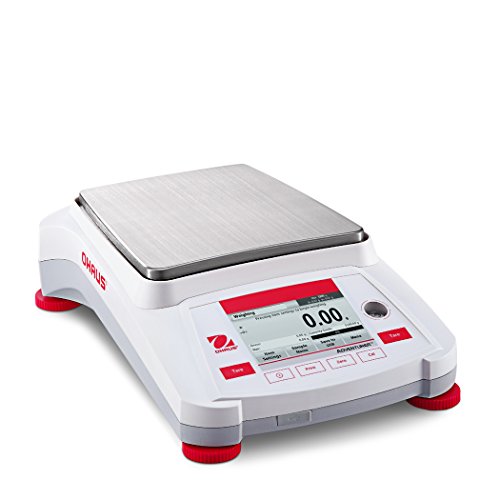
- 2200 g capacity with 0.01 g readability
- Nine modes for weighing, counting, density, and formulation
- AutoCal and dual USB support lab workflows
Best For: Labs needing a high-capacity precision balance with internal calibration
Portable Fast-Response Pick
A&D Weighing Newton Portable Balance

- One-second response time for quick reads
- Backlit LCD with comparator and counting functions
- Runs on AC power or batteries
Best For: Portable lab users who need quick weighing with flexible power options
Ultra-Fine Analytical Option
Hanchen Digital Analytical Balance

- 0.1 mg readability for precision work
- Three-sided glass draftshield improves stability
- USB and RS232 support data communication
Best For: Ultra-fine laboratory weighing in a compact bench setup
Compact High-Precision Lab Balance

- External calibration for accuracy checks
- Mini benchtop design with stainless steel build
- Digital high-precision balance scale
Best For: Compact lab benches and users who need external calibration
Ultra-Fine Analytical Scale
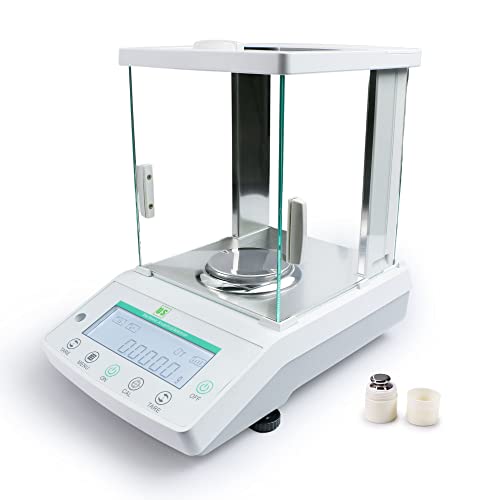
- 0.1 mg readability with 0.2 mg repeatability
- Draft shield and underhook weighing support lab use
- RS-232 port for printer and computer connections
Best For: Chemistry labs, jewelry work, and precision research
Mechanical Teaching Balance
500g Benchtop Scale with 19 Weights

- Includes 19-piece weight set
- 500g capacity with 0.02g accuracy
- Compact 12 cm platform for teaching use
Best For: Classrooms and hands-on weighing demonstrations
Compact lab precision pick – A&D FX-123 122 g x 0.001 g Benchtop Balance
If you want benchtop precision balances for milligram-level work, the A&D FX-123 is built for accurate small-quantity weighing in a compact footprint. With 0.001 g readability, quick stable results, and a stainless-steel pan, it fits well on lab tables, counters, and workstations where repeatable measurements matter.
Best For: Labs, jewelry work, reloading, education, and other small-parts weighing tasks that need fine readability.
Pros:
- 0.001 g readability with a 122 g maximum capacity for precise small weighing
- Fast, stable readings designed to improve efficiency during repeated tasks
- Compact benchtop form factor with a clear digital display
- Includes AC adapter, weighing pan, user documentation, and a 100 g calibration weight
Cons:
- Lower capacity than larger precision balances, so it is not meant for heavier loads
- Mini form factor may be less suitable if you need a larger weighing area
Overall, the FX-123 is a practical pick when your priority is fine readability in a small, professional-scale setup. It is especially appealing if you want a ready-to-use package with calibration weight included.
Advanced analytical workstation pick – A&D GF-6000 Analytical Balance with Density and Counting
Among benchtop precision balances, the A&D GF-6000 stands out as a feature-heavy analytical option for users who need more than basic weighing. It includes quick reference support, under-hook capability, and specialized modes like density, comparator, and counting, making it suited to more advanced workflows.
Best For: Advanced lab users who need analytical functions such as density checking, comparator use, or counting.
Pros:
- Analytical balance with under-hook capability for expanded weighing tasks
- Includes density mode, comparator function, and counting mode
- Quick reference card attached for easier day-to-day use
- Compact unit with a 1-count package configuration
Cons:
- No readability value is listed in the supplied notes
- Limited detail in the product information makes comparison harder
This model is best viewed as a specialized analytical balance rather than a simple everyday scale. If your workflow benefits from mode-based functionality, it offers a strong set of tools in one benchtop unit.
High-capacity precision balance – Adam Luna LTB 3602e 3600g x 0.01g Balance
If you need benchtop precision balances with more capacity than a typical milligram-scale unit, the Adam Luna LTB 3602e offers 3600 g capacity and 0.01 g readability. Its backlit LCD, color-coded keys, level indicator, and adjustable feet make it a practical choice for professional weighing where setup and visibility matter.
Best For: Labs, manufacturing, density determination, purity analysis, and quality control work that needs a higher-capacity precision balance.
Pros:
- 3600 g capacity with 0.01 g readability for larger precision weighing tasks
- Backlit LCD is easy to read in different lighting conditions
- Color-coded keys help with fast button recognition
- Level indicator and adjustable feet support proper setup
Cons:
- Less fine readability than 0.001 g balances
- Plastic construction may not feel as rugged as metal-bodied alternatives
For buyers who need a broader weighing range without giving up precision, this Luna model is a strong fit. It balances capacity, usability, and professional features in a compact design.
Practical everyday balance – PCE-BS 3000 3000 g x 0.1 g Laboratory Scale
The PCE-BS 3000 is a straightforward benchtop precision balance for users who need reliable weighing with basic utility features. With 3000 g capacity, 0.1 g readability, taring, piece counting, and an adjustable accuracy program, it suits routine lab, school, and industrial tasks where convenience matters more than ultra-fine resolution.
Best For: Schools, laboratories, and industrial settings that need a practical general-purpose balance.
Pros:
- 3000 g capacity with 0.1 g readability for routine weighing tasks
- Piece counting function with selectable reference quantities
- Taring can be used several times across the weighing range
- Automatic display lighting and battery indicator add convenience
Cons:
- 0.1 g readability is less precise than analytical or milligram balances
- Limited product details make feature comparison less complete
This is a sensible pick when you want core balance functions in a compact, easy-to-use package. It is not the most precise option here, but it covers the essentials well for everyday weighing.
AutoCal Lab Workhorse – Ohaus AX2202 Adventurer AX Precision Balance
If you need benchtop precision balances for routine lab work, the Ohaus AX2202 is built for users who want a high-capacity platform without giving up fine 0.01 g readability. Its color touchscreen and nine application modes help reduce manual steps for weighing, counting, formulation, density work, and more, making it a practical fit for busy lab benches.
Best For: Labs that need a 2200 g precision balance with broad application support and automatic internal calibration.
Pros:
- 2200 g capacity with 0.01 g readability for larger sample and package weighing
- Nine application modes, including parts counting, density determination, check weighing, and formulation
- AutoCal automatic internal calibration helps keep maintenance routine and consistent
- Dual USB ports and GLP/GMP data support add useful lab connectivity features
Cons:
- No warranty is listed in the supplied details
- At 10.2 pounds, it is more of a stationary bench instrument than a portable unit
Overall, this model stands out among benchtop precision balances for labs that value workflow efficiency and built-in calibration over portability. The combination of a full-color touch display, broad mode set, and high capacity makes it a flexible day-to-day balance for general lab use.
Portable Fast-Response Pick – A&D Weighing Newton Portable Balance
For buyers comparing benchtop precision balances with a more portable option, the A&D Weighing Newton is a compact balance that emphasizes speed and flexibility. It offers a one-second response time, backlit LCD, and functions like specific gravity, percentage weighing, parts counting, and comparator checks for straightforward scientific use.
Best For: Users who want a portable balance with quick response and basic lab functions.
Pros:
- Fast one-second response time for quick measurements
- Backlit LCD makes readings easier to see
- Includes specific gravity, percentage weighing, parts counting, and comparator functions
- AC or battery operation adds placement flexibility
Cons:
- Handheld form factor is less bench-oriented than traditional precision balances
- 1200 g maximum capacity is lower than some larger benchtop models
This balance makes sense when speed and portability matter more than a full bench setup. It is a practical pick for laboratory and scientific applications where you want fast results and a useful set of weighing functions without a bulky instrument.
Ultra-Fine Analytical Option – Hanchen Digital Analytical Balance
Among benchtop precision balances, this Hanchen analytical model is aimed at users who need very fine resolution and stable readings in a small footprint. Its 0.1 mg readability, three-sided glass draftshield, and temperature compensation are designed to help deliver repeatable results for laboratory, pharmacy, jewelry, chemical, and similar precision tasks.
Best For: Ultra-fine weighing jobs that need 0.1 mg readability and a draftshield on a compact bench footprint.
Pros:
- 0.1 mg readability for very fine measurement work
- Three-sided glass draftshield helps reduce airflow effects
- USB and RS232 connectivity support data transfer
- Small 12 in x 8 in footprint is bench-friendly
Cons:
- 120 g maximum capacity is much lower than general-purpose balances
- Designed for specialized precision work rather than larger samples
If your workflow depends on very small mass changes, this balance is the most specialized option in the group. It prioritizes repeatability, shielding, and data handling over capacity, which makes it a strong fit for fine analytical tasks on a crowded bench.
Compact High-Precision Lab Balance – A&D Weighing GF-3002A
If you want benchtop precision balances for routine lab work, the A&D Weighing GF-3002A is built around high-precision weighing with external calibration. Its mini form factor and stainless steel construction make it a practical fit for tighter workspaces where reliable kilogram measurements matter.
Best For: Labs, workbenches, and users who want a compact precision balance with external calibration.
Pros:
- External calibration supports ongoing accuracy checks.
- High-precision balance scale with a digital display.
- Mini form factor saves bench space.
- Stainless steel material adds durability.
Cons:
- Notes only specify kilogram measurement, so it may be less versatile than multi-unit models.
- No capacity or readability details were provided in the supplied notes.
For buyers comparing benchtop precision balances, this model stands out for straightforward precision and a space-saving design rather than extra features. It is best suited to users who value calibration control and a compact footprint.
Ultra-Fine Analytical Scale – U.S. Solid 120g x 0.1mg
This U.S. Solid analytical balance targets buyers who need benchtop precision balances with extremely fine resolution. With 0.1 mg readability, a draft shield, and RS-232 connectivity, it is geared toward lab, jewelry, and compounding tasks where small measurement changes matter.
Best For: Chemistry labs, jewelry analysis, scientific research, and compounding work.
Pros:
- 0.1 mg readability with 0.2 mg repeatability.
- Four-sided glass draft shield helps reduce air interference.
- RS-232 port supports printer and computer connections.
- Includes underhook weighing for hard-to-handle substances and density calculations.
Cons:
- 120 g maximum capacity is modest.
- As an analytical balance, it is more specialized than a general-purpose top-load scale.
Among benchtop precision balances, this one is the most measurement-focused of the group. It makes sense for users who prioritize fine resolution, protected weighing, and data output over higher capacity.
Mechanical Teaching Balance – 500g Benchtop Scale with 19 Weights
If you are shopping for benchtop precision balances for demonstrations or basic measuring tasks, this mechanical balance offers a hands-on approach. It includes a 19-piece weight set, a 12 cm platform, and stated accuracy of 0.02 g, making it a practical fit for classrooms and simple lab-style weighing.
Best For: Classroom teaching, mechanical demonstrations, and basic weighing in labs or workshops.
Pros:
- Includes 19 weights for immediate use.
- 500 g maximum weighing capacity with 0.02 g accuracy.
- Compact 12 cm balance pan diameter.
- Pointer markings are designed to be clear and durable.
Cons:
- Mechanical design lacks the convenience of a digital display.
- Best suited to teaching and basic weighing rather than advanced precision workflows.
This is the most traditional option among the benchtop precision balances here. It is a good pick when you want a durable, instructional scale with included masses instead of electronic features.
How We Picked the Best Benchtop Precision Balances
We focused on accuracy class, readability, capacity, calibration method, stability, and the fit for real-world tasks. For Benchtop Precision Balances, the best choice is not always the highest-capacity model; it is the one that matches your smallest typical sample, required tolerance, and workspace.
Quick Comparison
Use capacity and readability as your first filters. Higher-capacity models are better for larger samples, bins, and multi-part loads, while finer-readability balances are better for analytical work, compounding, and jewelry measurements. Also check whether the model supports internal auto-calibration, external calibration, or simple mechanical setup, since that affects convenience and long-term consistency.
Key Buying Factors for Benchtop Precision Balances
Readability and Repeatability
Readability tells you the smallest increment the display can show, but repeatability and stability tell you how dependable those readings are. If you need highly consistent results, choose a balance with a clear spec for repeatability and a stable platform that resists vibration and air movement.
Capacity Versus Sensitivity
Match capacity to your largest routine sample, not your rarest one. If most tasks involve small samples, a high-capacity balance may be less useful than a more sensitive model with finer resolution. For lab and analytical use, the smallest readable increment often matters more than top-end capacity.
Calibration and Ease of Use
Auto-calibration can save time in busy environments, while external calibration may be preferred where you want manual control or a simpler design. Clear leveling feet, an easy-to-read display, and straightforward tare functions make daily use faster and reduce operator error.
Application Fit
Different Benchtop Precision Balances suit different jobs. Jewelry, compounding, and analytical work usually demand very fine resolution. Reloading, manufacturing, and general lab tasks may benefit from a balance with more capacity and a durable build. If portability matters, look for a model that is easy to move without sacrificing stability.
Who Should Buy Which Benchtop Precision Balances?
Choose a high-resolution analytical-style balance if your priority is small mass measurements and tight tolerances. Pick a mid-capacity precision balance if you need broader versatility for lab, QC, or reloading tasks. If you want a simpler, lower-tech option, a mechanical balance may still be useful for basic classroom or bench applications.
In short, the best Benchtop Precision Balances are the ones that balance accuracy, capacity, calibration convenience, and workflow fit for the work you do most often.