Polymer chemistry is one of the easiest ways to turn abstract science into something students can see, touch, and test. The right demo kit can make concepts like chain structure, cross-linking, and absorption feel immediate.
Below, we focus on practical options for classrooms, homeschool labs, and STEM demos, with an emphasis on safety, clarity, and repeatable results.
Best 10 Polymer Chemistry Demonstration Kit Picks for 2026
Interactive lab station

- 20 non-hazardous experiments
- 57-piece lab-style setup
- Includes manual and experiment cards
Best For: Kids who want a guided chemistry station with slime and other simple experiments
Bulk absorption polymer
5 lb Sodium Polyacrylate Supply
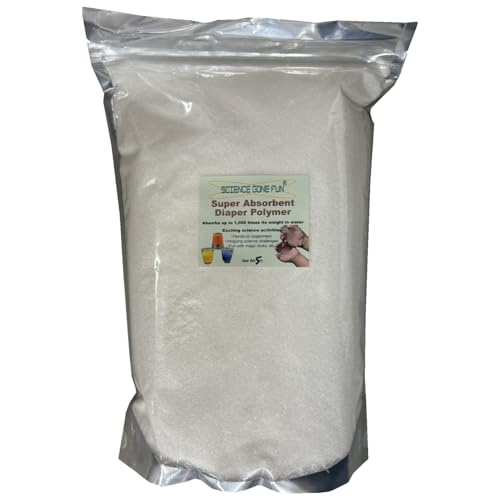
- Absorbs up to 1,000x its weight
- 5 lb bag for repeated use
- Good for demos, spills, and slush gel
Best For: Large-scale absorption demos and STEM projects
3D molecular learning

- 444 pieces for chemistry study
- Ball-and-stick and space-filling models
- Shows bond angles and molecular geometry
Best For: Students and teachers studying molecular structure and stereochemistry
Compact demo polymer

- Turns water into squishy gel
- Good for demos and sensory bins
- Certified safe and non-toxic
Best For: Small absorption demos, sensory play, and science tricks
3D Molecular Model Teaching Set
LINKTOR Chemistry Molecular Model Kit

- 240 pieces with atoms, bonds, and a disconnector tool
- Builds ball-and-stick and space-filling models
- Helpful for bond angles, structure, and stereochemistry
Best For: Students and teachers learning molecular geometry and structure
Hands-On Nylon Demo Kit
Innovating Science Nylon 6-10 Rope Trick Kit

- Built for a nylon 6-10 rope trick demonstration
- Includes materials, instructions, and MSDS packet
- Suitable for ages 13+ with adult supervision
Best For: Classrooms and labs demonstrating polymer chemistry
Super Absorbent Polymer Powder
Sodium Polyacrylate Science Jar

- Turns water into a gel-like slush for demos
- Absorbs up to 800x its weight in water
- Useful for polymer chains and STEM lessons
Best For: Absorption demos, science fairs, and sensory STEM activities
Organic Molecular Builder

- 86 atoms and 154 bonds
- Builds ball-and-stick and space-filling models
- Useful for polymers and general chemistry
Best For: Students who want a durable model kit for molecular and polymer visualization
Gel Absorption Demo
Instant Sodium Polyacrylate Kit

- Turns water into gel instantly
- Good for STEM demos and sensory play
- Non-toxic and lab-tested
Best For: Quick classroom or home demos of polymer absorption
Fluorescent Polymer Lab
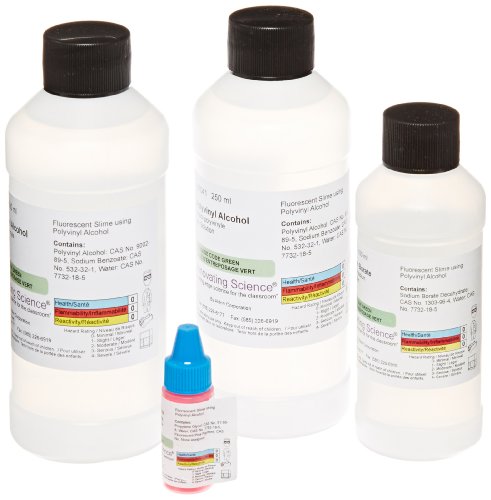
- Uses polyvinyl alcohol to make fluorescent slime
- Visible in regular light and under black light
- Includes instructions and MSDS packet
Best For: Age-13-plus polymer demonstrations with strong visual effect
Interactive lab station – Hands-On Chemistry Lab Kit
If you want a polymer chemistry demonstration kit that feels like a real lab setup, this Ooze Labs station is a strong pick. It combines slime, chromatography, fizzing reactions, and other safe experiments with a full set of lab-style tools, so it works well for structured home science time or classroom demos.
Best For: Kids and families who want a colorful, hands-on chemistry station with multiple guided experiments.
Pros:
- Includes 20 non-hazardous experiments with slime, chromatography, acids, bases, and more.
- Comes with 57 pieces, including beakers, test tubes, flasks, pipettes, and other lab tools.
- Printed experiment cards clip onto the station for easy reference.
- Separate full-color manual adds more experiments and scientific explanations.
Cons:
- Requires assembly before use.
- Best suited to children old enough to follow guided experiments.
- Not aimed at advanced chemistry beyond introductory demonstrations.
This is a practical choice if you want the presentation of a real chemistry station without hazardous materials. It offers a broad mix of experiment types, making it more versatile than a single-ingredient polymer demo set.
Bulk absorption polymer – 5 lb Sodium Polyacrylate Supply
For a polymer chemistry demonstration kit centered on absorption, this bulk sodium polyacrylate bag gives you plenty of material to work with. It is designed for science classroom demonstrations, STEM learning, spill control, and DIY slush gel projects, so it is a flexible option when you need volume rather than a packaged kit.
Best For: Teachers, parents, and makers who need a large supply of absorbent polymer for demos or practical use.
Pros:
- Absorbs up to 1,000 times its weight in water.
- Useful for classroom demonstrations, science fair projects, and STEM kits.
- Can be used for DIY slush gel, cold packs, spill containment, and sensory play.
- Large 5 lb bag provides enough polymer for repeated experiments.
Cons:
- It is a raw material, not a complete experiment kit.
- Uses require setup and extra supplies such as water or containers.
- Best results depend on careful handling and following directions.
This is the most practical option if your goal is to demonstrate absorption at scale. It is less polished than a classroom set, but it gives you far more material for repeated polymer experiments.
3D molecular learning – 444-Piece Chemistry Builder
If your version of a polymer chemistry demonstration kit needs to show structure instead of reactions, this molecular model set is a strong educational tool. It is built for organic and inorganic chemistry learning, with enough pieces to demonstrate molecular geometry, bond angles, and fullerene models in three dimensions.
Best For: Students and teachers who want a detailed 3D molecular modeling set for chemistry study.
Pros:
- Large 444-piece set includes atoms, bonds, and parts for a Carbon-60 fullerene model.
- Supports both ball-and-stick and space-filling model styles.
- Designed to show molecular structure, bond angles, and stereochemistry.
- Easy to assemble and disassemble with the included connections and tools.
Cons:
- Focuses on molecular structure, not wet-lab polymer reactions.
- Not a hands-on slime or absorption experiment set.
- More suitable for chemistry study than casual play.
This kit is best when the lesson is about how molecules are built rather than how polymers behave in water. It gives students a clear, tactile way to visualize chemistry concepts that are harder to grasp from books alone.
Compact demo polymer – 50g Super Absorbent Granules
This polymer chemistry demonstration kit is all about quick absorption and tactile experimentation. The 50g bag of sodium polyacrylate expands into a squishy gel when water is added, making it useful for classroom demos, sensory bins, color-mixing activities, and classic disappearing-water tricks.
Best For: Simple, hands-on absorption demonstrations and sensory play with a small starter amount.
Pros:
- Absorbs up to 1,000 times its weight and turns water into gel.
- Works for science projects, classroom demonstrations, and sensory play.
- Can be used for the disappearing-water magic trick.
- Certified safe and non-toxic, with ASTM F963-17 and CPSIA compliance.
Cons:
- Only a 50g bag, so it is not ideal for large-scale demonstrations.
- Requires water and simple setup to get started.
- Focuses on one main polymer effect rather than multiple experiments.
This is a compact choice for quick demonstrations and repeatable classroom activities. It is especially useful if you want a small amount of polymer to test absorption behavior without buying a bulk supply.
3D Molecular Model Teaching Set – LINKTOR Chemistry Molecular Model Kit
If you’re looking for a polymer chemistry demonstration kit that also covers broader chemistry concepts, this LINKTOR molecular model set is a practical hands-on option. It includes 240 pieces with atoms, bonds, and a disconnector tool, so students can build and study inorganic chemistry, organic chemistry, and structural chemistry in 3D.
Best For: High school students, teachers, and beginners who need a reusable chemistry model kit for molecular geometry and structure practice.
Pros:
- 240-piece set with 86 atoms, 153 bonds, and a disconnector tool.
- Supports ball-and-stick and space-filling molecule models.
- Shows bond angles, molecular structure, and stereochemistry in 3D.
- Color-coded atoms make the kit easier to learn and use.
Cons:
- It is a model kit, not a chemical reaction demonstration set.
- Focused on general chemistry structures rather than a specific polymer experiment.
This is a good classroom or home-study choice if your priority is visualizing chemistry rather than running live demonstrations. It gives learners a durable way to explore molecular geometry and bonding concepts with repeated hands-on use.
Hands-On Nylon Demo Kit – Innovating Science Nylon 6-10 Rope Trick Kit
This polymer chemistry demonstration kit is built for one classic purpose: showing how nylon is made in a hands-on rope trick experiment. The kit includes materials for creating nylon polymer, plus instructions and an MSDS packet, making it suited to structured classroom or lab demonstrations.
Best For: Ages 13+ with adult supervision, especially classrooms or labs demonstrating a nylon polymer reaction.
Pros:
- Designed specifically for demonstrating polymer chemistry.
- Includes materials to create nylon polymer in a guided activity.
- Comes with instructions and an MSDS packet.
- Compact kit size for classroom or lab storage.
Cons:
- Requires adult supervision for use.
- Subject to DOT shipping restrictions.
- Limited to the nylon 6-10 rope trick demonstration.
If you want a focused polymer lesson rather than a general chemistry kit, this is the most directly relevant option in the roundup. It is a straightforward choice for showing polymer formation in a memorable, hands-on way.
Super Absorbent Polymer Powder – Sodium Polyacrylate Science Jar
For a polymer chemistry demonstration kit centered on absorption and material behavior, this sodium polyacrylate powder is a strong classroom or project supply. It turns water into a gel-like slush, making it useful for showing how superabsorbent polymers work in science lessons, sensory activities, and demonstrations.
Best For: Teachers, parents, and STEM activities that need a visible absorbent polymer demonstration.
Pros:
- Commercial-grade sodium polyacrylate for science demonstrations.
- Absorbs up to 800x its weight in water.
- Useful for teaching polymer chains and physical transformations.
- Can be used for classroom labs, science fairs, and sensory play.
Cons:
- It is a single material, not a full multi-piece kit.
- Best suited to absorption demos rather than synthesis experiments.
- May require extra setup for classroom or craft use.
This option works well when you want a dramatic visual experiment with a clear polymer science takeaway. It is especially practical for demonstrations where absorption, expansion, and texture are the main teaching points.
Organic Molecular Builder – 240-Piece Chemistry Model Set
If you want a polymer chemistry demonstration kit that also works for broader molecular lessons, this 240-piece model set is built for hands-on visualization. It helps turn abstract structures into 3D examples, with enough atoms and bonds to build simple compounds as well as more complex polymers.
Best For: Students from middle school through graduate level who need a durable molecular model kit for chemistry, biochemistry, or molecular biology study.
Pros:
- 240 pieces include 86 atoms and 154 bonds for a wide range of builds.
- Supports ball-and-stick and space-filling model construction.
- Embedded component design makes assembly easier and quicker.
- Portable enough for use at home, in class, or in the lab.
Cons:
- It is a general molecular model kit, not a polymer-specific demo set.
- Assembly is required.
- Made of plastic, so it is more for study than advanced lab work.
Overall, this set is a practical learning tool if you need a reusable way to visualize molecular structure and polymer concepts side by side. Its size and piece count make it a flexible choice for coursework and demonstrations.
Gel Absorption Demo – Instant Sodium Polyacrylate Kit
This polymer chemistry demonstration kit is all about showing absorption in a simple, visual way. Add water to the sodium polyacrylate and it transforms into gel, making it useful for classroom demos, sensory play, and basic STEM explanations.
Best For: Teachers, parents, and presenters who want a quick water-to-gel polymer demo with strong visual impact.
Pros:
- Creates an instant water-to-gel reaction for demonstrations.
- Works for science classes, STEM activities, and sensory play.
- Can also be used for cooling packs or garden moisture retention.
- Non-toxic and tested to ASTM F963-17 and CPSIA standards.
Cons:
- Only 35g total, so it is a small-format kit.
- Not intended for complex polymer experiments.
- Indoor-oriented and manual use only.
If your goal is a simple polymer reaction that students can see immediately, this kit delivers that effect with very little setup. It is best viewed as a demonstration aid rather than a full chemistry lab set.
Fluorescent Polymer Lab – PVA Slime Demo Kit
Innovating Science Fluorescent Slime Using Polyvinyl Alcohol Chemistry Demo Kit
Check Price On AmazonFor a polymer chemistry demonstration kit focused on visible reaction activity, this fluorescent slime kit uses polyvinyl alcohol to create a polymer students can actually see forming. The included pigment makes the result easy to view in normal light and even more dramatic under black light.
Best For: Ages 13+ with adult supervision, especially classrooms or demonstrations that need a colorful polymer reaction.
Pros:
- Creates fluorescent polymer slime from polyvinyl alcohol.
- Visible under regular light and orange under black light.
- Includes instructions and an MSDS packet for handling guidance.
- Designed specifically for demonstration use.
Cons:
- Requires adult supervision.
- Not suitable for younger children.
- More of a demo kit than a reusable general-purpose chemistry set.
This kit is a strong choice when the goal is an eye-catching polymer demo rather than broad chemistry coverage. Its fluorescent effect makes it especially useful for presentations and classroom reaction displays.
How We Picked the Best Polymer Chemistry Demonstration Kit Options
We focused on kits and materials that make polymer behavior easy to demonstrate without requiring advanced lab equipment. Priority went to options with clear educational value, age-appropriate use, and strong results for common demonstrations such as slime formation, superabsorption, and molecular modeling.
We also considered packaging size, ease of setup, and whether the item works as a standalone lesson or as a flexible teaching aid for multiple activities.
Quick Comparison: What Each Type Is Best for
Not every Polymer Chemistry Demonstration Kit serves the same purpose. Some are better for visual “wow” moments like slime or gel formation, while others are better for explaining monomers, polymers, and molecular geometry. Super absorbent powders are ideal for absorption demos, and molecular model sets are better for structure-focused instruction.
Key Buying Factors for a Polymer Chemistry Demonstration Kit
Demonstration Type
Choose the format that matches your lesson goal. If you want fast engagement, slime and gel kits work well. If your focus is chemistry concepts, look for kits that connect observable changes to polymer structure, bonding, and material properties.
Safety and Cleanup
For classroom or home use, non-hazardous materials and simple cleanup matter. Check whether the kit includes clear handling instructions, age guidance, and disposal notes, especially for gels, powders, and adhesives.
Class Size and Reusability
Some kits are single-demo products, while others can support repeated use or multiple student groups. Larger bulk materials make more sense for teachers, while smaller sets may be enough for one student or a family project.
Instruction Quality
A strong Polymer Chemistry Demonstration Kit should help users understand what is happening, not just provide a visual effect. Look for step-by-step directions, explanation sheets, or discussion prompts that connect the experiment to real chemistry concepts.
Who Should Buy Which Polymer Chemistry Demonstration Kit?
Teachers and homeschool parents who want a flexible classroom tool should look at kits that combine clear instruction with repeatable demos. Students who need help visualizing molecular structure may benefit more from model kits than from reaction-based activities. If your goal is sensory play or dramatic absorption effects, superabsorbent polymer products are usually the most practical choice. For a more concept-driven lesson, choose a kit that directly ties the demonstration to polymer science principles.
In short, the best choice depends on whether you want a visual demo, a structure lesson, or a hands-on material experiment. Matching the kit to the lesson objective will give you the strongest results.